
Teachers, 2020 is here, marking a fresh new start, so there isn’t any better time to challenge your students to change their spending habits and set them up for financial independence! Here’s a great activity for your class that uses our Budget Game to understand how to build an emergency fund!

Goal:
The goal of this activity is to get students to save 10% of all the money they receive so that they can have an emergency fund.
The Rules:
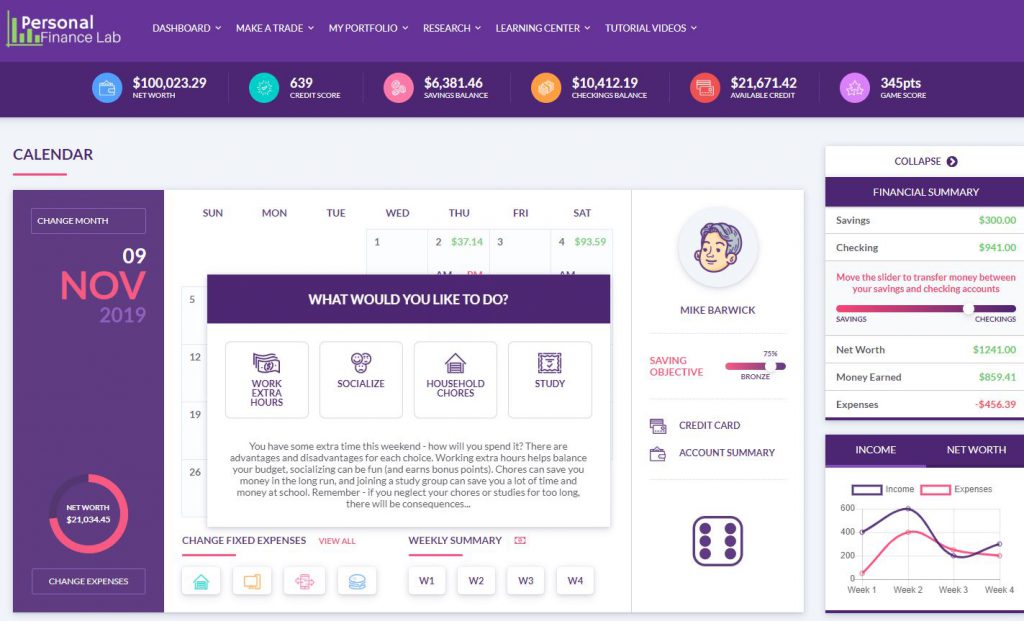
Implement a rule for the Budget Game that students must save 10 cents for every dollar of income received. Also, implement the rule that for any “Event Card” they receive they need to transfer money from their checking account into their savings account. By transferring the money, students will automatically gain more points in the game.
Philosophy:
The philosophy of the Budget Game is for the students to learn by doing. The focus of the game is to help students learn the fundamentals of money management. This resource is not here to replace you, but merely to become a teaching tool that you can use to introduce or consolidate a topic so that the basics can be understood. The budgeting game can, therefore, be used as both a supplemental and integrated resource!
To find more lesson plans and in class activities, click here!
Here are 3 QuickStart lessons that I like to use with my classes to introduce some of the fundamentals of money with our Budgeting Game. Each lesson will require the player to play at least one “virtual month” in the game which will take approximately 20 mins. Further time can be taken to do research and answer questions.
Lesson 1.
Here is a great lesson to start teaching the basics of money: In order to learn the value of money, students need to distinguish between a need and a want and what alternative choices they have through opportunity cost.
Needs and Wants
Activity:
Students will play the game for 1 virtual month and complete the table below. For every expense that they make, the student must write down a description, the amount that they paid, whether it is a need, a want and what they could buy instead. Once they have done this, they can look at opportunity cost and list what the cost or benefit is to choosing the alternative.
| Description | Cost ($) | Need? | Want? | Alternative | Opportunity Cost |
Lesson 2.
Using a Credit Card and your Credit Score: Students swipe their credit card with very little understanding of the consequences. Here the student will learn what happens when they use their credit card and not pay the bill on time.
Credit Card and Credit Score
Activity:
Students will play the Budgeting Game for 1 virtual month. The student will firstly take notice of their credit score. Then roll the dice to start the game and compete a virtual month. In that time the student will purchase everything that is offered to them on their credit card. They must not repay back any monies spent. At the beginning of the next round, the student must check their Credit Score and look at their Credit Card Statement and provide a summary of the consequences of not paying off their credit card. A follow up lesson could be the steps to improving their Credit Score.

Lesson 3.
Net Worth is often a common misunderstood term and people believe that everything they have goes towards their Net Worth and not what is solely theirs. There is an old joke: Why is there a drive thru at the bank? So, the car gets to meet its owner.
Activity: Net Worth
Students play the Budgeting Game for 2 virtual months. In that time, they should observe their Net Worth which is calculated by adding the Checking Account + Savings Account minus Debt (Credit Cards).
We hope you like this. If you do try any of these lessons, let us know how your students got on. Also, do check out our library of lessons that are available. Any feedback is welcome and if you like what we are doing, please share with others and follow us on social media.
Request More Information
[contact-form-7 id=”17211″ title=”Pfinlab Contact Form”]
Very few students will ever care to know how to graph a parabola, but everyone will need to know how to do their taxes. Don’t require trigonometry but require basic tax preparation.
Lindsey, 41, mixed race mother of five in Oregon suburb
Personal Finance Lab’s parent organization turns 30 this year, and we have been involved in the changing landscape of k-12 education in the United States every step of the way. I have been working on our curriculum development over the last 5 years, and during that time I’ve been travelling around the country speaking at regional education conferences, holding webinars and focus groups with teachers, diving into discussions with parents, and trying to help make sure every student in the United States had access to the basic financial literacy skills they will need after graduation.

What we do here at PersonalFinanceLab is to bring the best of what we’ve learned from the last 75 years of experiments in education reform across the country, and apply it to how we teach financial concepts in schools. Much of this comes back to an ever-evolving balance between what are known as the STEM disciplines, CTE programs, and “Life Adjustment” schools. How these three areas interact is essential to understanding how Personal Finance and Economic topics appear in the classroom.
A History Lesson
Before getting into the play between the areas of emphasis, let’s take a step back and see how we got to where we are today.
Post-Depression Education Reform
“…60 per cent of those in secondary school were neglected. The college preparatory curriculum was too remotely related to the lives they were living and were going to live; students didn’t plan to become skilled in any particular trade because the jobs open to them did not demand the kind of training schools could offer”
Carl Franzen, 1951
After World War II, high school enrollment across the United States started to surge. This is important – in 1930, high school enrollment was less than 50% of all 14-17 year olds. By 1950, it soared to over 70%.
This caused a full-blow existential crisis in schools around the country: Before 1950, most students would leave high school as soon as they could find a job – graduates who stayed through to the end were generally being groomed to continue on to college or enter a specific trade. As high school enrollment spiked, more and more students might not be on either of those paths: not planning on going to college, but also not planning to embark on a specific trade.
This caused a huge debate on education policy across the country – if more and more students were expected to graduate high school, what did society expect them to actually learn while they were there?
Life Adjustment Education
The answer was provided largely by market demand. Parents of this first spike of high school graduates themselves grew up during the Great Depression, and wanted their children to grow up knowing how to face the “Real World”. The concept of “Life Adjustment Education” developed and spread quickly from about 1947 through 1956 – the idea being that schools did not necessarily need to teach “more” subjects, but to put them through the lens of preparing students after graduation. Math classes should include lessons on taxes, English classes should include writing for business, science classes should focus on careers available in each field.
This was extremely popular among parents, who saw it as a natural “3rd path” between the College Prep and CTE curriculum, but generally speaking there was no “revolution”. Classes were still taught primarily through lecture, with fairly soft directives taken up by more ambitious teachers.
Sputnik and the STEM Crisis

The concept of Life Adjustment Education came to a screeching halt in 1957 with the launch of Sputnik. The country was gripped in panic – the “Missile Gap” was still a few years away, but the “Engineering Gap” was staring down directly from the heavens. It became a top national priority to start producing more engineers and technical specialists, as quickly as possible.
At the time, these fields broadly consisted of Biology, Chemistry, Physics, and Mathematics. The National Science Foundation pumped billions of dollars into curriculum development, teacher training, film reels (for self-taught classes while new teachers were being recruited and trained) and new ways of teaching.
The Rise of the Lab
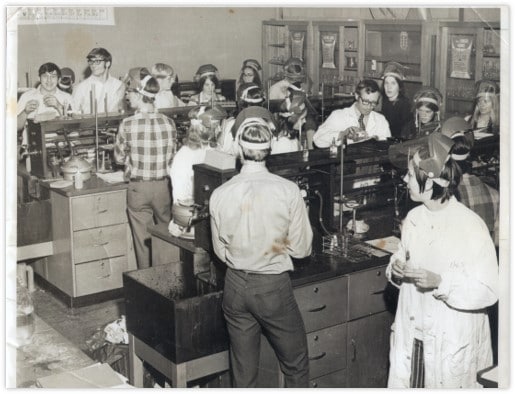
This is where the story gets interesting – the National Science Foundation push, and the funding that followed, is the reason why every high school has a biology and chemistry lab today. The real revolution in education came about explicitly because there were a lack of qualified teachers at the time – necessity was the mother of invention. Since there was no way to get fully qualified science instructors in every classroom on the turn of a dime, a radical new method of teaching was applied – the Experiential Classroom.
The National Science Foundation’s curriculum included libraries of exercises that could be conducted in the newly-built Labs – exercises that were guided by teacher input, but relied on students working by themselves or in groups to execute a set of instructions in a dedicated lab environment. At the time, teachers simply did not have the expertise to lecture about chemistry for an hour per day, and the experiential component was to give them a break by letting students “learn by doing”.
It is hard to undersell how well this new approach worked – STEM graduates flooded universities in the years afterwards. The engineers behind the Apollo moon landings were the first generation to graduate high school from these new Labs, and American universities were well-fed with students for STEM fields for decades afterwards.
Parents were also overwhelmingly supportive – they loved seeing the physical presence of the Labs at the schools, and could tangibly identify what their kids were learning, and why. The high school science teacher even became famous in their communities (if you’ve seen Stranger Things on Netflix, you’ll notice only one teacher pops up with a speaking roll).
STEM Today

Despite news stories that you may have seen arguing otherwise, the STEM crisis has largely abated. That is not to say we don’t need STEM – but that this is a problem we’ve been throwing money at for decades, and generally seems to be under control. There are still STEM vacancies – but today we have the graduates to fill them.

So this brings is back to where we left off back in 1956 – how do we get back on track for preparing students for life after school? What do we want students to know when they graduate high school, and how do we teach them?
Academics First, But Not Alone
The American Federation of Teachers commissioned a study to answer exactly this question a couple years ago, and the answers aren’t surprising. More than half of parents agree that pure academics should definitely be at the top of the agenda in high schoool (53%) compared to just 2 percent saying high school’s main focus should be preparing students for work.
However, diving a layer deeper shows a very different story. 75% of all adults say that high schools have at least some responsibility to prepare students both academically and to teach job skills. When asked about elective classes, more parents wanted their students to take a job skills or personal finance class than any advanced mathematics (or arts and music).

This is mirrored in nation-wide trends: 20 states now require some form of financial literacy to be taught in high schools (usually combined with some other subject) – as a society, we want our students to be better prepared for life after graduation, but we don’t want to sacrifice other academics to do it.
Enter The Finance Lab
The biggest success story of the STEM push of the 1950’s and 1960’s was the High School Lab, and kick-starting the entire experiential education revolution.
Thanks to advances in technology over the last 10 years, Financial Literacy is now the prime candidate for new Labs across the country – a dedicated place in the school focusing on learning about money, economics, budgeting, insurance, and everything in between. New simulations (like the ones we pioneer here at PersonalFinanceLab.com) turn these formerly dry topics into the most exciting place at the school, with interactive simulations, white-knuckle trading competitions, streaming market data, and life-inspired budgeting games taking center stage. This simply wasn’t possible 15 years ago, but the experimental approach has quickly proven to be the “missing piece of the puzzle” when tackling financial topics all over the country.
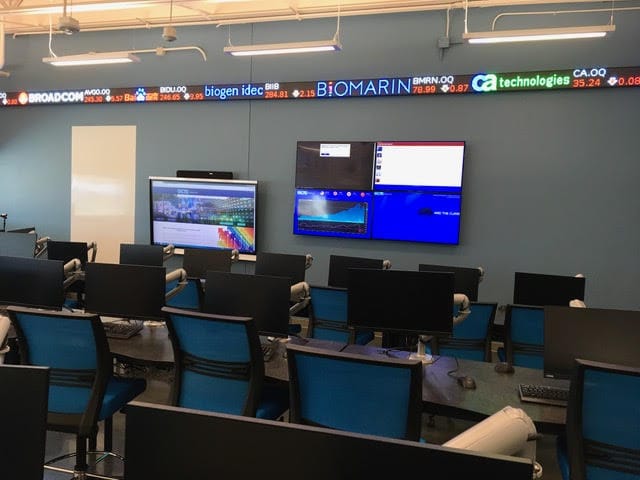
Math departments love labs because of a rising trend of teaching financial math classes (some states even include Personal Finance and Economics as part of their Math standards). CTE departments love them because it is the natural place to hold accounting, entrepreneurship, and business classes (and is a great way to grab student attention!). Social studies departments love them because it breaks off the lecture series and is an awesome way to introduce economic and financial topics. Teachers love them because it turns their classroom into the coolest room at the school, and parents love them for the same reason they liked the biology and chemistry labs – they have a clear, tangible way to see that their kids are learning valuable life skills in an environment explicitly designed for that purpose.
Building a Lab is usually the one thing that each of the different departments can usually agree on. Hundreds of new labs are being built across the country every year (particularly in states that have a mandate to teach financial topics). If your school doesn’t have one already, ask your administration:
We have a biology lab. We have a chemistry lab. Why not a Personal Finance or Business Lab?
Kevin Smith is the director of Curriculum Development for PersonalFinanceLab.com. He holds a Master’s degree in Economics from Concordia University in Montreal, and is a candidate for a Master’s of Public Administration from the Illinois Institute of Technology.
This presentation accompanies our lesson on Working vs Studying after high school, which is available as a class Assignment with a built-in assessment. Click Here to view the main lesson!
This presentation accompanies our lesson on Stocks, which is available as a class Assignment with a built-in assessment. Click Here to view the main lesson!
This presentation accompanies our lesson on Ticker Symbols, which is available as a class Assignment with a built-in assessment. Click Here to view the main lesson!
This presentation accompanies our lesson on Spending Plans, which is available as a class Assignment with a built-in assessment. Click Here to view the main lesson!
This presentation accompanies our lesson on Researching Purchases, which is available as a class Assignment with a built-in assessment. Click Here to view the main lesson!
This presentation accompanies our lesson on Reconciling Accounts, which is available as a class Assignment with a built-in assessment. Click Here to view the main lesson!
This presentation accompanies our lesson on Building an Investing Strategy, which is available as a class Assignment with a built-in assessment. Click Here to view the main lesson!

This presentation accompanies our lesson on Reading Stock Quotes, which is available as a class Assignment with a built-in assessment. Click Here to view the main lesson!
This presentation accompanies our lesson on Protecting Against Fraud, which is available as a class Assignment with a built-in assessment. Click Here to view the main lesson!

This presentation accompanies our lesson on Portfolio Diversification, which is available as a class Assignment with a built-in assessment. Click Here to view the main lesson!
This presentation accompanies our lesson on Planning Long-Term Purchases, which is available as a class Assignment with a built-in assessment. Click Here to view the main lesson!

This presentation accompanies our lesson on Opportunity Cost, which is available as a class Assignment with a built-in assessment. Click Here to view the main lesson!
This presentation accompanies our lesson on filing income taxes, which is available as a class Assignment with a built-in assessment. Click Here to view the main lesson!

This presentation accompanies our lesson on Getting Trading Ideas, which is available as a class Assignment with a built-in assessment. Click Here to view the main lesson!
This presentation accompanies our lesson on Family Planning, which is available as a class Assignment with a built-in assessment. Click Here to view the main lesson!
This presentation accompanies our lesson on Using Credit, which is available as a class Assignment with a built-in assessment. Click Here to view the main lesson!
This presentation accompanies our lesson on Credit Reports, which is available as a class Assignment with a built-in assessment. Click Here to view the main lesson!
This presentation accompanies our lesson on Credit Cards, which is available as a class Assignment with a built-in assessment. Click Here to view the main lesson!
This presentation accompanies our lesson on Classifying Products and Services, which is available as a class Assignment with a built-in assessment. Click Here to view the main lesson!

This presentation accompanies our lesson on Car Insurance, which is available as a class Assignment with a built-in assessment. Click Here to view the main lesson!

This presentation accompanies our lesson on buying a car, which is available as a class Assignment with a built-in assessment. Click Here to view the main lesson!
This presentation accompanies our lesson on Building an Investing Strategy, which is available as a class Assignment with a built-in assessment. Click Here to view the main lesson!
This presentation accompanies our lesson on Budgeting, which is available as a class Assignment with a built-in assessment. Click Here to view the main lesson!
This presentation accompanies our lesson on Budgeting and Spending Strategies, which is available as a class Assignment with a built-in assessment. Click Here to view the main lesson!
This presentation accompanies our lesson on Bonds, which is also available to include in your class assignments with an assessment. Click here to view the main lesson!
This presentation accompanies our lesson on Payroll Accounting, which is also available to be included in your class Assignment with an assessment. Click Here to view!
This presentation accompanies our lesson about Sales Tax, which is available as an “Assignment”.
Copy this presentation in Google Drive
Download this presentation as a PowerPoint
This presentation accompanies the Personal Finance Lab Career Center, with a brief discussion of some of the many options students have to choose from after completing high school.
Click Here To Copy This Presentation in Google Drive
Click Here to download this presentation as a PowerPoint

In this lesson students will learn about various ways to invest. They will be
learning about different types of investments such as stocks, mutual funds
and bonds. Students will be assessing different risk that comes with each
type of investment and determining when it is a good idea to invest.

In this lesson students will be learning about the different options that they have after graduating high school. They will be looking at different careers and learning about what skills and level of education is required to be successful in those careers.

In this lesson students will be learning about income tax and why certain states have an income tax. Students will be learning about taxes from the start to finish, from filling out tax forms to calculating what percentage will be taken out of their income.

In this lesson students will learn what sales tax, discounts and tips are. These are important things for students to know and learn because they will be interacting with these terms in their everyday life. Students will walk away being able to calculate all of these terms in a variety of situations.

In this lesson students will be learning about the different costs that come with buying and owning a car. This lesson is important because there are many costs that students do not think come with owning a care and it is important to take them all into consideration before owning a car.

This lesson introduces the concept of opportunity cost in the eyes of both the consumer and the producer. Students will walk away from the lesson thinking about the opportunity cost that comes with each decision that they make.

This lesson plan in an introduction to “Needs” and “Wants”, and how we use that distinction to make decisions throughout the day. The class activities also start to bridge the gap between the basic concepts, up through integrating concepts of money, and the foundations of budgeting.

In this lesson students will learn about the basics of what a credit card is and the different responsibilities that come with owning a credit card. Students will learn about what both a credit report and credit score are and the impact they have on someone’s finances. By the end of the lesson students will be able to implicitly and explicitly think about situations that will either improve or harm their credit and explain why.

This lesson plan will introduce students to the concept of comparison shopping. There are a variety of activities that all center around comparing different items in order to get the best value for your money. Students will be able to find the unit prices of various items and also how and where to research different prices of items both big and small.

This lesson is an introduction to buying a stock. Students will be introduced
to basic vocabulary that is involved with a buying and owning a stock. Students will be going through the entire process of buying a stock from looking up the stocks ticker symbol to buying a stock on the market.

In this lesson students will be learning about both budgets and spending
plans. They will be able to tell what the different parts of each are and when to use either. They will be looking at other peoples’ budgets and saving plans to evaluate how to create one. They will leave with the tools and the skills to create their own personal budget and spending plan.
In this lesson students will be learning all about checking and how to track
their purchases. Throughout the different activities students will be interacting with checks and connecting that back to budgeting and spending. Students will go through the entire bill paying process from reading a billing statement to writing a check in order to pay the bill and reconciling their out standing payments with their bank account. Includes 4 customizable activities

In this lesson students will be learning about different types of scams that could happen over the phone or on the computer. They will be able to identify when they find a scam and will learn the importance of not falling into the scam.
Includes 5 customizable activities
This document was part of the lease you signed after moving into your apartment.
Lease Terms
QUIET ENJOYMENT: Tenant shall be entitled to quiet enjoyment of the Premises and Landlord will not interfere with that right, as long as Tenant pays the rent in a timely manner and performs all other obligations under this Lease.
POSSESSION AND SURRENDER OF PREMISES: Tenant shall be entitled to possession of the Premises on the 1st day of the Lease Term. At the expiration of the Lease, Tenant shall peaceably surrender the Premises to the Landlord or Landlord’s agent in good condition, as it was at the commencement of the Lease, reasonable wear and tear excepted.
USE OF PREMISES: Tenant shall only use the Premises as a residence. The Premises shall not be used to carry on any type of business or trade without prior written consent of the Landlord. Tenant will comply with all laws, rules, ordinances, statutes and orders regarding the use of the Premises.
OCCUPANTS: Tenant agrees that no guests not as a signed tenant on this lease may live at the Premises for more than 5 days without prior written consent of the Landlord.
CONDITION OF PREMISES: Tenant or Tenant’s agent has inspected the Premises, the fixtures, the grounds, building and improvements and acknowledges that the Premises are in good and acceptable condition and are habitable. If at any time during the term of this Lease, in Tenant’s opinion, the conditions change, Tenant shall promptly provided reasonable notice to Landlord.
ASSIGNMENT AND SUBLEASE: Tenant ☐ shall ☐ shall not assign or sublease any interest in this Lease. All sublease arrangement must be made with prior written consent of the Landlord, which consent shall not be unreasonably withheld. Any assignment or sublease without Landlord’s written prior consent shall, at Landlord’s option, terminate this Lease.
DANGEROUS MATERIALS: Tenant shall not keep or have on or around the Premises any item of a dangerous, flammable or explosive nature that might unreasonably increase the risk of fire or explosion on or around the Premises or that might be considered hazardous by any responsible insurance company.
UTILITIES ANDS SERVICES: Charge for ☐ electricity, ☐ telephone service, ☐ cable television, ☐ heat, ☐ hot water, ☐ water, ☐ garbage pick-up, X snow-removal and ☐ lawn maintenance are services/utilities provided to the apartment are included as a part of this Lease and shall be borne by the Landlord in addition to the following: $35 per month of services rendered.
PETS: Tenant shall not keep any pets on the Premises without the prior written consent of the Landlord. If Landlord grants permission to Tenant to keep pets, an additional security deposit of $250 will be required by the Landlord to keep in trust for potential damage to the Premises caused by Tenant’s pets.
ALTERATIONS AND IMPROVEMENTS: Tenant agrees not to make any improvements or alterations to the Premises without prior written consent of the Landlord. If any alterations, improvement or changes are made to or built on or around the Premises, with the exception of fixtures and personal property that can be removed without damage to the Premises, they shall become the property of Landlord and shall remain at the expiration of the Lease, unless otherwise agreed in writing.
DAMAGE TO PREMISES: If the Premises or part of the Premises are damaged or destroyed by fire or other casualty not due to Tenant’s negligence, the rent will be abated during the time that the Premises are uninhabitable. If Landlord decides not to repair or rebuild the Premises, then this Lease shall terminate and the rent shall be prorated up to the time of the damage. Any unearned rent paid in advance shall be refunded to Tenant.
MAINTENANCE AND REPAIR: Tenant will, at Tenant’s sole expense, keep and maintain the Premises in good, clean and sanitary condition and repair during the term of this Lease and any renewal thereof. Tenant shall be responsible to make all repairs to the Premises, fixtures, appliances and equipment therein that may have been damaged by Tenant’s misuse, waste or neglect, or that of the Tenant’s family, agents or visitors. Tenant agrees that no painting will be done on or about the Premises without the prior written consent of Landlord. Tenant shall promptly notify Landlord of any damage, defect or destruction of the Premises or in the event of the failure of any of the appliances or equipment. Landlord will use its best efforts to repair or replace any such damaged or defective areas, appliances or equipment.
RIGHT OF INSPECTION: Tenant agrees to make the Premises available to Landlord or Landlord’s agents for the purposes of inspection, making repairs or improvements, or to supply agreed services or show the premises to prospective buyers or tenants, or in case of emergency. Except in case of emergency, Landlord shall give Tenant reasonable notice of intent to enter. Tenant shall not, without Landlord’s prior written consent, add, alter or re-key any locks to the Premises. At all times Landlord shall be provided with a key or keys capable of unlocking all such locks and gaining entry. Tenant further agrees to notify Landlord in writing if Tenant installs any burglar alarm system, including instructions on how to disarm it in case of emergency entry.
HOLDOVER: In the event Tenant remains in possession the Premises for any period after the expiration of the Lease Term (“Holdover Period”) a new month-to-month tenancy shall be created subject to the same terms and conditions of this Lease at a monthly rental rate of the same in this agreement unless otherwise agreed by the Parties in writing. Such month-to-month tenancy shall be terminable on thirty (30) days notice by either Party or on longer notice if required by law.
ABANDONMENT: If Tenant abandons the Premises of any personal property during the term of this Lease, Landlord may at is option enter the Premises by any legal means without liability to Tenant and may at Landlord’s option terminate the Lease. Abandonment is defined as absence of the Tenants from the Premises for at least 25 consecutive days without notice to Landlord. If Tenant abandons the Premises while the rent is outstanding for more than 60 days and there is not reasonable evidence, other than the presence of the Tenants’ personal property, that the Tenant is occupying the unit, Landlord may at Landlord’s option terminate this Lease Agreement and regain possession in the manner prescribed by law. Landlord will dispose of all abandoned personal property on the Premises in any manner allowed by law.
EXTENDED ABSENCES: In the event Tenant will be away from the Premises for more than 7 consecutive days, Tenant agrees to notify Landlord in writing of such absence. During such absence, Landlord may enter the premises at times reasonable necessary to maintain the property and inspect for damages and needed repairs.
SECURITY: Tenant understands that Landlord does not provide any security alarm system or other security for Tenant or the Premises. In the event any alarm system is provided, Tenant understands that such alarm system is not warranted to be complete in all respects or to be sufficient to protect Tenant on the Premises. Tenant releases Landlord from any loss, damage, claim or injury resulting from the failure of any alarm system, security or from the lack of any alarm system or security.
SEVERABILITY: If any part of this Lease shall be held unenforceable for any reason, the remainder of this Agreement shall continue in full force and effect. If any provision of this Lease is deemed invalid or unenforceable by any court of competent jurisdiction, and if limiting such provision would make the provision valid, then such provision shall be deemed to be construed as so limited.
INSURANCE: Landlord and Tenant shall each be responsible to maintain appropriate insurance for their respective interests in the Premises and property located on the Premises. Tenant understands that Landlord will not provide any insurance coverage for Tenant’s property. Landlord will not be responsible for any loss of Tenant’s property, whether by theft, fire, riots, strikes, acts of God or otherwise. Landlord encourages Tenant to obtain renter’s insurance or other similar coverage to protect against risk of loss.
BINDING EFFECT: The covenants and conditions contained in the Lease shall apply to the Parties and the heirs, legal representatives, successors and permitted assigns of the Parties.
GOVERNING LAW: This Lease shall be governed by and construed in accordance with the laws of the State of Illinois.
ENTIRE AGREEMENT: This Lease constitutes the entire Agreement between the Parties and supersedes any prior understanding or representation of any kind preceding the date of this Agreement. There are no other promises, conditions, understandings or other Agreements, whether oral or written, relating to the subject matter of this Lease. This Lease may be modified in writing and must be signed by both Landlord and Tenant.
NOTICE: Any notice required or otherwise given pursuant to this Lease shall be in writing and mailed certified return receipt requested, postage prepaid, or delivered by overnight delivery service, if to Tenant, at the Premise and if to Landlord, at the address for payment of rent. Either party may change such addresses from time to time by providing notice as set forth above.
CUMULATIVE RIGHTS: Landlord’s and Tenant’s rights under this Lease are cumulative and shall not be construed as exclusive of each other unless otherwise required by law.
WAIVER: The failure of either Party to enforce any provisions of the Lease shall not be deemed a waiver of limitation of that Party’s right to subsequently enforce and compel strict compliance with every provision of this Lease. The acceptance of rent by Landlord does not waive Landlord’s right to enforce any provisions of this Lease.
INDEMNIFICATION: To the extent permitted by law, Tenant will indemnify and hold Landlord and Landlord’s property, including the Premises, free and harmless from any liability for losses, claims, injury to or death of any person, including Tenant, or for damage to property arising from Tenant using and occupying the Premises or from the acts or omissions of any person or persons, including Tenant, in or about the Premises with Tenant’s express or implied consent except Landlord’s act or negligence.
LEGAL FEES: In the event that the Tenant violates the terms of the Lease or defaults in the performance of any covenants in the Lease and the Landlord engages an attorney or institutes a legal action, counterclaim, or summary proceeding against Tenants based upon such violation or default, Tenants shall be liable to Landlord for the costs and expenses incurred in enforcing this Lease, including reasonable attorney fees and costs. In the event the Tenants bring any action against the Landlord pursuant to this Lease and the Landlord prevails, Tenant shall be liable to Landlord for costs and expenses of defending such action, including reasonable attorney fees and costs.
ADDITIONAL TERMS AND CONDITIONS:
DISPLAY OF SIGNS: Landlord or Landlord’s agent may display “For Sale” or “For Rent” or “Vacancy” or similar signs on or about the Premises and enter to show the Premises to prospective tenants during the last 30 days of this Lease. Tenant agrees that no signs shall be placed on the Premises without the prior written consent of the Landlord.
NOISE: Tenant shall not cause or allow any unreasonably loud noise or activity in the Premises that might disturb the rights, comforts and conveniences of other persons. No lounging or visiting will be allowed in the common areas. Furniture delivery and removal will take place between 8a.m. and 8p.m.
PARKING: Tenant is ☐ granted X not granted permission to use parking space(s) that may be found at the property for the purpose of parking 2 motor vehicle(s) during the term of this Lease. Landlord is not responsible for, nor does it assume any liability for damages caused by fire, theft, casualty or any other cause whatsoever with respect to any car or its contents.
BALCONIES: Tenant ☐ shall X shall not use balcony for the purpose of storage, drying clothes, or cleaning rugs. Use of balcony for this purpose shall result in a $25 fine per day.
BICYCLES: All bicycles owned by the Tenant shall be stored only in the areas designated by the Landlord and not in any other parts of the building including the hallways, entrances and lobbies.
DWELLING: Tenant is only entitled to occupy the dwelling listed above. This Lease does not entitle the Tenant to use of any area outside of the dwelling including, but not limited to, the attic, basement or the garage without written permission from the Landlord. Tenant is not to paint any part of the apartment without prior written permission from the Landlord.
WATER LEAKS: Tenant is to notify the Landlord immediately if Tenant notices any running water in the faucets in the kitchen, bathroom-sink, bathtub or any other faucets. If the toilet is running and does not shut off properly, Tenant is to notify Landlord immediately. If Tenant does not notify Landlord of any water leaks and it is determined that the water bill is in excess because of this leak, Tenant will be responsible financially for paying the difference in the water bill.
LATE FEES: If Tenant fails to pay any additional fines within 15 days of notice, an additional $35 fine will be levied for late payment.

The world’s best tool for teaching Personal Finance, Economics, and Business is about to get even better with our new customizable Budgeting Game!

How It Works
Schools with a site license for PersonalFinanceLab.com stock and budgeting games will now have the option to also add our new customizable budgeting simulation to their class, and will find a new set of Assignments specifically geared for actions students need to take throughout their simulation.
The new budgeting game puts your students in the role of a college student with a part-time job covering one simulated year. Students need to manage the variable income from their job with variable monthly expenses (like rent and tuition), while trying to build up their net worth, credit score, and social life.
Your school will need a site license to PersonalFinanceLab to take advantage of this new budgeting simulation.

Events will take place every few “days” in the game, prompting students to make buy/save decisions, and whether to rely on their debit card or credit cards.
[smartslider3 slider=3]
Focus On Learning
While students are progressing each month, they are also prompted with work vs study decisions, how much time to dedicate to leisure, how much money to keep in their checking account vs savings account, and randomized quiz questions testing their knowledge of broader personal finance concepts.
[smartslider3 slider=4]
This keeps the emphasis on learning – students learn a bit more with every action, and need to react to financial events in the game that are typical of college students in real life.
To help students understand how all of these activities come together, we also feature a robust reporting framework, where students can see their complete account summaries, credit card statements, and overall monthly activity reports – both live while playing the game, and from their student reports!
[smartslider3 slider=5]
Teachers can see all their class reports too – giving a complete picture on student progress, choices made, and monthly summaries for their entire class.
More Information
If you want more information about our Budgeting Game, or how to use PersonalFinanceLab in your class, get in touch through the form below!
[contact-form-7 id=”17211″ title=”Pfinlab Contact Form”]
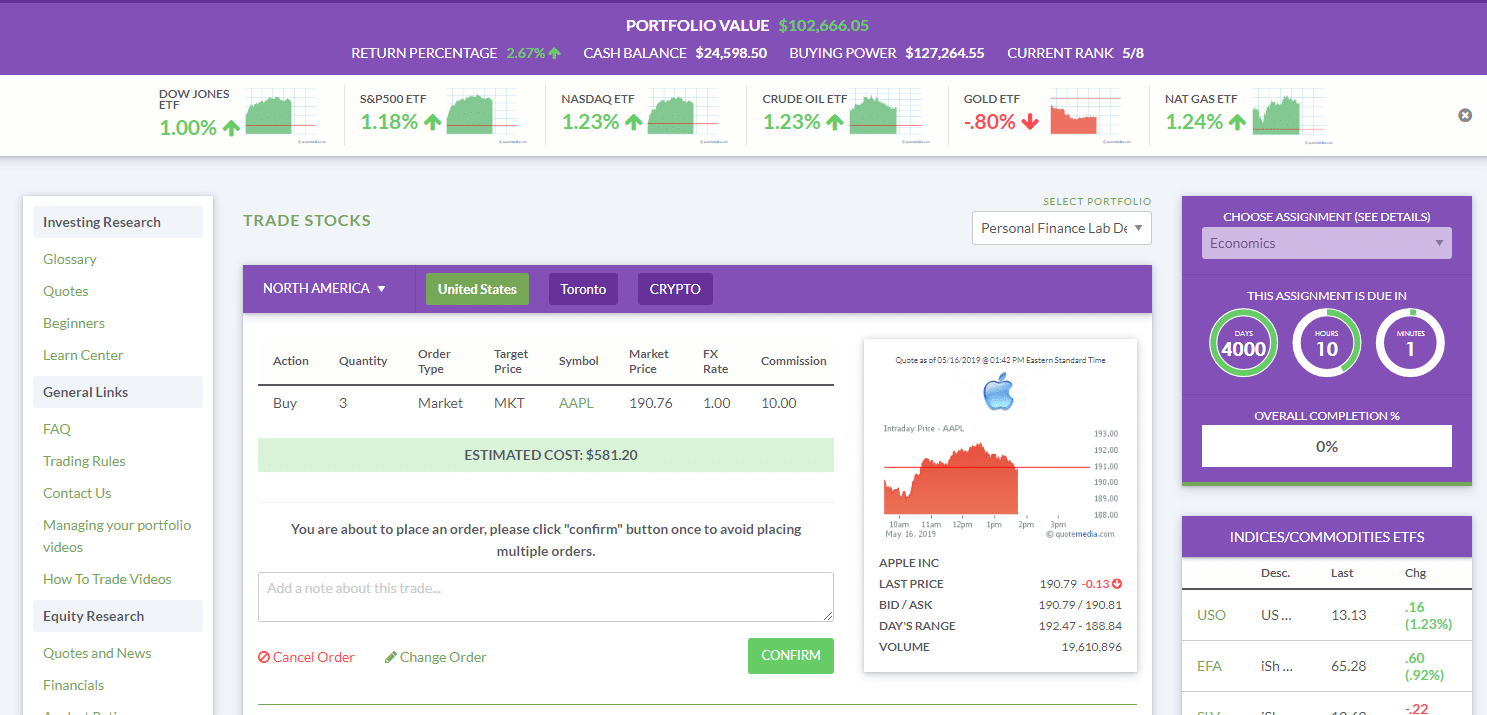
Teachers sometimes ask us why we anchor the curriculum and other activities on PersonalFinanceLab.com to our stock market simulation – so we want to tell you why!
Research Tested, Student Approved
 There are numerous studies showing how stock market games improve classroom outcomes in Personal Finance, Economics, and Business classes, with a body of literature going back nearly 30 years (coincidentally, not long after StockTrak, the makers of Personal Finance Lab, launched the world’s first web-based stock market simulation).
To get to the heart of the matter, there are two reasons why stock market games “work” in the classroom:
- It gives your students a chance to “get their feet wet” and see how concepts you cover in class are applied in the real world
- The class rankings of your game adds an element of competition that keeps kids paying attention day after day
We took this one step further with our “Trade Notes” feature, which directly encourages students to connect concepts you cover in class with the trades they make in their virtual portfolio.
Longer Games = Better Learning
 When we talk to teachers, we sometimes see teachers who are very comfortable investing on their own that still avoid stock games in class. Their reasoning is that the length of a class is not long enough for students to tell the difference between a “good” investor or “bad” investor. This criticism comes up most often when teachers are considering using a stock game just during their 2 week unit on Investments. And they are right!
This is why it is important to run your class stock game for as long as possible – giving your students the most possible exposure to the real ups and downs of the financial markets. We designed our platform to even let your class game go on long after your class ends – letting students continue to log in and manage their portfolio even over summer vacation (if you choose). This is why we tie everything together on PersonalFinanceLab.com with the stock simulation – to encourage teachers to hold longer sessions. This can mean having students dive in to the game before you cover every part of investing in class, but we make sure to build in plenty of tutorial videos and educational resources to help them hit the ground running.
A New Way To See The World
 Using stock games in class gives your students a whole new perspective on the world around them. By the end of your class simulation, your student’s thought process gets transformed from “I’m going to the store to buy some food” to “I’m going outside in my Nike (NKE) shoes, Wrangler (VFC) Jeans, and Abercrombie & Fitch (ANF) t-shirt, to the Bank of America (BAC) ATM to get cash, then drive my Ford (F) car rolling on Goodyear (GT) tires with BP (BP) gas to Walmart (WMT) to buy Charmin (PG) toilet paper, Crest (PG) toothpaste, Coca-Cola (KO), and Ben and Jerry’s (UL) Ice Cream.
This helps students take stock of how they spend their own money, and how businesses operate in the real world – fostering a new level of critical thinking and understanding of finance and economics. Why does Charmin toilet paper and Crest toothpaste have the same stock symbol?
Group Projects With Accountability

Stock games are also a perfect opportunity for group work in class. We take group projects seriously, and know it can be a challenge to properly credit each team member with their own work. That is why unlike other stock games, even if students work in teams, each participant will have their own separate login. You can see each student’s trading activities, assignment progress, quiz grades, and individual rankings separately.
If you choose to run your class game as a group project, you can move students into “Teams”, which aggregates their trades and portfolios into one big group – and also gives class Team Rankings. This lets students build group strategy and work together, while still maintaining the accountability of seeing exactly what each participant contributes.
Because They Need It
At the end of the day, very few of your students will become day traders, or even very active investors (but you definitely will see during the course of your game which have the aptitude!). The benefit of using stock market games for the average student is opening the window on a world that they absolutely need to understand in the 21st century. Not every student needs to understand how to read patterns in a stock chart, but EVERY student needs to be able to have an intelligent conversation with their financial adviser about their long-term goals, and what they want their investments to look like.
Giving your students exposure to the stock markets also makes the financial world far more accessible. This helps students understand that they can, and should, get started saving and investing as early as possible, rather than waiting until they feel “adult” enough to start putting money away. The trigger of “buying stock” in any person’s mind also fires the same triggers as spending on consumption. This means young adults tend to find “investing” a much easier pill to swallow than just the abstract concept of “saving”, since they have an actual asset they can see changing value in real-time. Showing how portfolio returns are moving every second of every day solidifies compound interest, encourages healthy saving habits, and helps make sure young people do not get left in the dust when it comes to building wealth early.
So if you haven’t already, start using stock market games in your classes!

CashCrunch 101 Expands Company’s Educational Personal Finance Simulations
For Immediate Release
(Montreal, Quebec) May 8, 2019 – Stock-Trak Inc., the leading provider of virtual stock market trading applications for the education and consumer markets, has recently acquired a personal budgeting simulation (CashCrunch 101) from Fortune and Venture, LLC.
“The addition of a customizable personal budgeting simulation is a perfect complement to our customizable stock simulation and personal finance curriculum. Beginning this Fall, both our PersonalFinanceLab.com and our StockTrak.com sites will have this budgeting simulation, allowing our K12 and university students to have a broader, financial educational experience” says Mark T. Brookshire, Founder and CEO of Stock-Trak Inc.
The personal budgeting simulation shows students how to create a monthly budget of income and expense items. Unlike other simple budgeting simulations based on relatively fixed settings over the duration of the class, the Cash Crunch 101 simulation has the ability to include much more variation in monthly income and expenses – making it a far more realistic exercise for recent graduates and college students for when they need these skills the most. Students manage the day to day activities of paying bills, deciding whether to pay cash or charge items, making decisions on payment plans and insurance, managing their credit card balance and credit score, and many more financial literacy topics.
“As more states are requiring students to have a Personal Finance Class, our sites are becoming perfectly aligned with the needs of educators. No other educational company provides a single website that offers a customizable budgeting simulation, a customizable stock market simulation, and customizable integrated lessons covering Personal Finance, Business and Economics,” says Mr. Brookshire.
The StockTrak.com website is the #1 portfolio simulation for university finance classes and trading rooms. StockTrak.com is used by over 1,100 professors each year and their 70,000+ students. StockTrak.com allows professors to customize a trading period for their class by selecting trading dates, initial cash balance, commission structure, position limits, and other trading parameters.
Stock-Trak’s high school sites (PersonalFinanceLab.com and HowTheMarketWorks.com) are used by over 20,000 teachers and their 500,000 students each year. PersonalFinanceLab.com is similar to StockTrak.com but includes over a library of over 300 integrated Personal Finance, Business and Economics lessons aligned to national standards for high school students.
About Stock-Trak Inc.
Stock-Trak offers a variety of virtual trading applications for both the academic and corporate markets. Our family of virtual trading and stock market education sites (StockTrak.com, PersonalFinanceLab.com, HowTheMarketWorks.com, WallStreetSurvivor.com, NationalSMS.com, and Investing101.net) helps over 750,000 students and adults each year learn how the stock market works and become more confident in their investing decisions. Our robust virtual trading platform can also be customized to meet the needs of banks, brokerages, media companies, and other financial websites to enable them to offer their clients a virtual stock trading experience. Founded in 1990, our virtual trading platforms and websites have helped over 8,000,000 individuals learn about the markets and practice their trading skills.
Contact:
Mark Brookshire at (770) 337-7720
Mark@StockTrak.com
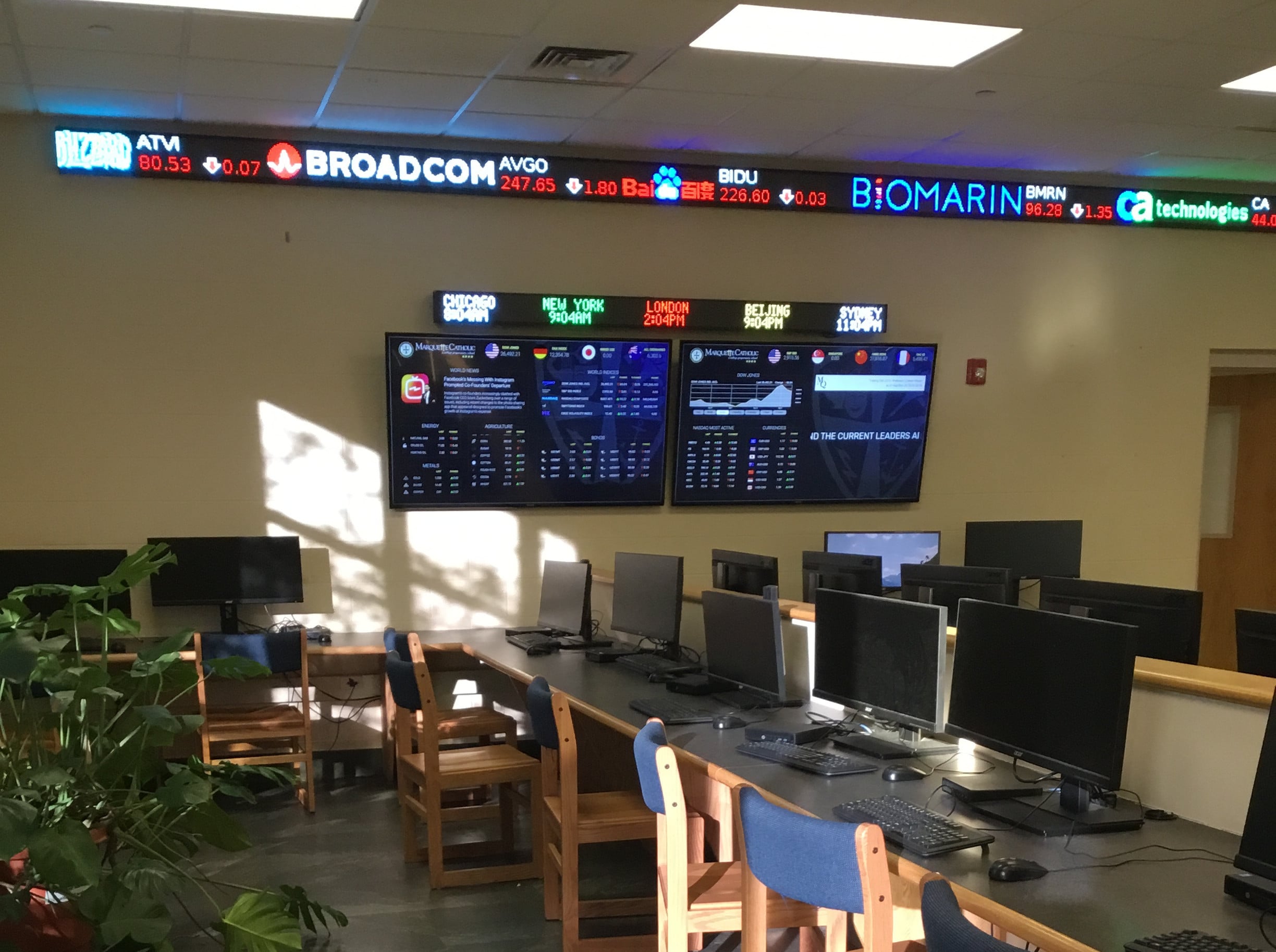
Marquette Catholic High School in Michigan City, Indiana was one of the first schools we worked with to transform one of their classrooms into a full Financial Literacy Lab.
The Marquette program utilizes the Personal Finance Lab simulation and curriculum both in their Economics classes and their Global Trading classes, focused on investing and finance.
The Lab Space

The Marquette lab is fitted with a wall-to-wall LED ticker along the ceiling, displaying 100 NASDAQ stocks. They also have a second smaller ticker displaying the time in some of the major markets from around the world that their Global Finance class focuses on – Chicago for futures and options, New York for American equities, London for European equities and futures, along with the Beijing and Sydney exchanges, all of which are available in the Personal Finance Lab trading platform.

They also use two LCD displays, which alternate between live quotes for Forex and Commodities, a stock watchlist, live market news, live updating stock charts, and a streaming leaderboard of their class rankings (you can see more of what you can add to your displays on our blog post here).
The Classes
In the Lab itself, Marquette holds their Global Finance classes, Intro to Business classes, and Microsoft Office classes. The Intro to Business and Microsoft Office classes do not currently take advantage of the Personal Finance Lab website, but the streaming rankings are always a great discussion point, as they see their friends and classmates moving up the leaderboard.
Marquette is a 1-to-1 iPad school – outside the lab space itself, they also use the PersonalFinanceLab website, curriculum, and simulation in their Economics classes. While these classes do not meet in the Lab itself, they are still able to utilize all the PersonalFinanceLab resources from anywhere with internet access – making it perfect even for homework assignments.
Over the last 12 months, the total usage of the PersonalFinanceLab website has increased from about 15 students a semester to over 60, as more teachers at the school find ways to incorporate the platform in their lesson plans.
Using Personal Finance Lab With The Global Trading Class
The Global Trading class was the first to utilize the stock game in their classes. This CTE-focused course has between 10 and 20 students a semester, with an emphasis on researching investments.

Snapshot of the Financial Statements Research tool
The class also utilizes the built-in Assignments feature to get students familiarized with investing and building a portfolio. Each week, students are given a new “Assignment”, borrowing both from the included stand-alone lessons, and integrated Investing 101 Beginner’s Investing Course.

Snapshot of a student progress report – names obscured for privacy
So far, a group of 9 students this semester have placed over 550 trades between them (that’s over 60 trades each!), and we are barely through the midterms!
Since the Global Trading class meets in the Lab itself, the class rankings are broadcast to the LCD screens, and the students from other classes can monitor the standings of their friends – with a lot of interest getting generated to start a school Investing Club!
Using Personal Finance Lab With The Economics Class
Starting this semester, Marquette is also using the PersonalFinanceLab website in their Economics class. This class does not meet in the lab itself – students typically log in using their iPads elsewhere at school (or at home for homework).
The economics class swaps intensive investing for more of a focus on the lessons and curriculum (the class of nearly 40 students have about 700 total trades).

Snapshot of the Teacher Dashboard
The economics teacher structured the class Assignments to start small and work big – the first 2 weeks focus on stocks and investing (to get introduced to the concept of managing a portfolio) before adding in Economics and Personal Finance lessons, tailoring the week’s assignments to align with the topics covered in class. In all, there are 9 separate assignments, arranged week by week, with an average of 3 topics covered in each Assignment.
The addition of the Economics class greatly increased the reach of their Lab resources throughout the school, from a CTE-specific resource used by the business classes to an invaluable resource used by the social studies department as well (and a much wider audience of students).
Looking To The Future
Since launching the Lab, there has been a huge boost in interest for finance and investing across the school, and they hope to launch a new Investing Club later this year. Their new business teacher is also looking to use PersonalFinanceLab.com as a more active part of her lesson plans next semester.
If you are interested in getting more information, or ordering PersonalFinanceLab for your school, be sure to fill out the information request below!
[contact-form-7 id=”17211″ title=”Request More Information”]