Good Till Date Order Terms

If you have ever placed a limit or stop order, you have see the “Good Till Day” order term on the trading menu:

A “Good-Till-Day” order is simply one that will cancel at the end of the trading day if it does not fill. So, for example, if you have Apple stock, and today you know they are releasing an Earnings Release, you know their price is probably going to change quite a bit today.

If you are worried about losing value, but don’t want to stare at the ticker all day, you can put a Sell Stop order at the price you would want to dump it at if the price starts falling, and set the order to cancel at the end of today.

If the price does start falling, the order will execute as soon as it hits your price threshold. If the price doesn’t fall, the order will cancel at the end of the day.

If you place a Good Till Day order after the market has closed, it will stay open until the end of the next trading day.

Why Use It?

Many people use Good Till Cancel orders, will will stay open until either they execute, or they cancel the order manually. One disadvantage to this is that you cannot execute a Market Order on stock you have an outstanding Limit Order on; this means that if you have a Stop order placed on your Apple stock, but the price goes up and you want to sell it, you would first have to cancel your Stop order before you can make a Sell market order.

Generally, people put Good Till Day orders on many Limit Orders for stocks they are hoping have a big spike during the day, and stop orders when they fear some market news may come out that will cause a long-term decrease in a stocks price.

How Do I Build a Diversified Portfolio?

Understanding what it means to build a diversified portfolio is one of the first concepts a new investor needs to understand. When talking about stocks, diversification means to make sure you don’t “put all of your eggs in one basket.”
what does it mean to diversify a stock portfolio

What Does It Mean To Diversify?

Simply put, to “diversify” means to make sure pick a variety of stocks in different industries. History shows that at different points in time different parts of the market outperform the others. At times the technology stocks perform well, sometimes its the banking stocks, sometimes its international stocks, sometimes its defense, sometimes its medical, etc. Since it is difficult to predict which industry is going to perform the best in the future, the best thing to do is to just own a few stocks in each industry so that you always own some of the top performing stocks. This way, over time, your portfolio returns are less volatile and, hopefully, always positive.

With real money, most advisers would recommend you have about 30 stocks in your portfolio, but with your virtual portfolio, you should try to have at least 10 stocks in your portfolio and those stocks should be from at least 5 different industries.

Why Do People Diversify?

Investors diversify because it helps to stabilize a portfolio’s return, and the more stocks you own the more likely you are to own a stock that ends up doubling or tripling in price. For example, if you own an equal dollar amount of 10 different stocks and 9 of them stayed at the same price and one of them doubled, your portfolio would be up 10%.

People invest in the stock market because they want to make more money than they could make if they just left the money in the bank. Investors especially do not want to LOSE money. “Capital Preservation” is the idea that you want to preserve the money you have invested; investors never want to be in a position where it would have been better to not have invested at all. So to make sure that investors are protected from price swings, and to help simplify managing their portfolio, investors try to maintain a fully diversified portfolio.

How Does It Work?

When you diversify your portfolio, you make sure that you never have “too many eggs in one basket.” If one of the stocks you have invested in starts to go down in price, you have limited your exposure to that stock by only having a smaller percentage of all your assets in that stock. For beginners, this can mean having no more than 20% of your portfolio in any one stock, ETF, or Mutual Fund. With real money, as you invest more money into your portfolio and as your portfolio grows in value, you should keep buying different stocks so that eventually you have less than 10% of your money in any one stock.

Diversification means that, for example, if you are investing in stocks in the Banking, Energy, Healthcare, Manufacturing, Luxury and IT industries, you would try to spread your money as evenly as possible across these industries. This way, if the Energy sector as a whole starts to have problems (for example, if the price of oil falls quickly), you don’t have to worry about your entire portfolio, and you have limited the losses you are exposed to from a single market shock.

Types of Diversification

There are 3 main types of diversification to think about as you first start investing:

1. Security Type Diversification

This means owning a variety of investments like real estate, stocks, bonds, gold/silver and cash. Yes, cash is an investment! For many years, the rule of thumb was to subtract your age from 100, and have that percentage of your overall value invested in stocks (so if you are 18 years old, you would invest 82% of your portfolio in stocks). The idea is that over time stocks have consistently outperformed other investments so therefore the younger you are, the more you should be invested in stocks. As you get older and closer to retirement when you will rely on your investments, you have less time and you should prefer the low but consistent returns of bonds and cash. Another way of putting this is that younger investors are more risk-tolerant and older investors are more risk-adverse.

This line of thinking is getting to be a little out-dated, with the rising popularity of ETFs, more choices for mutual funds, and the ability to invest in riskier bonds, but the idea of making your portfolio more risk-averse over time can still be a good idea.

2. Sector Diversification

To diversify by sector means that you would split your investments across companies based on the type of business they do; “Energy” companies would be oil producers, electricity companies, and companies that specialize in transporting materials needed for energy production. “Manufacturing” companies are firms that build everything from toys to cars to equipment to airplanes.

The idea behind sector diversification is that if there is some larger trend that negatively affects an entire industry, you would want to make sure not all of your investments are affected at once. For example, low oil prices caused a general decline in energy stocks (of course, with some companies still growing, and others hit especially hard).

3. Stock Diversification

This is the most basic type: just making sure you don’t have too much money in any one stock. For example, if you want to put 10% of your money in the banking sector, that doesn’t mean you should put 10% of your money in Bank of America. You should have a few bank stocks in case one of your bank stocks is poorly managed and it goes bankrupt. Individual stocks are more volatile than sectors, and sectors are more volatile than entire security types, so this is the core of all diversification.


Ways To Stay Diversified

Exchange Traded Funds (ETFs) and Mutual Funds are good places to start investing because these securities are diversified themselves. ETFs and mutual funds take money from investors and invest that money in a variety of securities that meet the stated objective of that fund. Some funds invest in large companies, some in European companies, some in utilities, some in commodities like gold and oil, etc. For example the ETF FHLC is a collection of Health Care stocks. If you are looking for an easy way to invest in a particular industry, without having to research which particular companies you want to choose, this is a quick route to take.

Warning About Over-Diversification

Diversifying is good, but don’t go too far! If you start diversifying too much, your portfolio starts to get “thin”; you might not lose much if one company starts to go down, but you also won’t gain much if another company you own starts doing very well. Beginners should usually build their first portfolio with between 8 and 10 stocks, ETFs, or Mutual Funds at a time. You can always switch the investments you have, but try to avoid having too many, or two few, investments at once.

Over-Diversification can also make it more difficult to manage your investments; if you are not able to follow up with company news and stay on top of your investments, things could start turning bad, and you could start losing one before you even know why!


Pop Quiz!

[mlw_quizmaster quiz=12]

Sharpe Ratio for Beginners

Introduction

The Sharpe Ratio is an important tool for evaluating a stock, or a portfolio, based on how risky it is to get a higher return. You can use the Sharpe Ratio to determine how consistent the returns of a stock or portfolio are, so you can determine if the returns are stemming more from wise investing, or “getting lucky”.

Example

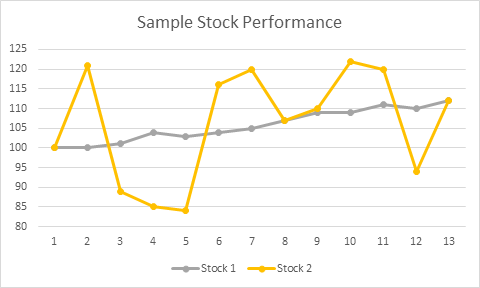
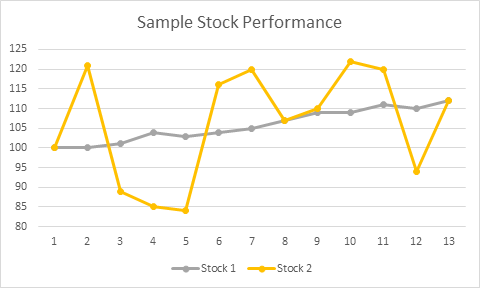
Look at the performance of these two stocks:

Sharpe-Ratio-Example

On the first day we track and the last day, these two investments have the same value. However, Stock 1 is very consistent in its returns, while Stock 2 has a very wide range of variance. In this example, if an investor holds both these stocks for 13 days, their return would be the same for both.

However, imagine if the investor sold both stocks on Day 11. The return for Stock 2 would be much higher! But if they waited just one more day, on day 12 Stock 2’s value crashed down, so Stock 1 looks like a better choice.

How To Use The Sharpe Ratio While Investing

When saving and investing, the goal should always be consistent returns and capital preservation; you do not want to make risky moves that could wipe out all the savings you put in. A wise investor would always prefer Stock A, since they do not need to worry about “timing the market”, instead they can focus on building a strong long-term portfolio, instead of focusing on when to buy and sell some “hot stocks” at the best prices.

In this example, Stock A would have a much higher Sharpe Ratio than Stock B, because it has much less variance for the same return at the end of the period we looked at.

You can expand this concept to an entire portfolio; if your portfolio value swings up and down a lot, but you end with a higher value, you will have a much lower Sharpe Ratio than someone else who may have a lower final return, but their portfolio value grew at a more consistent rate throughout the trading period.

BOTH measures are very important on determining which portfolio did the “best”. A key to investing is balancing risk and reward; a Sharpe Ratio between 1 and 2 is “good”, between 2 and 3 is “Great”, and greater than 3 is “Excellent”. However, if you are comparing two portfolios with a similar Sharpe Ratio, the standard Return will tell you more about which was  a wiser investment.

The head-and-shoulders pattern is one of the most popular chart patterns in technical analysis. It’s popularity is mainly attributed to the fact that it easy easier to spot than other patterns. It’s name comes from what the pattern looks like: A head and two shoulders (and a neckline).

The pattern indicates a reversal is likely to happen after the pattern has been completed. The head and shoulders pattern comes in two forms, top and bottom. The bottom head and shoulders pattern is very similar to the double bottom pattern or triple bottom pattern and are similar in many ways.

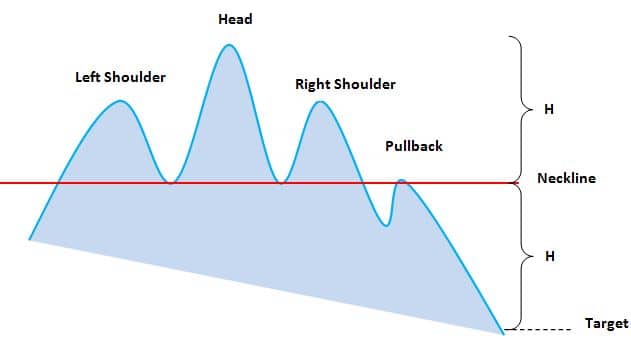
If we look at a graphical representation of the Top Head and Shoulder Pattern we can see that the pattern is composed of two shoulders, a head, and a neckline:

HaS1

The pattern does not need to look exactly like this, but it does need to follow a couple guidelines:

  1. The pattern must start with an upward trend and have a head that is higher than the two shoulders.
  2. The shoulder heights should also be roughly the same height, though the troughs can be different heights (ascending troughs are more desirable, that is to say the second trough is higher than the first trough).

In this graph, H stands for height and, in general, we can set our target price (to exit the position) roughly the same height between the difference of the neckline and the top of the head. The downward trend is likely to hit the target price of the same difference H between the neckline and the target. This is a good place to put a stop loss order.

Another thing to note is that the pullback is not necessarily always part of the pattern, it only happens about half the time. It does not have to go over the neckline, (it is even preferable that it does not) and should not be there long, or pass the neckline by a large amount. Top patterns are fairly reliable and take a downward exit (past the neckline) in approximately 90% of cases.

Here is also an example of a Bottom Head and shoulder without pullback.

has2

This chart is almost identical to the Top and head shoulder and follows the same rules but inverted.

Volume:

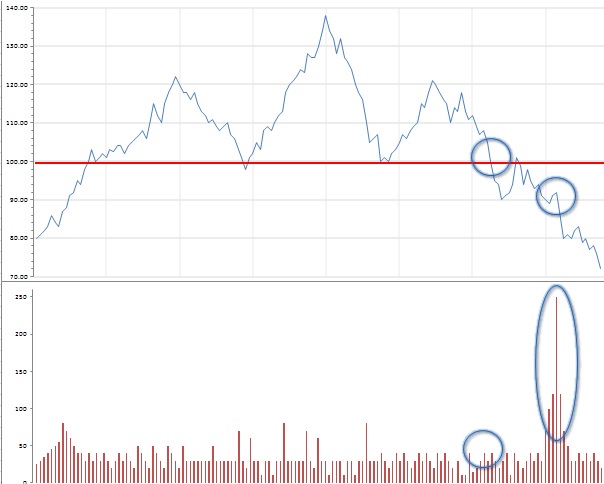
The underlying volume is a key indicator in successfully trading this pattern. Without volume the pattern is considered weak at best and is far more risky to trade.

hsa0

Above, we can see that when the stock first crosses the line at the first bubble many would be tempted to trade the stock as it is fulfilling the pattern. That may have been very risky as it could simply have been a momentary decline without much strength. The far safer and more important time to trade is when the stock continues with it’s support and trades down with significant volume. This is a far stronger indication of trend.

To summarize, head and shoulders are one of the first patterns students learn in technical analysis. It is important to not only look at the pattern but to have a strong volume when breaking through the neckline or various supports and resistances.

The Moving Average Convergence-Divergence (MACD) indicator is one of the easiest and most efficient momentum indicators you can get. It was developed by Gerald Appel in the late seventies. The MACD moves two trend following indicators and moving averages into a momentum oscillator by subtracting the longer moving average from the shorter moving average. The result is that the MACD gives the best of both worlds: trend following and momentum. The MACD is continually changing above and below the zero line while the moving averages come together, cross and diverge. Traders can search for signal line crossovers, centerline crossovers as well as divergences to generate signals. For that reason the MACD is unbounded, it is not necessarily useful for identifying overbought and oversold levels. Note: MACD is pronounced as either “MAC-DEE” or “M-A-C-D”. Take a look at the sample chart with the MACD indicator in the lower panel:
MACD
Calculation

MACD Line:(12-day EMA – 26-day EMA)

Signal Line:9-day EMA of MACD Line

MACD Histogram:MACD Line – Signal Line

The MACD Line is the 12-day Expotential Moving Average(EMA) minus the 26-day EMA. Closing prices are used for these moving averages. A 9-day EMA of the MACD Line is plotted with an indicator to function as a signal line and identify turns. The MACD Histogram denotes the difference linking MACD and its 9-day EMA, the Signal line. The histogram stays positive when the MACD Line is above its Signal line and negative when the MACD Line is below its Signal line. The values of 12, 26 and 9 are the typical setting used with the MACD, but other values can be exchanged depending on your trading style and goals.
Interpretation

The MACD is about the convergence and divergence of the faster and slower moving averages. Convergence occurs when the averages move towards each other. Divergence occurs when the averages move away from each other. The shorter moving average is faster and more responsive. The longer moving average is slower and less reactive to price changes. The MACD Line moves above and below the zero line – also known as the centerline. The direction, of course, depends on the direction of the moving average cross. A positive MACD is when the shorter moving average crosses above the longer moving average. As the shorter moving average moves further above the longer moving average (diverges) this means the stock price upside momentum is increasing. When the short moving average drops below the long moving average, it demonstrates that the stock shows a downward momentum.

MACD

The yellow area shows the MACD Line in negative territory as the short line is below the long line. In this chart, the crossing occurred at the end of September (see the black arrow) and the MACD moved diverged further into negative territory as the short moving average moves further away from the long moving average. The orange area highlights the period of positive MACD values, which is when the short moving average moves above the long moving average. Notice that the MACD Line stayed below during this period (red dotted line). The red line means that the distance between the slow EMA and long EMA was less than 1 point, which is not a much of a difference.
Divergences
Divergence forms when the MACD line moves away from the price line of the stock. Bullish divergence are formed when a stock’s price records a lower low and the MACD hits a higher low. The lower low for the stock confirms the downtrend, but the higher low for the MACD line shows less downward momentum. Downside momentum still outpaces the upward momentum as long as the MACD remains negative. When the downward momentum slows, it can foreshadows a trend change or a upside rally. The next chart uses a Google (GOOG) chart with a bullish divergence for Oct-Nov 2008. Notice that there were clear lower troughs as both Google’s price line and its MACD line bounced in October and late November. Notice that the MACD line formed a higher low as Google’s price line formed a lower low in November. MACD is signalling a bullish divergence as the signal line crosses over in early December. Google’s price line confirmed the reversal with a breakout.
MACD
A bearish divergence forms when a stock price records a higher high and the MACD line forms a lower high as the faster MA crosses the slower MA. The higher high for the stock price is quite normal for uptrends but when the MACD shows a lower high, this illustrates less upside momentum. Even though upside momentum may have declined, upward momentum is still out performing downside momentum as long as MACD is positive. Declining MACD upward trends can foreshadow a trend reversal or forecast a large price decline. Below we see a chart for Gamestop (GME) with a large MACD bearish divergence from Aug to Oct. The stock chart demonstrates a higher high above 28, but the MACD line falls short of the previous high and shows a lower high. The following MACD crossover is bearish. On the GME price chart, notice how the support is broken and turned into resistance on the following bounce in Nov as we see with the red dotted line. This momentary price bump provided another chance to sell or sell short.
MACD
We should be careful interpreting a MACD divergences. Bearish divergences are quite common for strong uptrends as do bullish divergences during a strong downtrend. Price uptrends quite often begin with a strong advance which will produce strong upside momentum for MACD. Even though we can see that the uptrend continues, it continues at a slower pace than started the uptrend which causes the MACD to decline. Even when upside momentum is not as strong, upside momentum still outpacing the downside momentum as long as the MACD line is above zero. We can see the opposite occuring when a strong downtrend begins. The next chart shows SPY which is the S&P 500 ETF. This chart shows four bearish divergences from Aug to Nov 2009. Despite the slower upside momentum, SPY’s price line continued higher because the uptrend was strong. Notice how SPY’s price continues a series of higher highs as well as higher lows. Remember, as long as MACD is positive the upside momentum is stronger than downside momentum.
MACD
Conclusions

MACD is a special indicator as it brings together both momentum and trend in one technical indicator. This unique combination of trend and momentum can be used with daily, weekly and monthly charts. The standard moving average lines for MACD use the difference between the 12 and 26-period EMAs. Chartists that are looking for a more responsive indicator can use a shorter short-term moving average and a longer long-term moving average. A MACD(5,35,5) is far more responsive than the more standard MACD(12,26,9) and can be a better indicator for weekly charts. Chartists looking for a less sensitivity indicator can use lengthening the moving averages. A less responsive MACD will still oscillate above/below zero but the frequency of the crossovers centerline and signal line crossovers will decline. Finally, remember that MACD is calculated using the difference between two moving averages. This means that the MACD line is dependent on the price of the stock. For example, the MACD line for a $20 stock may move from -1.5 to 1.5 while the MACD line for a more expensive $100 stock can move from -10 to +10. You cannot compare the MACD charts for several stocks with far different prices. If you want to compare the momentum of various stocks you should probably use the Percentage Price Oscillator (PPO) rather than MACD.

Fixed income analysis is the process of evaluating and analyzing fixed income securities for investment purposes.

Fixed Income represents a distinct asset class. Investors and analysts perform fixed-income analysis to

Evaluate the risk characteristics underlying debt securities and to assess the capacity of the borrowing entity to meet its financial obligations (credit analysis)
Identify which debt securities represent attractive investment opportunities
Determine the appropriate valuation (or value) of debt securities in the market
Compare the investment characteristics (e.g., risk and return) of debt securities with each other and with other asset classes such as stocks, derivatives, real estate, or other.

Features and Characteristics of Fixed Income

Some important features of fixed income securities include

Government versus Corporate Bonds
On a very broad level, fixed income securities can be categorized as
Government
E.g., US Treasuries
Corporate
Bonds issued by public corporations
Issuer
The party, entity, or corporation that sells the debt obligation to investors
This is the borrowing entity
Borrower or Debt Security Holder
The party that has purchased the debt obligation (i.e., the lender)
Principal or Face Value
The amount borrowed which has to be repaid in full at a future date
Interest
The interest rate that is applied to the principal borrowed amount
Periodic Payments
The periodic dates during the life of the debt for which the borrower is responsible for making regular payments of interest or principal (or both)
Maturity
The length of time from the inception of the debt to its termination
Fixed-Income Options
Options embedded within fixed income securities giving the lender or borrower the right to either redeem the obligation
Callable Bond – the issuer of the debt obligation retains he right to redeem the bond before its maturity date
Putable Bond – the holder of the debt obligation (the borrower) retains the right to redeem the bond before its maturity date
Convertibility
Convertible debt securities allow the debt security holder to convert the debt obligation into common equity

Introduction

The Black-Scholes formula is the most popular ways to calculate the true price of an option.

It is easy to calculate the intrinsic value, but the extrinsic value can be very tricky to calculate.

Black Scholes is used for calculating two types of options.

Options on stocks
Stock Options.

Fisher Black, Robert Merton and Myron Scholes originally created the Black Sholes formula in 1973.

Black Sholes uses all the ingredients that go into option pricing:

The price variation of the stock,
The time value of money,
The option’s strike price
The time to the option’s expiry.

What does the Black-Scholes Model Calculate

Securities and options that are widely traded follow a price change known as “a Geometric Brownian motion with constant shift and velocity”. Prices for options and stocks follows a normal distribution with constant standard deviations and constant growth. If you find that the Black-Scholes calculated price is greater than the current price, the formula suggests that the option should be bought and vice-versa.

Formula

The Black-Scholes formula:

C = S N(d1) – X e-rT N(d2)

where
C = price of the call option
S = price of the underlying stock
X = option exercise price
r = risk-free interest rate
T = current time until expiration
N = area under the normal curve
d1 = [ ln(S/X) + (r + σ2/2) T ] / σ T1/2
d2 = d1 – σ T1/2

σ = Standard Deviation of normally distributed stock returns

We can calculate the price of a put option with the Put-call parity:

P = Xe-rT N(-d2) – S N(-d1)

There are a few assumptions that need to be considered when calculating the price of a stock over a period period.

The Stocks price is normally distributed and so the volatility of the stock price with respect to the market is relatively constant over time.
The stock used do not pay dividends
The options can only be cashed in on expiration.
We assume that the option does not have commissions or transaction costs.
The interest on bonds and risk free rates is constant during the period.
We cannot predict market directions and markets are efficient.

Limitations of the Black-Scholes Model

The model assumes that the risk-free rate and the stock’s price volatility are constant over time. It typically misinterprets the price of options for stocks that have high-dividends.

Conclusion

The Black-Scholes model is used to calculate the mathematical value of an option. For more information and to see the weakness of this pricing model please see this Black Scholes Option Pricing Model link.

If you are ready to open a real brokerage account to start trading options, please look at this list of the best option brokers and their current offers and promotions.

Definition:
The simultaneous purchase of a security on one stock market and the sale of the same security on another stock market at prices which yield a profit.

In Depth Description:
In economics and finance, arbitrage is the practice of taking advantage of a price difference between two or more markets: striking a combination of matching deals that capitalize upon the imbalance, the profit being the difference between the market prices. When used by academics, an arbitrage is a transaction that involves no negative cash flow at any probabilistic or temporal state and a positive cash flow in at least one state; in simple terms, it is the possibility of a risk-free profit at zero cost.

In principle and in academic use, an arbitrage is risk-free; in common use, as in statistical arbitrage, it may refer to expected profit, though losses may occur, and in practice, there are always risks in arbitrage, some minor (such as fluctuation of prices decreasing profit margins), some major (such as devaluation of a currency or derivative). In academic use, an arbitrage involves taking advantage of differences in price of a single asset or identical cash-flows; in common use, it is also used to refer to differences between similar assets (relative value or convergence trades), as in merger arbitrage.

People who engage in arbitrage are called arbitrageurs — such as a bank or brokerage firm. The term is mainly applied to trading in financial instruments, such as bonds, stocks, derivatives, commodities and currencies.

Over-The-Counter (OTC) Stocks

Most investors are familiar with NASDAQ, the NYSE (New York Stock Exchange), TSX (Toronto Stock Exchange), and most other large national stock exchanges. However, there are also thousands of companies that want to sell shares to the general public, but are not able to sell on these exchanges. Stock traded on these “Over The Counter” exchanges are known as OTC stocks.

Why do companies trade OTC?

Major stock exchanges have very specific rules about being listed, along with specific costs involved to stay listed once originally posted. Some of these reasons include:

  1. Minimum Stock Price
  2. Earnings must be above a certain threshold ($11 million per year for the 3 consecutive years for NASDAQ, for example)
  3. Cash flow and Market Capitalization minimums
  4. Corporate filing requirements

If a smaller company wants to list its stock for sale to the public, they can offer their stock on OTC exchanges to avoid some of these restrictions. Medium companies that shrink, and no longer maintain the minimum requirements, can also be “de-listed” from a major exchange and have its shares continue trading on OTC exchanges as well.

What is required for a company’s stock to trade OTC?

While the minimum market capitalization, revenue, and cash flow requirements are not an issue for OTC stocks, they ARE required to make similar SEC filings to be listed. These include financial statements and information on the company management.

What is the main drawback of trading OTC stocks?

OTC stocks are often very small companies with very small market capitalization. This means that they often have extremely low, or even zero, annual revenue or assets, making them extremely risky investments. “Penny Stocks” exclusively trade on OTC markets, and are often the vehicle for stock fraud schemes, including “Pump and Dump”, where a individual for firm buys a large amount of stock, starts a marketing campaign to convince other investors that stock is set to rapidly gain value, and then dump their stock, leaving other investors with worthless stock that had its price inflated by hype.

OTC stocks also have a major drawback in that they are very, very thinly traded (often less than 100 shares per day). This means that the bid/ask spread is very high, making the “last price” hours, days, or even weeks old, since it so rarely actually trades between investors. This means once an investor purchases the stock, it can be extremely difficult to actually sell it, since there may not be anyone willing to buy it from you.

Are there any advantages to OTC stocks?

There can be very good reasons to buy OTC stocks as well. For example, some very small start-up companies will sell their first set of shares on OTC, and as they grow eventually be listed on NASDAQ or another major exchange. The investors who found and invested while it was still a micro-cap potentially could make very high rewards. For example, in 2015 InVivo Therapeutics (NVIV), a medical technologies company, was listed on OTC before it was able to be listed on NASDAQ. In April 2015, they officially transitioned to the NASDAQ, with their OTC shares becoming NASDAQ shares, and its investors seeing a large gain in value as more investors were made aware of, and became interested, investing.

There are also other advantages: foreign companies may not be willing to list a large number of shares on a large national exchange, but a small number of shares may be traded on OTC exchanges. For example, Nintendo and Heinekin, which trade on the Japanese and Dutch exchanges respectively, have a small number of shares that trade in the US on OTC markets (as NTDOFTO and HKHHF respectively). The price on the OTC markets generally matches the price on their own domestic markets, although there is often a much larger bid/ask spread due to lower volume, and price differences stemming from currency conversion.

The most difficult thing people think of with personal finance is building your monthly budget, and sticking to it. There are tons of different expenses and payments to consider, so we put all the big ones in one place! This tool will also help you see exactly how much you can set aside for savings every month!

If you have already used our Buy Vs Lease Calculator to see how much your home payments will be, use this value to build a budget around the expenses you know you will have!

Once you have built a monthly budget, and see how much you can save, take that to our Saving To Be A Millionaire Calculator to see how long it will take to earn $1,000,000 with that saving level!

Make sure you click the VIEW REPORT button below!


Take The Quiz!

[qsm quiz=2]

The first BIG purchase many people make is when they buy their first car. This calculator will help show the impact of many of the biggest factors people need to consider when taking out their first loan for a big purchase.

If you have used our Credit Card Payment Calculator to see how minimum payments on small loans are made, you might want to start to think what happens when you make bigger purchases, with bigger loans.

Once you have found the payments you can make on a car you can afford, check out our Buy Vs Lease Calculator to start seeing when actually buying a big purchase is REALLY cheaper than renting!

Make sure you click the VIEW REPORT button below!


Take The Quiz!

[qsm quiz=3]

Credit Cards! These are usually the first “loans” a person takes out, and the first monthly payments! Tens of thousands of young people dig themselves deep into credit card debt before they even realize it, so have fun with this payments calculator to see how much these bits of plastic REALLY cost!

If you have already used our Compound Interest Calculator, try using the same interest rate you hoped to save at as the same amount your credit card company charges. Then double it to get a more realistic picture!

Once you have seen the impact that taking out loans can have at different interest rate and payment schemes, check out our Car Loan Calculator to see how you can budget a big purchase without losing your wallet!

 
Make sure you click the VIEW REPORT button below!


Take The Quiz!

 
[qsm quiz=4]

Compound Interest Calculator

The first thing to consider with all personal finance is the idea of compound interest! This is what separates the “Piggy Bank” savers from the Warren Buffets; making use of interest compounding is how you can really make your savings grow!

If you have already used our Investment Return Calculator, you can use this calculator to see how different types of compounding will affect your overall return!

Once you can really see the impact of interest compounding and growth, try out our Credit Card Payments Calculator to see what happens when you are paying interest, not earning it!


Make sure you click the VIEW REPORT button below!


Take The Quiz!

[qsm quiz=6]

Advanced Investment Return Calculator

Find out the difference between Simple and Compound Interest! See how big an impact your tax rates and inflation have on your savings over time!

If you have already used our Becoming A Millionaire Calculator, you can use your targeted Expected Investment Return numbers in this calculator to see how to make that return happen!

Once you see how moving the rate of return affects your profits, try checking out our Compound Interest Calculator to see how the different types of compounding can have a big impact on the final return!

Check out some of our other calculators:

Make sure you click the VIEW REPORT button below!


Take The Quiz!

[qsm quiz=7]

Want to be a millionaire? Everyone does, but do you know how much you need to save and what rate of return you need to get on your investments to reach that million level? This financial calculator helps you learn how your savings grows over time and how sensitive your final savings balance is to the rate of return you are earning.

  • Did you know if you start saving $100 a month on your 18th birthday and put that money in a piggy bank, by the time you are 65, you will have $56,400 in your piggy bank (and $0 in interest).
  • But if you put that $100 a month in a savings bank account that paid 3% interest, then by the time you are 65, you will have $122,425 in your bank account. That’s the $56,400 you saved plus $66,025 interest paid by the bank to you.
  • That’s a big improvement, but if you could earn 8% return on your $100 monthly savings, then by the time you are 65 you will have $566,754 in savings! This example uses 8% because that is the historical return of the stock market.
  • Better yet, if you save twice the amount per month ($200 instead of $100) you will have exactly twice the value at age 65, or $1,133,508.
  • So how do you become a millionaire? Start saving $177 a month on your 18th birthday, earn 8%, and have a bank account worth $1,003,155 on your 65th birthday.

If you have used our Home Budget Calculator, you can use your monthly savings plan with this tool to see how long it will take to reach your savings goal!

Once you see how big of an impact the Expected Rate of Return has on your savings growth, take a look at our Advanced Investment Return Calculator to see more details on how to make those big returns happen!

Make sure you click the VIEW REPORT button below!


Take The Quiz!

[qsm quiz=5]

Buy Vs Lease Calculator!

The biggest expense most people have is the place they live, one of the biggest decisions young people face is whether to buy their home, or continue to rent. Conventional wisdom says that buying will pay off in the long term, but believe it or not this is not always the case!

If you have used our Car Loan Calculator to see what kind of loan you can afford with your budget, you can use the same numbers you ended with there to get a great idea of where your personal cut-off would be between whether to Buy or Lease!

Once you know what kind of home you are getting, and how much you would have to pay a month, check out our Home Budget Calculator to build a budget around your expenses, and determine how much you are able to save every month!

Make sure you click the VIEW REPORT button below!


Take The Quiz!

[qsm quiz=8]

Use this calculator to find Net Present Value, based off expected annual growth, cash flow over a variable number of years, and separations of cash flow between investments and operations.
This calculator will help you determine the attractiveness of a company by seeing how much it would be worth if you wanted to buy it today! You can start by taking an existing company and filling in the company’s costs (or Cash flow from Operations) and what the company makes (or Cash flows from Investing). You can then play around with the Weighted Average Cost of capital, expected annual growth and see what the company is worth today!


Pop Quiz

[qsm quiz=76]

Use this calculator to calculate an Internal Rate of Return! Inputs include regular deposits and withdrawals, up to 20 irregular withdrawals, and whether to calculate based on deposits at the beginning or end of the period.

The Internal Rate of Return or “IRR” is an important concept in math, finance and economics. It is frequently used to find out how attractive an investment is. The IRR will give you a measure of how much, in percentage terms, the yield will be for the given investment. The IRR is calculated by setting the Net Present Value to zero.

The Calculated IRR is in yearly terms even if you use a different period for withdrawals and payments or a different start and end date. That is, it will give you the equivalent interest rate per year with the selected values.


Technical analysis software gives a user the ability to quickly manage information and is often provided by a brokerage for free or a small premium. You can also get the software without having a brokerage.

These software allow users to perform a variety of tasks depending on the specific tool you use.

They often have but are not limited to charting, news, fundamentals, trade automations, back testing, and many other features that are useful for trading. It is important to note that they are called technical analysis software they are not limited to just technical analysis; many can be used as stock screeners, fundamental research tools, and much more.

Anyone interested in day trading stocks should be familiar with the basics of technical analysis, and try one or two software packages to see what all the fuss is about.

Introduction

Serbia is a European country with an upper-middle income economy. It had one of the fastest growing economies of its region, in terms of GDP growth rates prior to the global recession, and attracted solid foreign direct investment.


Serbia’s Main Industries

Serbia is economically known for its strength in:

  1. Agriculture Sector
    1. Fruits
    2. Vegetables
    3. Live cattle
  2. Mining and Metals Sector
    1. Iron
    2. Steel
    3. Non-ferrous metals
  3. Industrial and Manufacturing Sector
    1. Metal processing
    2. Machinery
    3. Mechanical and household appliance production
    4. Consumer electronics
    5. Food Processing
    6. Textiles and Footwear
  4. Forestry Sector
    1. Timber
    2. Wood
  5. Natural Resources
    1. Oil
    2. Coal
    3. Copper
    4. Lead
    5. Zinc
    6. Bauxite
    7. Iron Ore


Serbia’s Main Stock Exchanges

The main stock exchange in Serbia is the Belgrade Stock Exchange (BELEX)

  • Founded in 1894
  • In 2004 became a member of the Federation of Euro-Asian Stock Exchanges
  • Trading mainly occurs in equities and debt of listed Serbian companies. Future plans are underway to include other instruments such as rights, warrants, and derivatives
  • Serbia’s Main Index is the BELEX 15 – consists of Serbia’s 15 most heavily traded listed companies

Glimpse into Serbia’s Equity Market

After experiencing significant negative impacts from the global recession, and performing quite poorly between 2008 and 2009, Serbian equities have rebounded in 2011 with a promising outlook for the near-term.
However, the Serbian stock exchange is not very liquid, which adds to its risk. As such, the good performance could be largely liquidity-driven and investors remain cautious. The Belex 15 stock index has increased around 15% since the beginning of 2011, with its energy stocks performing particularly well.


Serbia’s Top 10 Companies

Rank Company Profit 2009 (Euro) Revenue 2009 (Eur) Revenue Growth (YoY)

  1. Naftna Industrija Srbije AD -393,851,753 -92,165,916 -27.14%
  2. JP Elektroprivreda Srbije -144,741 -24,991,065 4.65%
  3. Telekom Srbija AD 162,153,620 62,646,388 1.63%
  4. JP Srbijagas 9,873,843 3,397,005 -4.78%
  5. Delta Maxi DOO 18,989,256 18,560,216 8.65%
  6. Termoelektrane Nikola Tesla DOO -17,739,454 -97,846,294 5.48%
  7. U.S. Steel Serbia DOO -153,051,128 4,914,422 -44.37%
  8. Mercator – S DOO 12,071,671 -4,259,543 318.49%
  9. Elektrovojvodina DOO -6,931,560 -8,322,647 2.99%
  10. YugoRosGaz AD 13,715,564 23,495,704 -32.94%


Ways to Invest in Serbia

There are a couple of different ways to invest in Serbian companies:

  1. Through a bank in Serbia
    1. AIK Banka
    2. Banca Intesa Beograd
    3. OTP Banka Srbija
    4. Alpha Bank Beograd
    5. Piraeus Bank
    6. Raiffeisenbank Beograd
    7. Volksbank Beograd
  2. ETFs with some exposure to Serbia
    1. ESR:NYSEArca– seeks to track the MSCI Emerging Markets Eastern European Index Fund
    2. GUR:NYSEArca – SPDR S&P Emerging Europe ETF

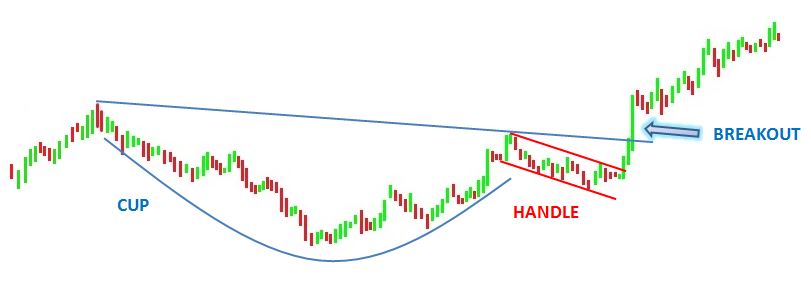
A cup-and-handle chart pattern resembles a cup of coffee with a cup (half circle) and handle (downwards trading pattern). It is a bullish continuation pattern that marks a pause (sideways trend) in the bullish trend. The entire pattern can be anywhere between 1 month to a little more than year. The handle should generally by anywhere from a quarter to a little less than a half of the cup duration.

The cup should be well rounded, it can be fairly steep but should not be so abrupt that it looks like a V. It should also not be so flat that it could be mistaken for a straight line. The handle should be a fairly narrow downward or flat trend.

The cup and handle should always start with an upward trend. The height of the cup and the initial up trend are also important to have a successful cup and and handle pattern. The height of the cup should be approximately between one third (1/3) to two thirds (2/3 of the initial upward trend.

For example, if we have a stock that initial moved from 20 to 30$ and then started to create a cup, the height of that cup should be between about 3.3 (1/3 * 10) and 6.6 (2/3 * 10).

cupandhandle

As with most technical analysis patterns, there are guidelines to indicate the strength of the trend.

1. The closer it is to a nicely rounded cup, the stronger the trent
2. The “handle” can only convert to a breakout when there is strong volume.

Latvia is an EU member country that experienced superior GDP growth rates prior to the financial crisis in 2008. It underwent significant privatization, which resulted in large foreign direct investment inflows. Its economy was ranked first among developing countries until 2008.

Latvia’s Main Industries

Latvia is economically known for its strength in:

  • Pharmaceuticals and Chemicals Sector
    • Phytopharmaceuticals
    • Paints and varnishes
    • Chemical compounds
    • Synthetic fibres
    • Cosmetics and perfume
    • Plastic and rubber products
  • Biotechnology Sector
  • Industrial and Manufacturing Sector
    • Electronics Manufacturing and Engineering
    • Electrical Engineering
    • Textile and Clothing Sector
      • Cotton
      • Wool
      • Garments and accessories
      • Linen
      • Synthetic fibre
  • Agriculture Sector
    • Fruits and Vegetables
    • Bread and Grain
    • Fish
    • Dairy
    • Meat
    • Beverages
  • Forestry Sector
    • Timber
    • Wood
    • Pulp
    • Paper
    • Fibreboard

 Latvia’s Main Stock Exchanges

 The main stock exchange in Latvia is:

A) Riga Stock Exchange (currently NASDAQ OMX Riga)

  1. Founded in 1993 as the Riga Stock Exchange
  2. Is a self-regulating organization, owned by the NASDAQ OMX
  3. Utilizes the highly advanced trading technology (INET)
  4. Serves trading in equities, fixed income, derivatives, and depository receipts
  5. Currently has 30 members on the exchange
  6. Indices

B) OMXR/RIGSE Index


Latvia’s Economic and Investment Performance

After superior growth, Latvia’s economy suffered a severe contraction mainly due to a credit-induced high consumption and bubble. Prior to that, it was a hub for foreign investment and capital, after privatisation led to its economy opening up.

After ranking first among developing countries, it suffered a significant economic contraction. Nevertheless, sound economic and investment policies enabled it to stabilize in 2010 and it remains a promising country with strong potential.


Latvia’s 10 Most Profitable Companies in 2010

Rank Company Symbol : Ticker Profit ($millions) Revenue ($millions)
1 Latvijas Gaze GZE1R-RG 668.29 48.78
2 Grindeks GRD1R-RG 123.22 13.45
3 Latvijas Balzams BAL1R-RG 98.84 7.42
4 Olaines Kimiski-Far OLF1R-RG 47.81 6.69
5 LATVIJAS TILTI AS LTT1R-RG 42.45 3.77
6 SAF Tehnnika SAF1R-RG 18.03 2.57
7 Valmieras Stikla Skiedra VSS1R-RG 74.08 1.17
8 Ditton Pievadkelu AS DPK1R-RG 14.6 0.72
9 BRIVAIS VILNIS AS BRV1R-RG 13.49 0.66
10 LIEPAJAS AUTOBUSU PARKS AS LAP1R-RG 10.15 0.45


Ways to Invest in Latvia

There are a couple of different ways to invest in Latvian companies:

  • Through a Latvian Bank
    • Aizkraukles Banka
    • Danske Bank
    • Nordea Bank
    • DnB NORD Banka
    • SEB Banka
    • Swedbank
  • ETFs
    • ESR:NYSEArce – has exposure to various Eastern European countries including Latvia

Belgium is an EU member located in Western Europe. It has a strong industrialized economy, well-developed transportation infrastructure, and a highly productive work-force making it an attractive destination for foreign capital.

Belgium’s Main Industries

  Belgium is economically known for its strength in:

  • Diamonds
  • Industrial and Manufacturing Sector
    • Engineering and Metal Products
      • Minerals Processing
        • Copper
        • Zinc
        • Lead
    • Steel and Iron Production
  • Heavy machinery and industrial equipment production
  • Motor  and Vehicle Assembly and Production
    • Automobiles
    • Ships and vessels
  • Petroleum
  • Food and Beverage Processing
  • Chemicals and Pharmaceuticals
    • Sulphuric Acid
    • Nitric Acid
    • Synthetic Ammonia
    • Crude Tar
  • Textiles Processing
    • Cotton
    • Wool
    • Linens
    • Synthetic Fabrics
    • Spinning
    • Weaving


Belgium’s Main Stock Exchange

The main stock exchange in Belgium is:

  1. 1.      Euronext Brussels
    1. Founded in the early 19th century
    2. Merged with the ParisBourse and Amsterdam Exchanges to form Euronext
    3. Euronext provides a single, cross-border exchange for markets in equities and derivatives
    4. Main Index

i.     BEL 20 – includes twenty highly liquid Belgian equities


Belgium is an important trading partner with many EU members, and as such, many companies in the EU region have also listed on the Euronext Brussels.

Glimpse into Belgium’s Equity Market

Belgium listed equities have rebounded following the 2008 financial crisis yielding around 30% from recessionary bottoms, as represented the BEL 20 index.

The Euronext Brussels market capitalization rose 17% from Euro 202 billion (2009) to Euro 273 billion (2010).

Stock Index Performance: BEL 20 Index

Belgium’s 10 Most Profitable Companies in 2010

Ways to Invest in Belgium

There are a couple of different ways to invest in Belgian companies:

  • Financial or Investment firms
    • Brokerage services are provided by domestic or international firms in Belgium
    • Through a regional Belgian bank
      • Belgian banks offer securities investment services
        • AXA Bank
        • KBC Bank
        • BNP Paribas Fortis
        • Argenta
        • Belgian ETFs
          • EWK:NYSE ARCE – tracks the MSCI Belgium Investable Market Index
          • Through some international online brokers:
            • MB Trading
            • Interactive Brokers
            • TD Ameritrade
            • E-Trade
            • Questrade
            • optionsXpress
            • optionshouse
            • tradeMONSTER
            • Charles Schwab

Italy is an EU member country and one of G-8 leading industrialized economies, having the seventh largest economy in the world. Its thriving small and medium enterprises play an important economic role. Italy has world-leading companies in manufacturing, automobiles, textiles, and agriculture.


Italy’s Main Industries

 Italy is economically known for its strength in:

  • Agriculture Sector
    • Maize corn
    • Olive Oil
    • Fruits and Vegetables
    • Flowers
    • Wine
    • Meat
    • Dairy Products
    • Services
      • Financial
        • Banking
        • Insurance
        • Asset Management
  • Tourism
  • Precious metals
    • gold
    • Industrial and Manufacturing
      • Iron and Steel
      • Chemicals
      • Machinery
      • Automotives
      • Precision Engineering
      • Textiles and CLothing


Italy’s Main Stock Exchanges


The main stock exchange in Italy is:

  1. 1.      Borsa Italiana
    1. Founded in 1808 and operated under state ownership until privatisation in 1997
    2. In 2007 was purchased by the London Stock Exchange
    3. Serves trading in equities, and plays an important role in Italy’s fixed income and derivatives market
    4. Some Indices

i.     FTSE/MIB Index

ii.     MIBTel

Glimpse into Italy’s Equity Market

Foreign equity investors have remained cautious, with investment inflows not being significant in 2010. Italy’s equities have been considerably impacted by the Euro-zone debt and default crisis, and amid an uncertain economic outlook, with the stock index down 12% during the 2010 year.

Market capitalization of stocks has been stable, increasing from $317 billion in 2009 to $318 billion in 2010.


Italy’s 10 Most Profitable Companies in 2010

Ways to Invest in Italy

There are a couple of different ways to invest in Italian companies:

  • Through Italian Banks or foreign ones located in Italy
    • Banca d’Italia
    • Banco di Roma
    • Intesa Sanpaolo
    • Banca delle Marche
    • Canadian ETFs
      • EWI: NYSEArca – tracks the MSCI Italy Index
      • Through some international online brokers:
        • MB Trading
        • Interactive Brokers
        • TD Ameritrade
        • E-Trade
        • Questrade
        • optionsXpress
        • optionshouse
        • tradeMONSTER
        • Charles Schwab

Ireland is an EU member country with a knowledge-based economy and strong industries in services and technology. With attractive corporate tax rates, Ireland has been ideal destination for multinational corporations.


Ireland’s Main Industries

  Ireland is economically known for its strength in:

  • Agriculture Sector
    • Cattle
    • Beef
    • Dairy
    • Services Sector
      • Financial
        • Banking
        • Asset Management
  • Tourism
  • Mining and Metals Sector
    • Zinc
    • Lead concentrates
    • Alumina
    • Coal
    • Gypsum
    • Limestone
    • Industrial and Manufacturing Sector
      • Construction Sector
        • Residential property
  • Pharmaceuticals and Chemicals
  • Technology Sector
    • Hardware
    • Software related goods and services
    • Energy Sector
      • Supply and distribution of natural gas
      • Electricity
      • Coal

Ireland’s Main Stock Exchanges

 The main stock exchange in Ireland is:

  1. 1.      Irish Stock Exchange
    1. Founded in 1793 and is Ireland’s sole independently-owned exchange
    2. Has an established and extensive debt securities trading market
    3. Operates three principal markets

i.     Securities of established domestic and global Irish companies

ii.     Growth-oriented companies

iii.     Debt market

  1. Indices

i.     ISEQ Overall Index


Glimpse into Ireland’s Equity Market

Irish equities experienced negative returns following the 2008 economic crisis. With the Irish banking sector have a heavily credit exposure to a deteriorating and crashing property market, the economy underwent significant problems.

The 3-year return on the ISEQ overall index was -48%. The index has somewhat recovered however, with the last 9 months yielding 4.5%

ISEQ Return

Ireland’s 10 Most Profitable Companies in 2010

Irelands 10 most profitable companies

Ways to Invest in Ireland

There are a couple of different ways to invest in Irish companies:

  • Irish Banks of foreign banks/investment companies in Ireland
    • Allied Irish Banks
    • Anglo Irish Bank
    • Bank of America
    • DePfa Bank
    • KBC Bank Ireland
    • Rabobank Ireland
    • Goldman Sachs Bank (Europe)
    • Irish ETFs
      • EIRL:NYSEArce – seeks to track the MSCI Ireland Capped Investable Market Index
      • EKH:NYSEArce aims to allow diversification through the performance of some of the largest European companies listed on the US market (has some exposure to Irish companies)
      • Through some international online brokers:
        • MB Trading
        • Interactive Brokers
        • TD Ameritrade
        • E-Trade
        • Questrade
        • optionsXpress
        • optionshouse
        • tradeMONSTER
        • Charles Schwab
Hungary Flag

Hungary is an EU member country with a medium-sized, liberal economy that is rapidly developing. It has the 5th largest economy in Central and Eastern Europe, with major exports in machinery, chemicals, textiles, and agricultural products.


Hungary’s Main Industries

 Hungary is economically known for its strength in:

  • Agriculture Sector
    • Wheat
    • Corn
    • Sunflower
    • Potato
    • Sugar beet
    • Canola
    • Apple
    • Pear
    • Grape
    • Wine
    • Livestock
    • Industrial and Manufacturing Sector
      • Automobile Production
        • Engine manufacturing and production
        • Vehicle Assembly
  • Heavy Industry
    • Mining and Metallurgy
      • Metalworking and processing
      • Steel Production
      • Metallurgy
      • Machine Production
        • Machine tools
        • Transport Equipment
        • Electrical Appliances


  • Energy Production
  • Mechanical Engineering
  • Chemicals
  • Food Processing
  • Services
    • Tourism

 Hungary’s Main Stock Exchange

The main stock exchanges in Hungary is:

  1. 1.      Budapest Stock Exchange
    1. Previously The Hungarian Stock Exchange (1864)
    2. Operates as a subsidiary of the CEESEG AG holding company, which owns around 70% of the BSE
    3. Over 40 domestic and international brokers participate in trading on the BSE
    4. Products traded include

i.     Equities

ii.     ETFs

iii.     Government and corporate debt

iv.     MBS

v.     Futures and options

vi.     Grain commodities

  1. Important indices

i.     BUX

ii.     MSCI Hungary Index


Glimpse into Hungary’s Equity Market

Hungary’s economy was severely impacted by the recent recession, owing partly to having one of the largest public deficits in the EU region. However, it has recovered quite well, and its equities have rebounded solidly over the past year.

The MSCI Hungary Index stock index rose 24.36% over the last year, with a year-to-date of 16.59% return.

Stock Index Performance: BUX

Hungary Stock Index Performance

Hungary’s 10 Most Profitable Companies in 2010

Hungary 10 Most Profitable Companies


Ways to Invest in Hungary

There are a couple of different ways to invest in Hungarian companies:

  • Through a regional Hungarian Bank or a foreign bank/investment company located in Greece
    • Erste Bank Hungary
    • Budapest Hitel
    • OTP Bank
    • Deutsche Bank
    • BNP Paribas Hungaria Bank
    • Raiffeisen Bank
    • Investors can purchase equities through a regional bank
    • Hungarian ETFs
      • ESR:NYSEArca – tracks the MSCI Emerging Markets Eastern European Index Fund
      • GUR – aims to replicate the SPDR S&P Emerging Europe index, and has over 5% exposure to Hungary
      • Through some international online brokers:
        • MB Trading
        • Interactive Brokers
        • TD Ameritrade
        • E-Trade
        • Questrade
        • optionsXpress
        • optionshouse
        • tradeMONSTER
        • Charles Schwab

Peru is a Latin American country with an emerging, market-oriented economy that has been among the top performers in South America. Rich in natural resources, it is a major exporter of gold, copper, zinc, and fish.


Peru’s Main Industries

Peru is economically known for its strength in:

  • Agriculture Sector
    • Fishing
    • Artichokes, grapes, avocadoes, mangoes,
    • Cotton
    • Coffee
    • Sugar
    • Services Sector
      • Tourism
      • Natural Resources
        • Copper
        • Gold
        • Silver
        • Petroleum
        • Timber
        • Iron ore
        • Coal
        • Natural gas
        • Mining Sector
          • Gold
          • Coal
          • Copper
          • Zinc
          • Silver
          • Iron Ore
          • Manufacturing and Industrial Sector
            • Metal mechanics
            • Tobacco processing
            • Food processing
            • Textile

Peru’s Main Stock Exchanges

 The main stock exchange in Peru is:

  1. 1.      Bolsa de Valores y Productos de Asunción (BVPASA)
    1. Established in 1977 and is Peru’s only stock exchange
    2. Exchange provides trading services in equities and debt securities of both public and private companies
    3. Stock Index

i.     IGBVL index


Glimpse into Peru’s Equity Market

Prior to the global financial crisis in 2008, Peru experienced economic growth that was among the top-performers in Latin America (2007 and 2008). Political stability and liberalised economic policies have made Peru a very open investment regime, attracting significant foreign investment and capital

Equities performed exceptionally well in 2009 and 2010, with the IGBVL index rising 101% and 65%, respectively.  Between the same periods, the market capitalization of its exchange grew by 43% from $US 69.7 billion to $US 99.8 billion.

Peru’s 10 Most Profitable Companies in 2010

Peru 10 Most Profitable Companies

Ways to Invest in Peru

There are a couple of different ways to invest in Peruvian companies:

  • Through a Peruvian Bank or foreign one located in Peru
    • BBVA Banco Continental
    • Banco Financiero del Peru
    • Bank of Nova Scotia
    • JP Morgan Chase Bank
    • Banco Standard Chartered
    • Citibank
    • Peruvian ETFs

Portugal is an EU member country with a high-income and service-based economy. It enjoys vast forests, has a strong industrial base, and is an important agricultural exporter.

Portugal’s Main Industries

Portugal is economically known for its strength in:

  • Agriculture and Fishing Sector
    • Cereals
    • Olives
    • Wheat
    • Maize
    • Wine
    • Oranges
    • Fish
    • Industrial and Manufacturing Sector
      • Oil refining
      • Cement production
      • Machinery and electronics
      • Textile and footwear
      • Food processing
      • Forestry Sector
        • Pulp
        • Paper
        • Services Sector
          • Tourism
          • Transport
          • Telecommunication
          • Financial
            • Banking
            • Natural Resources Sector
              • Lithium
              • Tungsten
              • Tin
              • Uranium


Portugal’s Main Stock Exchanges

The two main stock exchanges in Portugal by size are:

  1. 1. Euronext Lisbon
    1. Created in 1769 as the Lisbon Stock Exchange
    2. Acquired in 2002 by Euronext NV to become Euronext Lisbon. It became part of the NYSE Euronext Group following their merger in 2007
    3. Trading occurs mainly in equities, bonds, warrants, ETFs, and derivatives
    4. Index

i. PSI-20 – composed of Portugal’s 20 largest companies by market cap and share volume


  1. 2. OPEX
    1. An alternative trading system (ATS) geared for trading in small and medium sized Portuguese companies
    2. Listing criteria is not very rigid and regulated
    3. Specializes in alternative investments and securities such as

i. Warrants and certificates

ii. Derivatives

  1. Investors include private equity investors, hedge funds, and pension funds

Glimpse into Portugal’s Equity Market

The performance of Portuguese equities has been heavily impacted by the Euro-zone peripheral economies’ debt crisis, as well as its own. The Market capitalization of its exchange fell by 17% in 2010 to $81.9 billion, and its equities have significantly underperformed during the last 3 years with a -30% return.

Investor capital and equity outflows have been considerable during this period, and investment should be limited with the current uncertain outlook. Portugal has recently negotiated a $110 billion bailout from the EU and IMF.

Ways to Invest in Portugal

There are a couple of different ways to invest in Portuguese companies:

  • Through a regional Portuguese Bank
    • Portuguese banks enable their clients to invest in securities listed on the exchange
      • Banco Espirito Santo
      • Banco Comercial Portugues (BCP)
      • ETFs with exposure to Portugal
        • CUT:NYSEArca – tracks the Beacon Global Timber Index
        • DFE:NYSEArca – tracks the WisdomTree Europe SmallCap Dividend Index
        • Through some international online brokers:
          • MB Trading
          • Interactive Brokers
          • TD Ameritrade
          • E-Trade
          • Questrade
          • optionsXpress
          • optionshouse
          • tradeMONSTER
          • Charles Schwab

Romania is an EU member country, which has experienced positive foreign direct investment and GDP growth following privatization initiatives over the last decade. It has an upper-middle income economy strong in its industrial and agricultural sectors. 

Romania’s Main Stock Exchanges

The two main stock exchanges in Romania by size are:

1. Bucharest Stock Exchange

It was founded in 1882 and has merged with Romania’s OTC exchange (RASDAQ) in 2005.

The principle securities traded on this exchange include:

  1. Equities
  2. Government and Corporate debt
  3. Fund units
  4. Structured products

2. SIBEX

It is Romania’s second largest exchange, and is designed for trading in derivative securities such as futures and options on

  1. Stocks and indexes
  2. Currencies
  3. Interest rates
  4. Commodities such as gold


Glimpse into Romania’s Equity Market

Romania’s major index is the BET, which is composed of Romania’s 10 largest listed companies.

Romanian equities yielded positive returns of 16% during the last year, and have performed solidly relative to other European equities.

Ways to Invest in Romania

There are a couple of different ways to invest in Romanian companies:

1. Through a bank in Romania

  1. Banca Tanssilvania
  2. Romanian International Bank
  3. CEC Bank
  4. Alpha Bank
  5. ABN Amro
  6. Raiffeisen Bank
  7. Citibank Romania
  8. Libra Bank

2. ETFs

ESR:NYSEArce – It is an emerging markets ETF with high exposure to Eastern Europe

Argentina is a South American country that is one of the G-20 economies. It is the third largest economy in Latin America and has the highest GDP per capita in its region. It possesses plenty of natural resources, a strong agricultural sector, and a well-educated population.

Argentina’s Main Industries
 Argentina is economically known for its strength in:

  • Agriculture
    • Beef
    • Fruits and Vegetables
    • Wheat
    • Cattle
    • Natural Resources
      • Mining
        • Coal
  • Metals
    • Gold
    • Copper
    • Zinc
    • Magnesium
    • Uranium Silver
  • Energy
    • Oil and Petroleum
    • Natural Gas
    • Electricity
    • Manufacturing
      • Food Processing
      • Chemicals and Pharmaceuticals
      • Auto Parts, Iron, and Steel
      • Industrial Machinery
      • Textiles
      • Forestry Products
      • Cement
      • Tobacco

 Argentina’s Main Stock Exchanges

The two main stock exchanges in Argentina by size are:

  1. 1. Buenos Aires Stock Exchange
    1. Argentina’s largest and primary stock exchange
    2. Operates as a self-regulating, non-profit entity
    3. Main Index

i.     MERVAL – an important price-weighted index of the exchange


Ways to Invest in Argentina

There are a couple of different ways to invest in Argentine companies:

  • Through regional Argentine banks and financial firms or international ones operating in Argentina
    • Santander Rio
    • BBVA Banco Frances
    • BNP Paribas
    • BACS BANCO DE CREDITO Y SECURITIZACION
    • Argentina ETFs
      • ARGT: NYSEArca
      • EEV – emerging market ETF with exposure to various countries including Argentina
      • Through some international online brokers:
        • MB Trading
        • Interactive Brokers
        • TD Ameritrade
        • E-Trade
        • Questrade
        • optionsXpress
        • optionshouse
        • tradeMONSTER
        • Charles Schwab

Glimpse into Argentina’s Equity Market
Considered an emerging economy, Argentina attracts significant foreign investors and capital.

The MERVAL (stock index) reached an all-time historical high in January 2011. Although the index deteriorated significantly following the 2008 financial crisis, it has since risen by over 90% from its bottom.

Market capitalization of listed equities rose from $49 billion in 2009 to $64 billion in 2010 – an increase of 31%.

Capital and financing inflows via international markets related to bond issuance and new equity placements had fallen from 2.5% to 0.5% of GDP during the 2008-2009 periods.  However, there have been some notable IPOs in 2010/11, which indicates a positive outlook.

Albania is one of south eastern European countries that have shown promising economic growth potential. It has been increasingly attracting foreign direct investment and possesses a strong agriculture and natural resources industry.

Albania’s Main Industries

Albanias Main Industries


Albania’s Main Stock Exchange

The main stock exchange in Albania is:

  1. 1.      Tirana Stock Exchange (TSE)
    1. Previously operated as one of Albania’s central bank departments before becoming independent
    2. Is a member of the Euro-Asian Federation of Stock Exchanges (FEAS)
    3. Principal areas of exchange trading

i.     Equities

ii.     Treasury bills

iii.     Government and municipal bonds

iv.     Corporate bonds


Albania’s Economic and Investment Climate

Due to a combination of low debt levels and an absence of a housing bubble, Albania has weathered the recent global recession quite well. Foreign investment in Albania grew by around 173% from 2006 to 2009 reflecting a strong investment climate and outlook.

Albania’s banking system continues to develop amid its progress towards a developed market economy, providing a stable financial system environment.

Natural resources are considerable, and include oil, gas, coal, iron, copper, chrome, and water.

Albania’s 10 Most Profitable Companies

Ways to Invest in Albania

There are a couple of different ways to invest in Albanian companies:

  • Through Albanian regional banks and financial companies
    • Raiffeisen Bank
    • National Commercial Bank
    • Triumf group
    • Alpha Bank
    • Societe Generale Albania
    • ETFs
      • Some US listed ETFs with exposure to Albanian stocks
        • WCAT: NYSEArca
        • CNDA: NYSEArca

Gross National Product is the value of all goods and services produced by a country’s residents.

GNP

  • Is based on the market value of goods and services
  • Takes only final goods and services into consideration
  • Relies on factors of production such as the country’s labor and capital
  • Is measured on an annual basis


How is GNP used?

Gross National Product statistics are used to

  • Measure the economic activity of a country
  • Evaluate and analyze economic growth
  • Assess how productive a country’s factors of production are
  • Measure the value of important goods and resources
  • Analyze the income earned by a country’s residents
  • Compare the performance of different countries
  • Develop economic policies aimed at improving GNP figures

How is GNP Measured?

Two approaches can be used to measure GNP: (1) The Income Approach (2) The Expenditure Approach

(1)    Income Approach

  • Measures the income or earnings received by the country’s factors of production (Labor, Land, Capital)

 GNP = Wages + Interest Income   + Rental Income + Profit

  • GNP or National Income is the sum of
    • Wages
      • The salaries, income or earnings that residents received for their work and labor during an entire year
      • Interest Income
        • Any income earned from holding assets or funds in
          • Bank savings accounts
          • GICs
          • Treasury-Bills
          • Canada Savings Bonds
          • Interest earned on foreign investments
      • Rental Income
        • Any income earned from owning and renting property.
        • Includes income from renting
          • A house
          • Apartments
          • Rooms
          • Office space
      • Profit
        • Income earned from investments (e.g., dividends from stocks)

(2)    The Expenditure Approach

  • Measures the amount spent or paid (expended) on all goods and services during the year at market value or prices
  • Uses and sums up two main components: (1) Gross Domestic Product and (2) Net Income from Abroad
    • We need to first calculate Gross Domestic Product (GDP)
      • GDP is the value of a country’s products and services produced in year
        • 5 main components of GDP
          • Private Consumption and Expenditure (households) – C
          • Investment Expenditure –  I
          • Government Expenditures – G
          • Exports   – X
          • Imports – M

GDP = Private Consumption + Investment Expenditure + Government Expenditures + Net Exports

GDP           =                C    +     I    +    G   +   (X   –   M)

 Next, we determine Net Income from Abroad, which is composed of

  • Income from Abroad – income received by citizens from overseas business activities
  • Income to abroad – income provided to foreign citizens from their business activities in the domestic country

Using both components, we calculate GNP as

GNP = GDP + Net Income from Abroad

Conclusion

The Gross National Product (GNP) is an economic measure of the market value of all goods and services produced by a country’s residents. It is an important and widely followed statistics that indicates the strength and growth of an economy, as well as the productive use of its factors of production such as labor and capital. It can be measured using the income or expenditure approach.

Free Cash flow is the cash available to all the capital providers of a company

There are two types of free cash flows

  • Free Cash Flow to the Firm (FCFF)
    • Cash flow available to pay out to all capital providers such as common stock holders, debt holders, and preferred stock holders.
    • Free Cash Flow to Equity (FCFE)
      • Cash flow that is available strictly to the company’s common stock holders (equity)

The FCFF and FCFE are not reported on a company’s financial statements, therefore, the analyst or investor must perform necessary calculations to arrive at these figures.

Financial Statement Items

First, we review some of the necessary financial statement items need to compute FCF

Net Income: the Earnings of the company after operating, interest, depreciation, and tax expenses have been made

Noncash charges: include items such as depreciation which do not represent an actual outflow of cash

Capital Expenditures:  the company’s investments in fixed assets and capital. These are an important source of future growth for a company

Working Capital:  the company’s short-term capital necessary to conduct its daily business operations. These include:

  • Receivables
  • Inventory
  • Payables

Cash Flow from Operations: The net amount of cash from the company’s operating activities

Interest Expenses: the company’s costs of assuming debt

Liabilities / Borrowing: The amount that the company borrows in terms of its debt obligations

FCFF and FCFE Equations

Free Cash Flow to the Firm (FCFF)

Cash available after operating expenses, working capital, and capital expenditures have been taken into consideration.

The company can use this cash flow to:

  • Pay its common equity holders with dividends
  • Pay its debt holders back (i.e., pay down its principal)
  • Pay its preferred equity holders

Equation:

FCFF = Net Income + Noncash items + Interest Expenses (1-Tax Rate) – Capital Expenditures – Working Capital Requirements

Free Cash Flow to Equity (FCFE)

Cash available to common equity holders after payments related to debt are made and working capital and capital expenditures are taken into account.

The payment s relating to debt include:

  • Payments such as interest expenses and debt principal repayment

The company can use this available cash flow to pay its common stock holders.

Equation:

FCFE = Net Income + Noncash items – Capital Expenditures – Working Capital Requirements + Net Borrowing

Why are FCFs used?

Some uses and applications of FCFs

  • To assess the company’s ability to pay its equity and debt capital providers
  • FCFs can be used when the company does not pay dividends, and as such, does not have a track record of paying equity holders. FCFs can indicate how much the firm can pay out
  • FCF can be used by a company to repay the principle related to its long-term debt
  • FCFs are used with for firm valuation purposes, such as with Discounted Cash Flow (DCF) models to measure a company’s intrinsic value

Conclusion

Free cash flows are a company’s cash available after operating expenses, capital expenditures and working capital requirements have been accounted for. It represents the funds available for the company’s capital providers. The FCFF represents cash available to both equity and debt capital providers, while the FCFE is the cash flow that can be reserved to the company’s common equity holders. FCFs play an important role in financial modeling and discounted cash flow techniques in determining valuation for an asset or financial security

The Form-8K is a SEC-mandated report filed by public companies to report unexpected events or transactions that are material in nature, and thus have an impact on the share prices of the company.

In accordance with the Securities Exchange Act (1934), specifically defined events must be reported within 4 business days. The main purposes of the Form 8-K are to:

  • Satisfy regulatory requirements
  • To provide investors and shareholders with up-to-date company information
  • Update previously released reports such as the 10-Q (quarterly report) and the 10-K (annual report) with important developments.

The criteria for reporting such material events or transactions are defined within 9 major sections or categories. These events (or transactions) are deemed to be significant for investors and shareholders towards their investment-decision making.


Why are Form 8-K reports important?

To make sound investing decisions, investors need information that is timely, reliable, and accurate. Material information concerning the activities, operations, and business of a corporation can have a significant impact on important aspects such as

  • Future revenues, earnings, cash flows, and other financial items
  • Strategic direction
  • Competitive positioning in the market
  • The industry it operates in

Such factors inevitably will impact its share price in the market. Therefore, it is important that investors have access to important information that is crucial in making investment decisions.

Annual reports (10-K) and quarterly reports (10-Q) contain valuable information. However, there is a time lag between the issuance dates of such reports. The Form 8-K is therefore used as a vehicle to report material events not captured by the 10-Q or 10-K.


What are material events?

The actual Form 8-K is available for download on the SEC’s website at:

https://personalfinancelab.com/wp-content/uploads/2013/10/form8-k.pdf

Material events fall under one of 9 main sections.

Section 1- Registrant’s Business and Operations

MATERIAL EVENTS:

  • Entry into a material definitive agreement
  • Termination of a material definitive agreement
  • Bankruptcy or receivership

Section 2- Financial Information

MATERIAL EVENTS:

  • Completion of acquisition or disposition of assets
  • Results of operations and financial condition
  • Creation of a direct financial obligation or an obligation under an off-balance sheet arrangement of a registrant
  • Triggering events that accelerate or increase a direct financial obligation or an obligation under an off-balance sheet arrangement
  • Costs associated with exit or disposal activities
  • Material impairments

Section 3- Securities and Trading Markets

MATERIAL EVENTS:

  • Notice of delisting or failure to satisfy a continued listing rule or standard; Transfer of listing
  • Unregistered sales of equity securities
  • Material modification to rights of security holders

Section 4- Matters Related to Accountants and Financial Statements

MATERIAL EVENTS:

  • Changes in registrant’s Certifying Accountant
  • Non-reliance on previously issued financial statements or a related audit report or completed interim review

Section 5- Corporate Governance and Management

MATERIAL EVENTS:

  • Changes in control of registrant
  • Departure of directors or certain officers; Election of directors; Compensatory arrangements of certain officers
  • Amendments to articles of incorporation or bylaws;
  • Change in fiscal year
  • Temporary suspension of trading under registrant’s Employee Benefit Plans
  • Amendments to the registrant’s code of ethics, or waiver of a provision of the code of ethics
  • Changes in shell company status
  • Submission of matters to a vote of security holders

Section 6- Asset-Backed Securities

MATERIAL EVENTS:

  • Change of servicer or trustee
  • Change in credit enhancement or other external support
  • Failure to make a required distribution
  • Securities act updating disclosure

Section 7- Regulation FD

MATERIAL EVENTS:

  • Regulation-required disclosures

Section 8- Other events

MATERIAL EVENTS:

  • other events deemed material or having important informational value

Section 9- Financial Statements and Exhibits

MATERIAL EVENTS:

  • financial statements of businesses acquired
  • pro-forma financial information
  • shell company transactions

Conclusion

The Form-8K report is crucial for investors and shareholders in remaining current on major or material events and transactions performed by a company.

Such events typically have the ability to affect the firm’s stock price. Therefore, investors use such information to update their investment decisions such as buying, selling, or holding the stock.

The Form 8-K report is mandated by the SEC, with the purpose of providing timely and relevant information not included in annual or quarterly reports.

Fixed income analysis is the process of evaluating and analyzing fixed income securities for investment purposes.

Fixed Income represents a distinct asset class. Investors and analysts perform fixed-income analysis to

  • Evaluate the risk characteristics underlying debt securities and to assess the capacity of the borrowing entity to meet its financial obligations (credit analysis)
  • Identify which debt securities represent attractive investment opportunities
  • Determine the appropriate valuation (or value) of debt securities in the market
  • Compare the investment characteristics (e.g., risk and return) of debt securities with each other and with other asset classes such as stocks, derivatives, real estate, or other.

Features and Characteristics of Fixed Income

Some important features of fixed income securities include

  • Government versus Corporate Bonds
    • On a very broad level, fixed income securities can be categorized as
      • Government
        • E.g., US Treasuries
    • Corporate
      • Bonds issued by public corporations
      • Issuer
        • The party, entity, or corporation that sells the debt obligation to investors
        • This is the borrowing entity
        • Borrower or Debt Security Holder
          • The party that has purchased the debt obligation (i.e., the lender)
          • Principal or Face Value
            • The amount borrowed which has to be repaid in full at a future date
            • Interest
              • The interest rate that is applied to the principal borrowed amount
              • Periodic Payments
                • The periodic dates during the life of the debt for which the borrower is responsible for making regular payments of interest or principal (or both)
                • Maturity
                  • The length of time from the inception of the debt to its termination
                  • Fixed-Income Options
                    • Options embedded within fixed income securities giving the lender or borrower the right to either redeem the obligation
                      • Callable Bond – the issuer of the debt obligation retains he right to redeem the bond before its maturity date
                      • Putable Bond – the holder of the debt obligation (the borrower) retains the right to redeem the bond before its maturity date
                      • Convertibility
                        • Convertible debt securities allow the debt security holder to convert the debt obligation into common equity

                        Elements of Fixed Income Analysis

                        The following elements are typically common when analyzing the fixed-income security of a corporation

                        • Credit Analysis
                          • Analysis of the company’s financial statements
                          • Assessment of creditworthiness and capacity to pay
                          • Analysis of collateral and covenants
                          • Risk Analysis
                            • Corporate fixed-income securities are exposed to certain risks, which can include one or more of the following
                              • Interest rate risk
                              • Inflation risk
                              • Credit or default risk
                              • Liquidity risk
                              • Foreign Exchange risk
                              • Sovereign risk
                              • Fixed-Income Valuation
                                • A time-value based formula and methodology is used to value fixed income securities
                                • The bond’s interest payments and principal are discounted back to today, to arrive at a present value figure (which is the bond’s value)
                                  • The present value of each future cash flow is found and summed up
                        •  The following are needed to perform the valuation
                          • The coupon or interest rate
                          • The coupon or interest payments
                          • The Face Value or Principal amount
                          • The discount rate used to find the present value of each future cash flow
                          • Comparison with Government Debt Securities
                            • Fixed-income analysis also includes a comparison of the corporate debt-security’s return or yield with that of risk-free US government debts (Treasuries)
                              • These are highly safe, liquid, and debt obligations
                              • The return on Treasuries is seen by investors as the minimum acceptable or possible return in the market
                              • The return on corporate fixed income securities is compared to the return on US treasuries to measure the “extra” yield/return offered (also referred to as risk premium)
                                • This extra return is required by investors for assuming the risks inherent in corporate fixed income securities (see above for list of risks)

                        Conclusion

                        Fixed income analysis is the analytical framework used to evaluate and assess fixed income securities for investment purposes. This includes credit and risk analysis, as well as bond valuation. It applies to securities such as government and corporate bonds, and plays an important role in the trading and pricing of such instruments in the market.

In investment valuation, financial modeling refers to the procedure and methodology performed to determine the value of an asset or financial security

Fundamentally, a business or company’s current value can be viewed as being derived from its future cash flow streams. An investor deciding whether to purchase or sell a stock, therefore, will be interested in estimating such value.

Financial modeling is the creation of a program or structure designed to incorporate a company’s financial information and projections, and subsequently come up with a valuation used for investment decision making.


Uses and Applications

Financial modeling has multiple uses and applications

  • Portfolio Management and Security Valuation
    • Analysts and portfolio managers use financial modeling to determine a stock’s fair or intrinsic value
    • Used as a basis for making investment decisions and recommendations such as buying, selling, or holding financial securities
  • Investment Banking and Private Equity
    • Investment bankers use financial modeling to develop valuation figures for merger and acquisition candidates
    • Private equity investors make extensive use of financial modeling when making investment decisions regarding leverage buyouts and management buyouts
  • Real Estate Investment
    • Financial modeling is used by real estate developers and investors in determining the fair value of properties
  • Corporate Finance
    • Executive management use financial modeling for capital budgeting decisions such as
      • Investing in new projects, fixed assets, or equipment
      • Determining the value-creation or destruction from replacing existing assets or equipment

Key Elements in Financial Modeling

The use of advanced computer software is typically used to conduct DCF. Microsoft Excel is commonly used for its spreadsheet capabilities.

Assume that an analyst would like to use financial modeling to determine the value of a corporation. It can be performed as follows

  • Historical financial statements are used as a starting point
    • The company’s historical financial results are tabulated. The following statements are used
      • Income Statement
      • Balance Sheet
      • Cash Flow Statement
    • Analysts typically use 2-5 years of historical results
  • Financial projections, financial forecasts, and financial estimates are made
    • The analyst will use assessment of the economy, industry, and market to make key assumptions regarding future conditions. This forms the basis of determining future projections.
    • Growth rate estimates or projected values for the company’s key financial statement elements are made, such as for
      • Revenues, expenses, depreciation, interest expenses, and net income
      • Assets
      • Liabilities
      • Capital expenditure
      • Debt projections
  • Development of Pro-forma financial statements
    • Using the forecasts developed above, the complete set of projected financial statements are developed
  • Projection of Cash Flows
    • Cash flows can be defined in several ways
    • Using the pro-forma statements, the analyst will usually determine the company’s free cash flows
      • Free Cash flows are the company’s available cash after accounting for capital expenditures and working capital requirements
    • Such FCFs form the basis of discounted cash flow valuation.
  • Determination of the Discount Rate
    • To value the projected cash flows, a discount rate is estimated.
    • This rate will be used to find the present value of each projected cash flow
  • DCF Analysis
    • The value obtained using DCF will be analyzed to determine whether it is appropriate
    • Usually, DCF is complemented with sensitivity analysis, which takes into consideration various scenarios regarding growth estimates and discount rates,
    • Investment decision is made


Conclusion

Financial modeling is a valuation methodology or program aimed at determining an asset or financial security’s value for investment decision-making purposes. It encompasses inputs from a company’s historical financial statements, development of assumptions and projections regarding its financial information, and using discounted cash flow techniques or models to produce a valuation figure. It is extensively used in portfolio management, security analysis, investment banking, and corporate finance.


Key Words: Valuation, Value, Asset, Financial, Security, Statements, Future, Discounted, Free, Cash, Flow, DCF, Stock, Security, Analyze, Determine, Portfolio, Management, Investment, Banking, Corporate, Finance, Private, Equity, Investor, Decision, Making, Analyst, Recommendation, Buy, Sell, Hold, Mergers, Acquisitions, Leveraged, Buyout, Historical, Discount, Rate, Discounting, Projected, Growth, Rate, Pro-forma, Development, Assumptions,

The diligent investor knows that he or she needs relevant, timely, and high-quality information in order to make sound investment decisions.

The earnings reports released by companies can be invaluable in providing such information. Released by public companies on a quarterly and annual basis, they can be used to assess and gauge a company’s:

o  financial condition

o  strategic plans

o  industry and competitive position,

o  Key performance drivers and risk factors

o  Future performance

SEC REGULATIONS

Publicly-traded companies are required to file earnings reports with the Securities and Exchange Commission on a quarterly (10-Q) and annual basis (10-K). Such reports have to be furnished within a specified timeline after the ending of the company’s accounting cycle.

ELEMENTS OF EARNINGS REPORTS

HIGHLIGHTS

The first section of these reports typically provides an overall summary of the company’s financial performance and key developments. A comparison between current results and prior years’ or quarters’ numbers are used to indicate how the company fared during the period. Brief highlights include:

o  Financial results such as sales, expenses, net income, EPS (along with growth percentages from prior periods)

o  Performance of key business segments or product lines

o  Important industry developments

STRATEGIC AND INDUSTRY ANALYSIS

Within earnings reports, companies will usually provide detailed information regarding the strategic plans of executive management.

Investments in new markets, business segments, or products can indicate the strategic direction the company is heading towards.

Key drivers affecting the execution and performance of such strategies are usually elaborated on.

An analysis of important industry and market developments and their impacts is also commonly presented.

KEY RISK FACTORS

Since the future performance of the company is uncertain, and is dependent on a multitude of unpredictable forces, management usually pinpoints important factors that might have negative impacts to the business.

Such factors can be country, industry, or company-specific or a combination.

Examples include:

  • Political events
  • Technological developments
  • Demographic trends
  • Inflation
  • Interest rates
  • Business cycles and stock market fluctuations
  • Volatility of prices

MANAGEMENT AND DISCUSSION ANALYSIS (MD&A)

In the MD&A section, executive management (commonly the CEO or CFO) present an in-depth analysis of the financial, operational, and business performance of the company.

An examination of trends and comparison with prior-period results is discussed, with the aim of explaining such fluctuations.

Detailed analysis is provided regarding items such as business segments & product lines, capital investments, production & operations, industry and market developments, mergers/acquisitions, and many other company specific items of interest.

FINANCIAL STATEMENTS AND SUPPLEMENTAL SCHEDULES

Prepared in accordance with accounting principles (e.g. US/Canadian GAAP, International GAAP), the company’s financial statements are presented. Additionally, the historical statements are shown alongside current-period numbers for comparison purposes.

Main Financial Statements:

o  Income Statement

o  Balance Sheet

o  Statement of Cash Flows

o  Statement of Comprehensive Income

o  Statement of Retained Earnings

Supplemental Schedules can include information regarding:

o  Operations and production

o  Capital expenditure

o  Business-segment specific data

o  Debt or Long-term liabilities schedules

o  Employee stock options

o  Other company-specific info

ACCOUNTING PRINCIPLES & RULES

Companies can use a multitude of accounting principles and rules to recognize, present, and report financial results to investors.

Within earnings reports, investors will typically find a section detailing the assumed accounting principles used by the company regarding such items as:

o  Revenue recognition

o  Expense recognition (the capitalization of expenditures versus expensing them)

o  Inventory valuation rules (e.g. FIFO, LIFO)

o  Depreciation (e.g. straight-line, declining-balance, etc)

o  Investments in other companies and accounting for mergers and acquisitions

o  Foreign exchange translations

o  Pension accounting

o  Off-Balance Sheet items (e.g. leases, SPV)

USING EARNINGS REPORTS TO ASSESS EARNINGS QUALITY

Company management has, at their disposal, numerous accounting principles and rules that they can be used to recognize financial information and report their results to the public, and this presents investors with several challenges.

Recognizing that financial information has a significant impact on the company’s stock price performance (and thus executive compensation) management has strong incentives to choose accounting principles that will allow them to portray the company’s financial position in the best light possible.

A well-informed and diligent investor will scrutinize the company’s assumed accounting principles to assess the impact of the choice of such rules on the reported results. This in turn, will allow the investor to gauge the quality of the earnings (i.e. how reflective they really are of actual performance and financial condition), and adjust their analysis accordingly.

Some accounting principles can be used to:

o  Recognize revenue too early

o  Excessively capitalize expenses (which defers their negative impact on earnings)

o  Report certain gains and losses in comprehensive income, thus bypassing the income statement

o  Mask liabilities by overly using off-balance-sheet accounting

o  using investment accounting principles to reduce volatility of reported investment results

CONCLUSION

The financial and non-financial information within earnings reports can be used to make sound investment decisions.

They can be an excellent tool in evaluating and valuing the financial health, strategic and industry position, and the future performance of the company.

As such, the well-informed investor will scrutinize all information, including the impact of accounting principles on reported results – which can affect the quality of reported earnings.
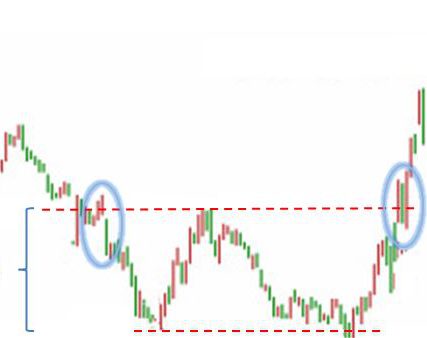
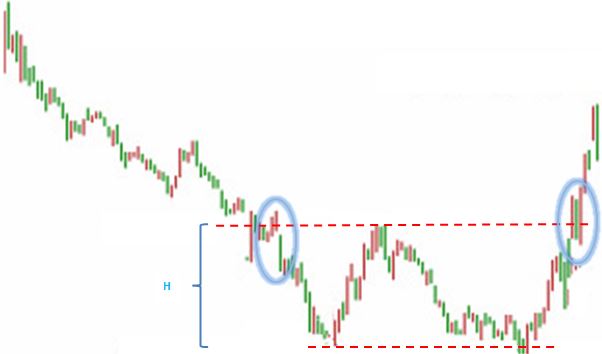
Discounted Cash Flow is a valuation technique or model that discounts the future cash flows of a business, entity, or asset for the purposes of determining its value.

One aspect of investment decision-making entails discovering the fair value of investments. The DCF rests on the principle that an asset’s fair value is the present value of all its future cash flows. Investors seek such value to

  • Determine a fair valuation for assets such as financial securities, business entities or divisions, or any asset that produces future cash flows
  • Compare an asset’s estimated DCF value with its market price today
  • Decide whether to purchase an asset or dispose of an investment holding
  • Compare the values of various assets or financial securities

Uses and Roles of DCF

DCF is used in areas such as

  • Portfolio Management
    • Financial analysts use DCF to find the fair or fundamental value of financial securities such as stocks and bonds
    • Using DCF estimates, analysts make stock buy or sell recommendations to their clients
    • Portfolio managers use DCF results to decide on which financial securities to add or remove from their portfolios
    • Typically, DCF analysis results in comparison between an asset’s DCF value and its market price
      • If DCF value > market price = asset is undervalued
      • If DCF value < market price = asset is overvalued
      • If DCF = market price, asset is fairly valued
  • Investment Banking and Private Equity
    • Investment bankers use DCF to determine appropriate values for transactions in
      • Mergers and Acquisitions
      • Leverage Buyouts
      • Management Buyouts
  • Corporate Finance and Management
    • In corporate finance, DCF is used in capital budgeting to assess the profitability of company-specific projects such as
      • Investing in new fixed assets or equipment
      • Replacing existing assets or equipment
      • Investing in new business divisions or subsidiaries

How is DCF performed?

DCF uses a time-value based formula to determine the value today, of a single or set of future cash flows. The main steps in performing DCF can be summarized as follows

  • Define a time period or horizon
    • DCF models require a time period for which the future cash flows will be projected
    • Time horizons are typically chosen between 1-10 years
      • However, the longer the period chosen, the more uncertainty there will be regarding forecast figures
  • Determine the discount rate
    • This is the rate used to find the present value of all future cash flows
    • Depending on the asset being valued, the discount rate can be
      • The cost of equity
        • The cost to the firm of its equity capital. This is basically the return demanded by its equity or stock holders
        • Used when valuing a firm’s equity or stock
      • The weighted average cost of capital (WACC) – also referred to as the cost of capital
        • Used to find the value of the entire company or firm
        • Takes into consideration the cost of all sources of capital providers: common equity holders, preferred equity holders, and debt holders
  • Define the asset or financial security’s cash flows. For example, they can be defined as
    • Dividends
    • Free cash flows
  • Find the asset’s current cash flows or earnings
    • This is found by looking at current financial statements and determining the company’s current or historical dividends or free cash flows
  • Develop expected or projected growth rates
      • Growth rates will be used to forecast expected future cash flows within a specified time horizon
      • With multiple and indefinite future cash flows, determine a perpetual or stable growth rate
      • Usually when valuing company cash flows, an assumption must be made regarding when a company’s cash flows will “stabilize” and grow consistently at the same rate into the future
  • Using the projected growth rates, determine the future cash flows within the time period specified
  • Using the discount rate above, find the present value of each future cash flow component

Advantages and Disadvantages

Advantages of DCF

  • Is a fundamentally sound valuation technique that can be used to determine fair or intrinsic value
  • DCF can be used to assess the market’s gauge of a particular investment’s value.
  • DCF is particularly useful with companies that generate stable cash flows
  • Can be used with companies that have negative earnings

Disadvantages of DCF

  • It can be very hard to make accurate projections
  • DCF Values are also highly sensitive to its assumptions and estimates. Even minor changes in estimates can cause large swings in value, which causes uncertainty to be large
  • DCF is geared for long-term investing horizons, and might not suitable for short-term investors.
  • In some cases, a long time horizon is needed, which makes the assumptions even more uncertain

Conclusion

The Discounted Cash Flow model or technique is a method used to determine an asset’s fair or intrinsic value. Its premise rests on the principle that an asset’s fundamental value is the sum of the present values of its expected future cash flows. The present value of such cash flows is found by discounting their future values using a discount rate. DCF is an important valuation tool extensively used in portfolio management, investment banking, and corporate finance

The Debt-Snowball Method is a debt-management strategy aimed at reducing a borrower’s obligations

Borrowers can use this method to slowly eliminate their debt by focusing on their smallest debt balance, followed by larger ones until all obligations are paid off.

Doing so can:

  • Substantially reduce debt in the long-term
  • Improve credit ratings by making small minimum payments over a long period of time
  • Be used to create good payment habits

Debt Snowball Steps

The Debt-Snowball method can be done using the following steps

  • Compile a list of all debt obligations incurred to date
  • List the debts from the smallest owed to the largest owed
    • The order arrangement of debts depends on the amount (or size) of the debt owed, rather than the actual interest rate
  • For each of the debts listed, the best efforts must be made to meet the minimum required payment, regardless of size
  • Make an effort to set aside or save extra funds each month
    • These extra funds that must be set aside after making the minimum required payments on all the debts above
  • Direct the extra funds saved towards paying off the smallest debt owed
    • Make consistent extra payments, until all the debt is eliminated
    • These are payments in addition to the minimum required amounts
  • After eliminating the least owed debt, use the same strategy to eliminate the next smallest debt
    • Use the funds directed towards the minimum required payment of the previous debt, plus any extra funds saved, towards payments on the next smallest debt
  • Continue this debt-reduction strategy until eventually all debt is eventually paid off


Rationale

Having a significant amount of debt can be over-whelming and stressful. Having a debt-reduction strategy can help an individual use an effective plan and method to tackle one debt problem at a time.

Some rationales for using the debt-snowball method include

  • A simple way of reducing a lot of debt
  • By making consistent small payments towards debt, the borrower will feel psychologically motivated to stick with his or her debt-reduction strategy as they see their debt load reduced
  • Using this method, all borrowers debts are reduced at a certain portion every period


Disadvantages

Disadvantages include

  • The method does not address the loans with the highest interest rate attributed to them. These are the debts that are the costliest since they incur a heavy interest charge.
  • Requires that all minimum payments on all debt be made. Therefore, this strategy may not be suitable for low-income earners
  • The length of time required to eventually pay off all debt can be significant


Conclusion

The Debt-Snowball method is a debt management and reduction strategy used to help borrowers reduce and eventually eliminating their debt burdens. Its principle rests on paying down one’s debt from the least amount owed to the greatest. While making the minimum required payments on all borrowed amounts, surplus or saved funds are directed towards paying off each debt amount until everything is eventually repaid.

Key Words: Debt, Snowball, Method, Management, Reduction, Elimination, Strategy, Obligation, Loan, Borrow, Borrowers, Owe, Least, Greatest, Amount, Size, Largest, Smallest, Balance, Order, Credit, Rating, Payment, Habit, Psychological, Motivation, Minimum, Payment, Interest, Rate, Cost, Expense, Extra, Surplus, Saved, Funds, Money, Income,

Covariance is a statistical measure of the extent that 2 variables move in tandem relative to their respective mean (or average) values.

In the investment world, it is important to be able to measure how different financial variables interact together.

Covariance can provide clues to the following two questions:

  1. Are there common factors affecting the returns of your investments?
  2. How can you measure the magnitude of this relationship?

It is calculated by taking the product of two variables’ deviations from their average values.

The practical applications of covariance are quite significant in statistics, economics, finance, and portfolio management.

Investment decision-making based on covariance analysis can have serious financial implications, and as such, it is important to be well-grounded in its understanding.

Formula of Covariance

Quite often, covariance analysis aims to assess historical relationships among variables of interest.

If we obtain a sample of monthly returns for two stocks, X and Y, covariance can be calculated as:

Covariance

Where,

Xi  = return (%) for stock X for period i

Yi = return (%) for stock Y for period i

X = sample mean or average value of X for sample n

Y = sample mean or average value of Y for sample b

n = sample size (12 observation implies n=12)

Note: the formula above is the covariance computation for a sample of data. When working with a population (the entire data), the denominator changes to (n) rather than (n-1).

Example Calculations

Assume we want to compute the covariance of a sample of monthly returns (%) for stock X and stock Y for 2010. The following table summarizes the return data, as well as all necessary calculations for both stocks:

 Stock X Returns (%)Stock Y Returns (%)   
Date (%) (%)   

Jan-10

1.80

1.25

0.86

-0.59

-0.51

Feb-10

2.20

2.65

1.26

0.81

1.02

Mar-10

0.80

1.36

-0.14

-0.48

0.07

Apr-10

-1.50

-2.36

-2.44

-4.20

10.26

May-10

1.75

2.95

0.81

1.11

0.90

Jun-10

-3.65

1.78

-4.59

-0.06

0.29

Jul-10

4.75

1.85

3.81

0.01

0.02

Aug-10

1.30

2.9

0.36

1.06

0.38

Sep-10

-2.15

3.5

-3.09

1.66

-5.12

Oct-10

3.75

2.6

2.81

0.76

2.12

Nov-10

1.95

2.15

1.01

0.31

0.31

Dec-10

0.25

1.5

-0.69

-0.34

0.24

Mean Value =

0.94

1.84

 Sum =

9.98

We calculate covariance using the formula above:

Covariance Formula

Therefore, there is a positive relationship between the returns of Stock X and Stock Y. In other word, the returns of both stocks tend to move in the same direction for the sample of interest

Limitations of Covariance

The major limitation of the covariance measure is in its interpretation. While we can gauge the directional relationship between the variables, the magnitude in itself, is not very informative. From the above example, a covariance of 0.91 does not tell us how strong the relationship between the returns of Stock X and Y is, and as such, our conclusions are limited. One way we can work around this shortcoming is to determine the correlation coefficient.

Another short-coming in covariance is that the result is highly sensitive to the volatility of the variables’ variances. For example, the presence of just a few outliers in a data set can significantly skew its result, rendering it as a potentially misleading statistic, in terms if interpretation.

Covariance in Portfolio Management Theory

Portfolio management theory (or Modern Portfolio Theory (MPT)), as developed by Harry Markowitz in the 1950s, makes extensive use of the covariance measure. The theory posits that an efficient frontier exists, which is derived from the expected returns and variances (or standard deviation) of sets of investment portfolios. Given varying weights in two asset classes (e.g. stocks and bonds), we can determine risk-efficient points on a graph plotting the expected returns and standard deviations of the portfolio. The line of the graph is the efficient frontier. In other words, the EF plots the maximum return possible given a level of risk (variance).

The role of covariance in MPT lies in its impact on the diversification effects of adding an individual investment, portfolio, or different asset class to an existing portfolio. Thus, given an existing portfolio, it is possible to reduce its inherent risk (for a given expected return) by adding an investment whose returns exhibits a low covariance with those of the existing portfolio.

Conclusion

Covariance is a statistical measure of the extent and direction of co-movement between two variables deviations from their respective means. It can be used to assess the association between important economic and financial data such as stock returns, equity indexes, bond returns, inflation, interest rates, and a multitude of relationships of interest. Covariance analysis can also be used to assess the diversification benefits of adding different asset classes into our portfolio. Its limitation is the difficultly in its interpretation, since the strength of the relationship cannot be strongly gauged from its result.

Given two variables or more variables of interest, we can measure the degree and direction of their linear association using correlation analysis.

A correlation of 1 indicates a perfect linear relationship, while a correlation of -1 implies a perfectly negative linear relation. A value of 0 means there is no association at all.

Correlation analysis is used extensively in the fields of statistics, economics, accounting, and finance. Some practical applications include (but not limited to):

  • Assessing the relationship between inflation, money supply, and stock returns
  • Determining the impact of including different asset classes in our portfolio on return and risk
  • Quantifying the benefits investing in foreign or emerging markets
  • Analysing correlations between exchange rates
  • Gauging the correlation between items on a company’s financial statements (e.g., the relationship between net income and cash flow


How Do We Measure Correlation

If we have a pair of data series for two independent variables, we can compute the correlation between using the following steps:

Step 1: Calculate the mean of each data series

Step 2: Calculate variance and standard deviation for each variable

Step 3: Determine the data series’ covariance

Step 4: Calculate the correlation coefficient using the covariance and standard deviation results obtained

AN ILLUSTRATION:

Assume we have the following data series for 2 variables of interest: (1) An Equity Index  (2) Stock XYZ.  They represent each variable’s return (%) for a 6 month period. Sample size (n) = 6.

Equity Index (%)

Stock XYZ (%)
   (%)   (%)
Month 1

1.8

1.25

Month 2

2.2

2.65

Month 3

0.8

1.36

Month 4

-1.5

-4.35

Month 5

1.5

2.5

Month 6

1.75

2.1


STEP 1: CALCULATE THE MEAN OR AVERAGE OF EACH DATA SERIES

Calculate Mean Step 1 Calculate Mean

STEP 2: CALCULATE VARIANCE AND STANDARD DEVIATION FOR EACH VARIABLE

Note: Since we are dealing with a sample, the denominator in the formula below is (n-1) rather than (n)

Calculate Variance and Standard Deviation

STEP 3: DETERMINE THE COVARIANCE BETWEEN THE TWO SERIES

Covariance

STEP 4: CALCULATE THE CORRELATION COEFFICIENT

The correlation coefficient between the stock index and stock XYZ can be found by dividing the covariance by the product of the standard deviations of the index and stock XYZ. The formula is:

Correlation Coefficient

LIMITATIONS OF CORRELATION ANALYSIS

Interpretation of correlation results can be misleading in certain cases. Some of the limitations include:

  • Certain functions or non-linear associations between independent variables could yield low correlation figures when in fact, the relationship between the variables exhibits a strong relationship. This disadvantage stems from the fact that correlation is a linear approximation of the association between variables


  • Correlations can be highly sensitive to outliers that are present in the data of variables. For example, for a set of observations with outliers, excluding such anomalous data could make a significant impact on the correlation coefficient. Of course, this also introduces another challenge. Does it make sense to include such outliers or not? Perhaps they contain relevant information.


  • Correlations could also suggest a relationship between variables, even when none actually exist. This could be attributed for example to mere luck. Another possible explanation is the interaction of the two variables with a third variable.


CONCLUSION

Correlation is a measure of the strength of linear association between 2 or more variables. The returns of two highly correlated stocks for example, tend to strongly move in the same direction.

The use of correlation analysis extends to numerous important fields. For example, in finance, correlation analysis can be used to measure the degree of linear relationships between interest rates and stock returns, money supply and inflation, stock and bond returns, and exchange rates.

Some of its short-comings include its unreliability, sensitivity to outliers, and the suggestion of linear relationships where none exist.

As such, its interpretation should be viewed cautiously as investment decisions made on biased correlation analysis can lead to (and it has) costly financial decisions.

What is Comprehensive Insurance?

Refers to a form of insurance policy which includes a broad range of coverage or protection.

Individuals and companies seek insurance as a form of protection against potential losses. Comprehensive insurance serves to

  • Protect against unexpected and uncontrollable events
  • Provide financial compensation for economic losses resulting from such events
  • Ensure that worker’s get compensated in the event of illness or injury
  • Protect certain assets or property against damage


Types of Comprehensive Insurance

Various types of insurance products exist within comprehensive insurance plans. They include

  • Corporate insurance plans
    • Most companies provide insurance packages to their employees that include health, life, disability, etc
  • Vehicle or automobile insurance
    • Protects the policy holder against losses incurred involving their automobile
    • Can cover damage, theft, collisions, bodily injuries or rehabilitation expenses
  • Employee and Labor-related insurance
    • Insurance plans that cover an employee’s salary or wages in the event of illness, injury or other adverse work-related factors
  • Health Insurance
    • Covers the costs or expenses related to medical treatments or procedures
    • Covers physician charges
  • Life Insurance
    • Insurance that provides monetary coverage to assigned beneficiaries in the event that that the insurance holder becomes deceased
  • Home Insurance
    • Insurance coverage regarding home property, assets, or valuables against loss, damage, or theft
  • Disability Insurance
    • Coverage that is provided when an insurance holder experiences some form of disability or injury


Features of Insurance

Features include

  • Insurance coverage and plans typically have a specific  amount that is insurable
    • This is the coverage amount, and there is a maximum limit that can be paid to the insurance claimant when a defined event is triggered.
  • Premiums
    • An insurance or policy holder is typically responsible for making periodic payments to the provider of insurance coverage
    • The premiums will depend on the type of insurance sought, as well as a host of other specific factors related to the individual
  • The amount of insurance premiums depends on the size of the coverage amount
    • Insurance premiums are the payments that an insurance holder must pay to the insurance company in return for protection
    • Insurance holders can increase or decrease the amount of coverage they have
    • A high insurable or coverage amount is usually associated with higher premiums
  • Insurance plans define specific events that trigger coverage payments
    • Within each insurance policy, the insurance company will specifically define the events or factors that qualify the policy holder to claim coverage


Advantages

Insurance has many advantages including

  • The protection against negative unforeseen events that cause financial loss
  • The protection of assets and property against damage, theft, or loss
  • Insurance can safeguard an employee’s income, providing needed assistance when incapable of working
  • Comprehensive insurance products are cost-effective since they bundle several forms of insurance into one package


Conclusion

Comprehensive insurance is a packaged insurance plan including various policy plans aimed at protecting individual(s) against unanticipated negative events and associated economic losses. Insurance plans can come in various forms covering health, auto, life, disability, and employment. An insurance plan typically will have a specified coverage amount for which periodic premium payments are made towards. Under certain qualifying events, the policy holder is entitled to the coverage


Key Words: Insurance Plan, Insurance Policy, Insurance Claims, Insurance Holders,  Insurance Package, Insurance Coverage, Insurance Protection, Unexpected loss, Adverse Loss

The options collar strategy is designed to limit the downside risk of a held underlying security.

It can be performed by holding a long position in a security, while simultaneously going long a Put and shorting a Call.

STRATEGY

If an investor is concerned about a large drop in the price of a stock position, he or she can pursue a collar to place a limit to its possible losses. This strategy is used when, for example, the underlying security is experiencing heavy volatility with a bearish expectation regarding its price movement. While putting a floor on losses, a collar also caps up-side profit potential.

Constructing a collar strategy can be done by holding the underlying, purchasing an out-of-the-money put, and selling an out-of-the-money call. Both options contracts must expire on the same date.

PROFIT/LOSS DEPICTION

The graph below shows the loss and profit from a collar. It plots the profit and loss as a function of price in the underlying security.

Collar Option Strategy

PROFIT/LOSS EXAMPLE

You own 50 shares of Stock XYZ, which is currently trading at $60. You are bearish regarding its stock performance, and wish to limit your losses with the use of a collar strategy. You perform the following transactions:

ð  Long a put with a strike price of $50, cost of $150,  and a 1 month expiration (out of money) 

ð  Short a call with a strike price of $70, a premium of $250, and a 1 month expiration (out of money)

Scenario 1: XYZ is trading at $60 at expiration

Outcomes:

ð  You gain $0 from your stock position

ð  Your long put and short call expire worthless

ð  Your profit is the premium gain minus the option cost

COLLAR PROFIT:

Collar Profit = Call Premium received – Put Option Cost  

=  $250 – $150  =   $100

Scenario 2: XYZ is trading at $75 at expiration

Outcomes:

ð  You gain $250 from your stock position

ð  You lose $250 on the short call. For a short call position, a stock price higher than the strike price will yield a loss.

ð  Your long put option is worthless. For a long put position, a stock price higher than strike price makes it worthless.

COLLAR PROFIT:

Gain on Stock Position =   (Ending Stock Price – Beginning Stock Price) X Number of shares held

= ($75 – $60) X 50 shares = $750


Value of Short Call =  – (Stock Price – Ending Strike Price) X Number of shares held

=  – ($75-$70) X 50 shares = $-250


Collar Profit = Call Premium received – Put Option Cost + Gain on Stock XYZ + Value of Call Option

=  $250 – $150  + $750 –  $250   =   $600


This also happens to be the maximum profit possible from this collar strategy.

Scenario 3: XYZ is trading at 45 at expiration

Outcomes:

ð  You lose $750 from your stock position

ð  You gain $250 on the long put. For a long put position, a stock price lower than the strike price will yield a gain

ð  Your short call option is worthless. For a call position, a stock price lower than strike price makes it worthless.


COLLAR LOSS:

Gain on Stock Position =   ( Ending Stock Price – Beginning Stock Price) X Number of shares held

=  ($45 – $60) X 50 shares = – $750


Value of LongPut  = (Strike Price – Ending Stock Price) X Number of shares held

=  ($50 – $45) X 50 shares =  $250


Collar Profit =  Call Premium received – Put Option Cost  –  Loss on Stock XYZ + Value of Put Option

Collar Profit =  $250 – $150  – $750 + $250   =  – $400

This also happens to be the maximum loss possible from this collar strategy.

CONCLUSION

A collar can be an effective options strategy that is used to place a limit on losses of a volatile stock that is expected to drop in value. By holding the stock, purchasing an out-of-the-money put, and writing an out-of-the-money call, a trader can basically place a lower limit on his losses. Doing so however, also caps the potential profit possible. It is therefore typically used with a bearish sentiment regarding a stock.


The Chicago Mercantile Exchange (CME Group) is a publicly-traded derivatives-based exchange (NasdaqGS: CME) founded in 1848, and based in the United States.

Being the first exchange to introduce forward contracts, standardization in futures trading, and the clearinghouse mechanism, the exchange has evolved into an important risk-management facilitator for a diverse set of participants trading in a wide range of asset classes.

Originally a non-profit organization at inception, the CME Group (formerly known as just the CME) eventually went public on in December 2002.

A merger with the Chicago Board of Trade (CBOT) took effect in July 2007 to form The CME Group.

On August 18th 2008, a subsequent merger was formally approved between CME Group and the New York Mercantile Exchange (NYMEX).  The current Chief Executive Officer (CEO) is Craig S. Donohue.

The CME Group provides forwards, futures, and options contracts on products and financial instruments across key asset classes such as Agriculture, Energy, Metals, Equity, Treasuries and Interest Rates, Exchange Rates, Real Estate, and even the weather.

Currently, the CME Group is the largest futures exchange in the world in terms of number of contracts outstanding (or open interest).

FUNCTIONS AND ROLE

The CME Group plays a significant role in supporting efficient markets in several key products and serving the risk-management needs for investors and corporations. Some of its main functions, roles, and uses include:

  • Standardizing the trading  in derivatives contracts
  • Allowing price discovery and providing liquidity
  • Permitting hedging (and speculation) against price fluctuations in key assets
  • Acting as a clearinghouse for derivatives transactions
  • Providing diversification and risk-management tools

TRADING PROCESS

There are two principal methods of trading on the CME exchange: Open Outcry and Electronic Trading (CME Globex)

OPEN OUTCRY

The open outcry method of trading involves verbal and non-verbal communication on a physical trading venue called the trading floor (or the pit).  Typically, traders and brokers use shouting and using hand signals to communicate buying/selling intentions or motivations.

CME GLOBEX TRADING PLATFORM

Electronic trading is the backbone of over 70% of transactions conducted on the exchange.

The CME Globex platform allows traders across the globe to access thousands of futures and options contracts on a virtually 24-hour basis.

Faster, more efficient, and less costly than open outcry, CME Globex offers real-time data, high speed, and high-volume capacity trading.

The CME is an electronic order-driven market (basically an auction market).

In such a system, trading rules are set in such a way where buyers enter orders seeking the lowest price, while sellers enter orders seeking the highest price.

This price-discovery process is made possible by an electronic order-matching system that follows certain trading rules.

Such rules play an important role in providing liquidity and ensuring an orderly price-setting mechanism that is conducive to efficient markets.

TYPES OF SECURITIES TRADED

The following table presents some of the most popular and heavily traded contracts covering some major asset classes. Trading is executed amongst the CME Group merged members (CME, CBOT, NYME).

AGRICULTURE ENERGY EQUITY BONDS/INTEREST RATES FX
Grains& Oil Seeds Crude Oil US Index Fut and Options STIR G-10
Corn CL Light Sweet Crude Oil E-mini S&P 500 (Dollar) Eurodollar AUD/USD
Wheat CVF Crude Oil Volatility Ind E-mini S&P 500 (Euro) OPTMid-Curve AUD/CAD
Soybeans Oil (WTI) Financial E-mini S&P MidCap 400 1-month Eurodollar AUD/JPY
Palm Oil BZ Brent Crude Oil E-mini S&P SmallCap 600 Euroyen TIBOR AUD/NZD
Livestock Ethanol E-mini NASDAQ-100 3-Month OIS CAD/USD
Live Cattle EH Ethanol S&P 500/Value Eurodollar Calendar Spread CAD/JPY
Lean Hogs Natural Gas S&P 500/Growth US Treas. Fut and Options CHF/USD
Feeder Cattle NG Natural Gas Technology SPCTR 13-week T-bill CHF/JPY
Dairy Henry Hub Natural Gas Intl Index Fut and Options Ultra T-Bond FUT EUR/CAD
Class II Milk Electricity E-mini MSCI EAFE 2-Year U.S. Treasury Note EUR/USD
Dry Whey PJM Western Hub Peak Nikkei 225 (Yen) 3-Year U.S. Treasury Note EUR/AUD
Powder U6 ISO New England Term FTSE/Xinhua China 25 5-Year U.S. Treasury Note EUR/GBP
Softs Refined Products E-mini MSCI Emerging Markets 10-Year U.S. Treasury Note Emerging Mkts
Cocoa Heating Oil ETF Futures Interest Rate Indexes BRL/USD
Coffee RBOB Gasonline S&P Depository Receipts U.S. Aggregate Bond Index MXN/USD
Forest 7f European Gasoline PowerShares QQQ Eurozone HICP Futures ZAR/USD
Lumber Coal TRAKRS Swaps RUB/USD
Pulp Central Appalachian Coal TRAKRS PIMCO CRR DJ CBOT Treasury Index RMB/USD


CLEARINGHOUSE MECHANISM

The CME also provides an important risk mitigation function with respect to its clearinghouse mechanism, basically providing clearing and settlement for derivative transactions.

By imposing margin requirements on the counterparties (buyers and sellers) of derivates transactions, credit and default risk is minimized.

Through a marking-to-market process, gains and losses arising from positions taken in contracts are settled on a daily basis, with margin requirements adjusted accordingly.

A hypothetical example will illustrate this procedure. The numbers are purely arbitrary and do not represent actual contract prices or margin requirements:

  • A futures contract is purchased (long position) for a total value of $5,000.
  • In order to trade the contract, the CME could for example set up the following parameters:


(1)   an initial margin of $4,000

(2)   a maintenance margin of $3,000


  • If the value of the contract falls below $3,000, the trader will have to deposit money into his account to bring his margin back to $4,000.
  • Furthermore, all daily gains/losses arising from price fluctuations are settled daily in the account.


REGULATION

All derivative transactions on the CME are regulated and supervised by the Commodity Futures Trading Commission (CFTC), which was created in 1974 by the US Congress as part of its amendment to the Commodity Exchange Act (1936).

Its main mission is the protection of investors and the public from fraudulent and manipulative trading practices, and to promote sound futures and options markets

In 1982, the futures industry created the National Futures Association (NFA), with the aim of being an independent self-regulatory organization.


CONCLUSION

The CME Group is an order-driven exchange that facilitates the trading of forward, futures, and options contracts on numerous products within key asset classes such as agriculture, energy, metals, equities, interest rates, and exchange rates.

It also plays a key clearinghouse role in margining and marking-to-market transactions, effectively mitigating the credit and default risk of counterparties involved in trading derivatives.

Over the years of its existence, it has largely moved from a purely open-outcry physical trading facility into an electronically-based trading exchange.

Keywords: CBOT, Options, Futures, Derivatives Exchange, Clearing-House, Margin,

The Chicago Board of Trade (CBOT) is a publicly-traded exchange (NYSE: BOT) that specializes in futures and options trading.

It was originally founded in 1848 as a non-profit marketplace for commodities, particularly agricultural products such as wheat, corn, and soybeans.

Arising into existence to allay the concerns of US merchants seeking to shield their commodities from volatile price fluctuation, the CBOT provided a centralized avenue for traders to enter into formalized contracts (forwards and futures).

By acting as a clearinghouse, the CBOT also mitigates the credit and default risk of counterparties engaged in transactions.

In July 2007, a merger between the CBOT and the Chicago Mercantile Exchange took place, creating the CME Group.

In August 2008, the New York Mercantile Exchange became part of the CME Group, and the 3 exchanges became Designated Contract Makers (DCM) of the CME Group.

Currently, the CBOT offers hundreds of options and futures on different products.

It is highly active in markets such as agriculture, energy, equities, and US Treasuries, providing an important risk-management function for thousands of its CBOT members.


Users and Purposes of CBOT

As one of the main derivative exchanges in the world, the CBOT serves important purposes for a wide variety of market participants including:

  • Investors and portfolio managers
  • Brokers and dealers, financial
  • Non-financial companies
  • Hedge funds
  • Government entities

Its main functions, roles, and uses include:

  • Being an orderly and efficient exchange enabling price discovery and liquidity in important products
  • Creating the standardization of derivative contracts
  • Mitigating exposure to price fluctuations in key assets (particularly volatile ones)
  • Acting as a clearinghouse
  • Serves diversification and risk-management needs
  • Allows certain investors such as hedge funds to construct non-conventional investment strategies
  • Permits certain investors to take speculative positions


Trading

THE PIT

The Pit is the physical trading platform where CBOT traders conduct transactions using the open outcry method of trading. Traders and brokers use shouting and certain hand signals to indicate buy or sell intentions. This method of trading has been to a large extent replaced by electronic trading systems.

ELECTRONIC TRADING

With the advent innovation and advancement in technology and software, financial exchanges sought to transition from the open outcry form of trading to faster, more efficient, and less costly electronic platforms. With simple front-end and network connectivity requirements, the CME Globex trading system allows traders from across the globe to access thousands of futures and options contracts on a virtually 24-hour basis, while offering real-time data, high speed, and high-volume capacity trading. This system plays an important role in providing liquidity to the derivative products in key markets. Based on trading rules, orders are entered electronically in an order book, and buy and sell orders are subsequently matched, thus ensuring a proper price-discovery and setting mechanism.


Types of Contracts Traded

The following table presents some of the most popular and heavily traded contracts covering the major asset classes: Trading is executed amongst the CME Group merged members (CME, CBOT, NYME).

AGRICULTUREENERGYEQUITYBONDS/INTEREST RATESFX
Grains& Oil SeedsCrude OilUS Index Fut and Options STIRG-10
CornCL Light Sweet Crude OilE-mini S&P 500 (Dollar)EurodollarAUD/USD
WheatCVF Crude Oil Volatility IndE-mini S&P 500 (Euro)OPTMid-CurveAUD/CAD
SoybeansOil (WTI) FinancialE-mini S&P MidCap 4001-month EurodollarAUD/JPY
Palm OilBZ Brent Crude OilE-mini S&P SmallCap 600Euroyen TIBORAUD/NZD
LivestockEthanolE-mini NASDAQ-1003-Month OISCAD/USD
Live CattleEH EthanolS&P 500/ValueEurodollar Calendar SpreadCAD/JPY
Lean HogsNatural GasS&P 500/GrowthUS Treas. Fut and OptionsCHF/USD
Feeder CattleNG Natural GasTechnology SPCTR13-week T-billCHF/JPY
Dairy Henry Hub Natural GasIntl Index Fut and OptionsUltra T-Bond FUTEUR/CAD
Class II MilkElectricityE-mini MSCI EAFE2-Year U.S. Treasury NoteEUR/USD
Dry WheyPJM Western Hub PeakNikkei 225 (Yen)3-Year U.S. Treasury NoteEUR/AUD
PowderU6 ISO New England TermFTSE/Xinhua China 255-Year U.S. Treasury NoteEUR/GBP
SoftsRefined ProductsE-mini MSCI Emerging Markets10-Year U.S. Treasury NoteEmerging Mkts
CocoaHeating OilETF FuturesInterest Rate IndexesBRL/USD
CoffeeRBOB GasonlineS&P Depository ReceiptsU.S. Aggregate Bond IndexMXN/USD
Forest7f European GasolinePowerShares QQQEurozone HICP FuturesZAR/USD
LumberCoalTRAKRSSwapsRUB/USD
PulpCentral Appalachian CoalTRAKRS PIMCO CRRDJ CBOT Treasury IndexRMB/USD


Clearing House Mechanism

As a clearinghouse for the derivative transactions conducted on the exchange, the CBOT acts as an intermediary to the counterparties involved. By enforcing margin requirements and the mark-to-market of daily profits and losses, the exchange significantly reduces the credit and default risk of the counterparties in a transaction. Along with the standardization of contracts, this clearinghouse function enhances market efficiency and liquidity while minimizing its risks.

For example, if a trader wishes to enter into a long futures contract, he/she must deposit an initial margin. This margin account is debited and credited on a daily basis depending on the price fluctuations in the underlying asset. Should the total value of the futures contract fall below what is referred to as the maintenance margin, the trader is responsible for depositing funds so as to bring it back up to the initial margin level.

Regulation

Derivative transactions on the CBOT trade in accordance with regulations mandated by the Commodity Futures Trading Commission (CFTC).

In 1982, National Futures Association (NFA) was formed with the aim of being an independent self-regulatory watch-dog organization.

Conclusion

The CBOT is an exchange providing trading in derivatives contracts and clearinghouse functions. It allows traders to buy and sell contracts on several products in asset classes such as agriculture, energy, metals, equities, bonds, and exchange rates. The majority of its trades are conducted electronically.

One metric that companies use to assess effective cash flow management is the cash conversion cycle (CCC).

The Cash flow of a company can be analogous to its life bloodline. Efficient cash flow generation and management are critical to the success of an enterprise in conducting its daily operations, pursuing investing opportunities, and meeting financial obligations.

Poor management of cash flow can lead to inability to meet payments, increasing the probability of financial distress and bankruptcy.

Cash Conversion Cycle is defined as the length of time (in days) needed to transform inventory purchases into actual cash receipts. It takes into consideration the company’s time commitment towards collecting receivables and paying its suppliers, and is an important measure of a company’s internal liquidity.

The CCC can be calculated as the sum of the inventory conversion period, receivables conversion period, and the parables conversion period.

CALCULATION STEPS

Firms typically follow a working capital cycle, whereby the acquisition of inventory is stored for a certain period of time, and subsequently sold, thus converting such purchases into sales and ultimately cash. This is precisely what the cash conversion cycle represents.

As a formula,

Days in Inventory Outstanding (DIO) + Days in Sales Outstanding (DSO) – Daysin Payales Outstanding = Cash Conversion Cycle

Calculating the CCC can be done in 4 steps, and requires information from the 3 main working capital accounts: Inventory, Accounts Receivable, and Accounts Payable. Note that certain income statement items are needed as well.

Assume the following:

Net Revenue

$40,000

Inventory

$1,000.00

Cost of Goods Sold

$25,000.00

Average Receivables

$850

Average Payables

$2,500

Cycle Period (Days)

365

STEP 1: DETERMINE THE DAYS IN INVENTORY OUTSTANDING (DIO)

First we calculate the Inventory Turnover – defined as the number of times inventory is sold in a year:

Inventory Turnover

Then calculate the Inventory Conversion Period, which is the average time it takes a firm to convert inventory purchases into sales:

Inventory conversion Period

STEP 2: DETERMINE THE DAYS IN SALES OUTSTANDING (OR DSO)

First find the Receivables Turnover – the average number of times that receivables are turned over (or collected):

Receivables Turnover

Then find the Receivables Conversion Period (DSO), which measures the average time it takes to convert receivables into actual cash receipts.

Days in Sales Outstanding

STEP 3: DETERMINE THE DAYS IN PAYABLE OUTSTANDING (DPO)

Calculate the Payables Turnover Ratio,

Payables Turnover Ratio

Followed by the payables conversion period

Paybles Conversion Period

STEP 4: CALCULATE THE CASH CONVERSION CYCLE ( CCC)

The final step is to sum up the resulting inventory, receivables, and payables conversion periods, calculated above:

Cash Conversion Cycle

Alternatively, we can express the above relationship using the turnover ratios we determined:

Turnover Ratio

It takes on average approximately 60 days for the company to inventory purchase, pay its suppliers, collect its receivables, and receive the cash

INTERPRETATION AND ANALYSIS

A low CCC is conducive to healthy working capital levels, profitability, liquidity, cash flows, and stable operating cycles.

From the example above, it takes approximately 60 days to convert inventory purchases into actual cash receipts. Needless to say, a short cash conversion cycle is desirable, and generally promotes healthy working capital levels and liquidity, cash flows, profitability, and stable operating cycles.

Understanding a company’s cash conversion cycle requires an examination of its 3 working capital accounts: accounts receivable, inventory, and accounts payable.  Managing the CCC involves managing the receivables, inventory, and payables functions.

Accounts Receivable

While an increase in receivables generates an increase in sales, holding receivables for a long time also ties up cash (since cash is received only when receivables are actually paid. Therefore, companies have an incentive to reduce the length of time that their receivables are outstanding. We can see this from the example of the equations above. Lower (or decreasing) outstanding receivables increase the receivables turnover ratio, which translates in a faster receivables conversion period (or a lower DSO). This in turn translates into a lower CCC.

Inventory

The same relationship applies to inventory. Decreasing the amount of time that inventories are held increases the inventory turnover ratio, which in turn decreases the inventory conversion period (or DIO). The effect is a lowering of the cash conversion cycle, an advantageous outcome.

Accounts Payable

The above causal relationships are reversed when dealing with payables. Companies have an incentive to lengthen the amount of time it takes to pay down payables, since that frees up and provides cash now.  Paying down payables requires the usage of cash, while an increase in payables from one period to the next increases cash.  From above, we see that higher average payables would lower the payables turnover ratio, and increases the payables conversion period (or DPO). Since the DPO is a negative component in the CCC equation, a higher DPO translates into a lower CCC – which is good.

CONCLUSION

Measuring the cash conversion cycle is important to liquidity, working capital, and the operating cycle of a company. Good management of the CCC can also enhance a company’s cash flows, allowing it to effectively make sound investing and financing decision. Managing the CCC entails efficient inventory, receivables, and payables functions, and should be part of a company’s overall operational strategy.

Keywords: Inventory Management, Fundamental Analysis, Accounts Payable, Accounts Recievable

Capital funding are monetary resources provided to another party for business (or non-business) purposes.

Capital funding is typically invested by a party or parties with the expectation of some form of monetary gain or return at some future time.  Capital funding plays an important resource allocation function, as its productive use plays a critical role in promoting economic growth

Who uses Capital?

Capital is provided to and used by a multitude of individuals, organizations, and businesses such as

  • Governments
    • Federal, state, or municipal governments are major recipients of capital
  • Non-Governmental Organizations
  • Corporations such
  • Private Companies
  • Start-up Businesses and Entrepreneurship Ventures
  • Charities, Foundations, and Endowments
  • Individuals

What is Capital Funding used for?

Some common uses of capital funding include

  • Capital can be used for investing purposes. For example, businesses use capital to
    • Buy land
    • Purchase equipment and fixed assets
    • Make expenditures related to their projects or activities
    • Invest resources in international markets
    • Pay their expenses and costs
  • Real estate investment and development
    • Capital can be used to purchase or develop property such as
      • Land
      • Commercial property
      • Office Towers
      • Buildings
  • Investing in financial securities by institutions, investors, and general public
    • Capital is used to
      • Purchase stocks, bonds, derivatives, or other financial securities
  • Lending purposes
    • Capital can be lent to individuals or entities with the expectation of being repaid the principal along with interest
  • Starting a business or venture
    • Capital funding is provided to entrepreneurs seeking to start a new company, and who may lack sufficient funds to do so
    • Can also be used to expand a small business and provide it with necessary resources to take it to the next level
  • Supporting charity work or good causes
    • Various charities and foundations use capital to
      • Help developing countries with urgent and humanitarian needs
      • Support those who are in need dire situations and are in need of resources
      • Create funds to treat or find cures for various diseases, illnesses, and conditions
  • Capital Preservation Purposes
    • Capital can also be preserved and gradually grown by placing it in safe interest-bearing accounts

Types of Capital Funding

Two important types of capital are equity and debt

  • Equity Capital
    • Represents an ownership stake by the capital provider
      • E.g., by providing a certain amount, an investor can own a percentage of a business
    • Common types of equity capital include
      • Common equity
        • Represent the investment in a company’s shares or stocks
        • Traded on secondary markets such as stock exchanges
      • Preferred Equity
        • An ownership stake whereby a periodic fixed percentage of return is demanded by investors
        • Possess features and characteristics of both equity and debt capital
      • Private or Venture Capital Equity
        • Equity Capital whose terms and characteristics are set uniquely and privately by the providers and users of the capital
        • Venture capital represents funds for start-up ventures and businesses,, projects, or activities
    • Usually the riskiest form of capital
      • E.g., investing in the shares of a public corporation entails the risk of losing the entire capital provided
    • Investors require a return on equity capital that is commensurate with the risk of equity capital
  • Debt Capital
    • Represents lending of capital
    • Characteristics and features include
      • a principal amount (lent amount) that must be repaid at a future date
      • Interest is applied to borrowed obligation that must be repaid periodically
      • A time horizon representing the specified time by which the borrower must repay the full obligation
      • Sometimes include the use of collateral and covenants, which are assets or funds provided as backup or reserves to protect against borrower default or non-payment
    • Some Types of Debt Capital
      • Senior Debt
        • Holders of senior debt are guaranteed to be repaid first in line, should a borrowing party default or in the event of bankruptcy
        • Will have strict collateral and covenant requirements
        • Usually command a lower interest rate than junior debt due to perceived safety of capital
      • Junior Debt
        • In the event of default of bankruptcy, holders of junior debt are paid only after senior debt holders’ obligations are satisfied first
        • Considered riskier than senior debt, and thus will usually entail a higher interest rate
      • Junk or high-yield debt
        • Debt capital that is highly speculative in terms of its probability of being repaid
        • For example, recipients of junk or high yield debt (such as companies) could be in highly precarious financial situations (such as facing or emerging from bankruptcy)
        • Considered the riskiest type of debt capital and thus a high interest rate will be applied

Conclusion

Capital funding is the provision of monetary resources or capital for productive uses. Capital provided by investors or other parties is used by various entities such as governments, companies, organizations, and individuals in order to fund their functions and operations. In most cases, capital provided is compensated by some form of return to the provider. Two important types of capital are equity and debt. Equity capital represents an ownership stake, while debt capital is a form of lending.

Key Words: Capital, Funding, Monetary, Resources, Business, Investing, Investors, Governments, Corporations, Private, Companies, Charities, Startup, Ventures, Charities, Foundations, Endowments, Return, Land, Equipment, Fixed Assets, Operations, Funding, Financing, Expenditures, Real Estate, Financial, Securities, Stocks, Bonds, Derivatives, Lending, Borrowing, Entrepreneurship, Common, Preferred, Equity, Holders, Stock, Shares, Debt, Principal, Interest, Senior, Junior, Junk, High, Yield, Secondary, Market, Exchanges,

Account Payables Management refers to the set of policies, procedures, and practices employed by a company with respect to managing its trade credit purchases.

In summary, they consist of seeking trade credit lines, acquiring favorable terms of purchase, and managing the flow and timing of purchases so as to efficiently control the company’s working capital.

The account payables of a company can be found in the short-term liabilities section of its balance sheet, and they mostly consist of the short-term financings of inventory purchases, accrued expenses, and other critical short-term operations.


WHY COMPANIES FINANCE THEIR PURCHASES

Purchasing inventory, raw materials, and other goods on trade credit allows a company to defer its cash outlays, while accessing resources immediately.

When managed appropriately financing purchases can contribute to effective working capital management.

A company that employs best practices with regards to payables management can reap the benefits of stable operating cycles that provide a stable source of operating cash flows and place it in a good liquidity position with respect to its competitors.


OBTAINING TRADE CREDIT

Companies seeking trade credit must demonstrate that they meet certain criteria with respect to their creditworthiness and financial condition.

This typically entails credit analysis by the supplier.

The financial statements of the company are analyzed, paying particular attention to its working capital, short-term liquidity and short and long-term debt to gauge its ability to meet obligations.

The final product of such analysis is usually some form of a credit risk rating.


PURCHASE AND PAYMENT TERMS

The purchase and credit terms obtained will depend on the company’s risk assessment above.

Companies that are financial stable can benefit from favorable terms (e.g. lengthy repayment periods).

For example, a company might be offered a sales on credit term of 5/10 net 30 implies a 5% discount on the purchase amount if payment is made within 10 days of billing date.

If the discount is not taken, the full invoiced amount is due in 30 day.


MANAGING PAYMENTS

After entering into purchase agreements with a supplier, the company has the responsibility of fulfilling its payment obligations.

The Accounts Payable department is accountable for this function, and performs tasks such as communicating with suppliers, sending payments and reconciling bank records, as well as updating and performing related accounting entries

Managing payables also include the expense administration with respect to the company’s own employees.

Expenses such as employee travelling, meals, entertainment, and other costs related to doing business for the company are administered by the payables department and must be managed appropriately.


EVALUATING THE PERFORMANCE OF PAYABLES MANAGEMENT

Accounts payable are one of 3 main components of working capital, along with receivables and inventory.

Understanding how these 3 accounts interact among each other and the resulting effects on working capital levels, cash flow, and the operating cycle can help in managing and evaluating payables management.

An appropriate balance must be struck, whereby the advantage of deferring cash outlays using trade credit is weighted against the risk of excessive short-term credit.

It is therefore important to maintain optimal utilization of credit lines and timing of payments, and create a balance between the need for cash, working capital, and liquidity.

A number of metrics and short-term financial ratios can be used to evaluate the performance payables management.


 Payables Turnover Ratio

Management can use this ratio to measure the average number of times a company pays its suppliers in a particular period.

A higher number than the industry average indicates the company pays its suppliers at a faster rate than its competitors, and is generally conducive to short-term liquidity.


Days in Payables Outstanding (DPO)

Measuring the average length of time it takes a company to pay for its short-term purchases in a period, the DPO can be used by management to determine an optimal timing of payments for its payables.


Cash Conversion Cycle

An important measure of the length of time required to turn inventory purchases into sales, and subsequently into cash receipts.

Using the CCC, management can assess the interaction of payables with the 2 other working capital accounts: receivables and inventory, and the resulting effects on cash flow.

A low CCC is highly desirable. A company can shorten the CCC by for example, lengthening its terms of purchases.


Net Working Capital (NWC)

NWC is the difference between current assets and current liabilities. High levels are desirable for short-term liquidity.

A decreasing pattern or trend in NWC can be attributed to increasing levels of payables, and thus can serve as a warning sign of excessive short-term credit.

A negative NWC (particularly when persistent) is a red flag for a lack of liquidity or potential insolvency.


Current and Quick Ratio

Two other liquidity measures, the current ratio expresses the NWC equation above as a ratio between current assets and current liabilities. Holding all else equal, rising A/P levels will reduce both the current and quick ratio. These ratios can be used to assess the impact of increasing payables on short-term liquidity.


CONCLUSION

The Accounts payable of a company is an important working capital account. Effective payables management can enhance a company’s short-term cash flow position through the design of optimal timing of payments to suppliers.

However, important considerations should be given to excessive financing, as that has a direct impact on the credit risk of the company and its short-term liquidity.

The idea behind insurance is that random bad thing can happen to just about anyone, and sometimes those random things are expensive to resolve.  Car crashes, medical emergencies, and flooding can destroy your personal saving and investing accounts if they happen to you and you’re not prepared to deal with them.

How Does Insurance Work?

insurance

To reduce the financial risk associated with these unexpected events, insurance companies developed programs to spread the risk among a large group of people.  Each member of the group pays a fee, called an insurance premium, to receive coverage for that particular risk.  If a member of the group is harmed by an unexpected event which the insurance policy covers, the insurance company will help pay for the damages. How can the insurance company afford to do that?  Insurance is based on probabilities.  Insurance companies expect that of 1000 people who are insured, only 2% of the people, for example, will be harmed and need compensation.  So if 1000 people premiums but only 20 are harmed, the insurance company will have enough money to cover those 20 claims.  In other words, insurance is a way to protect against risk.

In most situations, the insurance compensation following an event does not cover 100% of the cost incurred.  The individual filing a claim for damages needs to pay a certain amount himself before the insurance coverage “kicks in.” This amount is called the deductible.  Why is there a deductible?  So that you will share in the risk and try to be careful with your health and your property.

There are insurance policies designed to protect against different types of risk, but they generally fall into four major categories: car insurance, property insurance, health insurance, and life insurance.

Car Insurance

Car insurance, or automobile coverage, is insurance you get to protect against risk associated with your vehicle, both while driving and when your car is parked. There are four types of car insurance: Liability, Personal Injury Protection, Collision, and Uninsured Protection. All car insurance policies are a combination of these four types.

Liability Coverage

crash-1308575_960_720

Liability coverage is required in most states if you want to drive. This coverage exists to pay the repair and medical costs of any property or person damaged as part of an accident that was your fault. Liability coverage is required because it reduces risk for the other drivers.  If you cause an accident, the other parties know that their recovery costs will be covered by your insurance company.

If you get into an accident with someone who does not have liability coverage, and the accident was his/her fault, your only option to get paid for your damages is to sue the other driver directly.  Just be aware that if the person doesn’t have auto insurance, there’s a good chance they probably do not have the money to pay for the damages either.

Liability coverage does not cover you or your own vehicle.  It only covers damage that you cause while driving. If you are hit by someone who does have liability insurance, their coverage will pay for your repair costs, medical bills, and other expenses, depending how much at fault the other driver was. For example, if both people in a car crash are equally at fault, each person’s liability coverage will pay 1/2 of the other driver’s expenses.

Personal Injury Protection

Personal injury coverage exists to cover your own medical expenses in the event of a car accident, regardless of who is at fault. Personal injury coverage is optional, but if you are even 10% responsible for the crash, you will have to pay 10% of your medical bills out-of-pocket if you don’t have personal injury coverage.

Collision Coverage

Collision coverage covers the repair or replacement cost of your vehicle, regardless of who is at fault. Collision coverage is generally less important than personal injury coverage, but if you have an expensive car, you will be more likely to get collision coverage to protect against potential repair costs due to a collision.

Uninsured Protection

Tips To Get Rich Slowly
Uninsured coverage is less expensive in states where liability insurance is required for all drivers, since it is less likely you would get in an accident with an uninsured driver.

All of the insurance coverage previously mentioned is based on the idea that if you are hit by someone else, their liability coverage will pay for your damages. However, if the other driver is not insured, you could have a lot of trouble actually getting any money to cover your expenses. Uninsured insurance protection is designed specifically to protect against getting hit by an uninsured driver.  Your insurance company will cover you immediately and try to get their costs back themselves instead of making you chase the other driver for payment.

Determining Your Car Insurance Premiums

Your insurance premium is the amount the insurance company charges you for the coverages you elect to have.  The cost of your premium depends on several factors, including your age, the age of your car, previous accident history, the type of car you drive, and the amount of time you spend on the road.  Basically, the higher risk you present, the higher your premium cost will be.  This means if you are in an age group that is more likely to be in an accident (like a young, less-experienced driver), drive a very expensive car (which costs more to repair), or have a history of getting in accidents, your premium will be higher.

On the other hand, your premium will be lower if there are several factors demonstrating you will be less likely to file an insurance claim.  This includes having a history of being a safe driver, owning a car that includes safety features such as airbags and anti-lock brakes, driving a car that is less expensive to repair, and living in an area with a low crime and few accidents reported.  If your car is less likely to be damaged or stolen by thieves, and if the drivers around you are also safe drivers, the risk you pose to the insurance company is lower, so your premium will also be lower.

Property Insurance

Property insurance started out as insurance policies to protect against fire, but today it also helps protect against theft, faulty construction, lightning strikes, and other potentially expensive disasters that affect your home.

Homeowners Insurance

tornado-567723_960_720

If you own your home, you will need homeowner’s insurance. If you have a mortgage on your home, your bank or mortgage company will require you have homeowner’s insurance to help protect your investment.

Homeowner’s insurance covers your home and everything in it against damage and theft. It is there to help reduce the financial risk you could suffer due to events like a robbery, a fire, or a natural disaster.  Because you have coverage, you might be tempted to file a claim if you accidentally broke your television.  After all, your TV is inside your home.  But remember that when you file a claim, you are responsible for paying the deductible first before the insurance company pays their portion, and that could mean you paying the first $500 which could buy you a new TV anyway. 

One problem with filing a claim usually comes from proving you owned something to begin with. Insurance companies generally recommend people walk through their homes with a video recorder once per year to document everything that is in the home.  By doing this, you have video documentation of your items and can use the video later to show that something was in the home before it was stolen or destroyed.  While making the video, add important details verbally while capturing your footage.  Simply saying something like “This television is a Vizio brand.  It was purchased in November of 2019 for $600.” will help the insurance company determine the replacement value of the items that were damaged or stolen.

Homeowner’s insurance is generally more expensive for older buildings with out-of-date or unsafe electrical wiring and plumbing and for homes in higher crime areas. Homeowner’s insurance is less expensive for homes with more up-to-date insulation, new wiring, new plumbing, in safer neighborhoods, with better fire safety equipment (like smoke alarms and sprinklers), and better locks and safeguards against burglary.

Renter’s Insurance

Renter’s insurance covers your personal items when you are renting a home or apartment from someone else.  The owner of the building has homeowner’s insurance to cover the building structure, so renter’s insurance is only needed to cover your property.  This means that renter’s insurance is typically much cheaper.  If you are a college student with mainly electronics, clothing, and a few pieces of furniture, your premium could be less than $20 per month.  If a building has a fire, for example, the homeowner’s insurance would cover the building repair, and the renter would be compensated for damage or loss of their personal items through their own renter’s insurance policy.

The factors that make homeowner’s insurance more or less expensive apply in the same way to renter’s insurance.  The precautions you take to keep your items safe will most likely reduce your premium cost.  However, there is one factor you may not be able to control.  If you are on the ground floor of a building, your renter’s insurance will probably be more expensive than someone’s on the 10th floor since your place would be more likely to be burglarized.

Health Insurance

Health Insurance is designed to cover your expenses if you get sick or injured, including all medication and hospital care. Health insurance is important.  Without it, you could find yourself in tens or hundreds of thousands of dollars in debt if an unforeseen medical emergency occurs.

Health insurance is typically provided through your employer, but if you are an independent contractor or in a lower-paying job, you may need to buy health insurance on your own.  In 2010, the Affordable Care Act was passed into law, requiring that all individuals have some sort of health insurance coverage.  A health care marketplace was created which allowed individuals an online place to “shop” for health insurance.  Since 2014, everyone who can afford health insurance is required by law to have it  unless they can demonstrate that their earnings are below a certain dollar amount and they cannot afford it.

For the elderly, Medicare is a national health insurance program that covers all medical costs of people over the age of 65. For the poor, Medicaid is a national program providing health insurance to people whose earnings fall below a certain threshold.

Life Insurance

Tips To Get Rich Slowly
These types of life insurance policies are common both for family and retirement planning.

Life insurance was first created to provide for a deceased person’s family when they died.  The insurance payout would cover the cost of funeral expenses and would provide some cash to live on until the surviving family members found other means of support. Life insurance still fulfills this role, but some policies also have a cash value.  Depending on how long you hold a policy, you can receive a cash payout at the “expiration” of the policy.

For example, you may have a policy which pays $200,000 to your survivors when you die.  You pay a $20 monthly premium for that coverage.  If you make payments for 25 years and live until age of 65, the policy then “cashes out” and pays you a lump-sum of $50,000 to use in your retirement years.

Schedule a call

Get PersonalFinanceLab

This lesson is part of the PersonalFinanceLab curriculum library. Schools with a PersonalFinanceLab.com site license can get this lesson, plus our full library of 300 others, along with our budgeting game, stock game, and automatically-graded assessments for their classroom - complete with LMS integration and rostering support!

Learn More

[qsm quiz=78]

Challenge Questions

  1. Why do people take out insurance?
  2. Why do the police demand that you drive with insurance?
  3. Using your own words, explain how insurance works in terms of demand and how people are charged.
  4. What is the difference between liability and deductibility?
  5. List 5 different things that are commonly insured.