
Understanding financial solvency is as important to an investor as it is to a financial manager. Whether it’s having the money to pay off a friendly wager or having the capital to pay off a commercial loan, being solvent is necessary to achieve long-term success. Solvency is the possession of assets in excess of liabilities, or more simply put, the ability for one to pay their debts. This is an important metric for a business. If a business does not have the capital to pay off their debts, it means they are at risk of defaulting, which can severely cripple, or even end their business operations. This concern is what leads businesses to keep tight budgets.
Budgeting
Budgeting is an important part of financial management. Being able to keep a tight budget allows you to stay ahead of schedule. Everyone in the company knows approximately how much money is coming in and when it’s arriving. If the company foresees a shortfall of cash, they can reallocate resources to remedy the problem. This helps businesses remain solvent. By projecting cash flows, a company is able to acquire debt much more confidently. If there was no budget in place, you could wind up in a scenario where money needs to be re-invested into a crucial part of the business but because the company took out debt, they must first meet their debt obligation. Since a company’s solvency is extremely important to those on the inside and outside, there are a few financial ratios that can give you a better idea about how solvent a company is.
How to Measure Solvency

The four most important ratios that measure a company’s solvency are the Current Ratio, the Quick Ratio, the Interest Coverage Ratio and the Debt-to-Equity Ratio. Each of these ratios measures a different aspect of solvency. The Current and Quick Ratios measure liquidity, which while related to solvency is not the same thing. Liquidity is the availability of assets to a company that are either cash or easily convertible to cash – say, marketable securities. If a company has one million dollars in assets, and half of it is cash, you can say they have a high level of liquidity. If that same company also had two million dollars of debt, they would still have a high level of liquidity but they’re not very solvent, because their liabilities are two times greater than their assets.
Current Ratio
The first liquidity ratio, the Current Ratio, is calculated by dividing Current Assets by Current Liabilities. This ratio measures a company’s short term liquidity. It shows how solvent a company is in the short term – where short term is defined by less than one year. If a company’s Current Ratio is greater than one, it means that they can cover all their current liabilities with their current assets if needed.
Quick Ratio
The second liquidity ratio, the Quick Ratio, is nearly identical to the Current Ratio but it subtracts inventory from current assets. The Quick ratio is calculated by divided Current Assets minus Inventory by Current Liabilities. The reason that the Quick Ratio is considered a separate calculation is that inventory, while still an asset, is not very liquid. So, when you’re discussing a company’s short term liquidity to determine if they’re solvent you need to only include assets that could be easily converted to cash.
Interest Coverage Ratio
The Interest Coverage Ratio is a much more nuanced ratio and it measures a company’s ability to meet its scheduled interest payments. The Interest Coverage Ratio is calculated by dividing a company’s operating income by their scheduled interest expense. This ratio answers the question of whether a company will meet its interest obligation through normal operating income.
Debt-to-Equity Ratio
The Debt-to-Equity ratio is very simple. It divides a company’s debt by their equity. If the number is greater than 1 it means that the company has more debt than equity. This ratio shows how leveraged a company is. Financial leverage refers to a company’s use of debt to acquire additional assets. If a company takes out a loan (debt) to buy a new piece of machinery, they are more leveraged than if they used their revenue from operations (equity) to fund the purchase instead. If a company uses a lot of debt to make their purchases, they could be at risk of bankruptcy if operations are interrupted. Financial leverage is what led to a lot of companies declaring bankruptcy in the 2008 financial crash including, most famously, the multinational investment bank: Lehman Brothers.
Understanding Financial Statements
Now while you can likely just Google these ratios if you require them, it’s still important to know where they come from. You can find all the necessary components for these four ratios on a company’s financial statements. A company’s financial statements consist of three basic reports: the balance sheet, the income statement, and the cash flows statement.
Balance Sheet
The balance sheet shows a company’s assets, liabilities, and equity. Aptly named, a balance sheet must balance where the value of the assets is equal to the value of the liabilities plus equity. Just by glancing at a company’s balance sheet you could gain a firm understanding of how solvent they are. You would be able to see how much cash is available and how close to maturity their debts are. This would allow you to see if a company can meet its short-term obligations. However, being solvent requires a company to meet both their short and long-term debts, which you wouldn’t be able to accurately forecast using the balance sheet alone. Therefore, just looking at the balance sheet wouldn’t tell you enough.
Income Statement
The income statement would help you address whether a company can meet their long-term debts. The income statement shows a company’s revenues, expenses, and profits or losses. By subtracting the expenses from the revenues you’re left with a positive number – the profits, or a negative number – the losses. If a company is constantly incurring losses, their ability to meet their long-term debts would come into question. In the same respect, if a company was constantly profiting from their normal business operations, it would be expected that they will have an easier time meeting their long-term obligations.
Breaking Down the Income Statement
When considering a company’s long-term solvency using their income statements it’s important to take note of a few key numbers. If you’re trying to gauge whether a company will meet their long-term debt obligations, you’ll need to look at their income from business operations. This includes the company’s Total Revenue, Marginal Revenue, Output, and Profit.
Total Revenue refers to all money brought in by business operations. This is different than profit. To calculate profit you must subtract the expenses from total revenue to calculate how much money is made or lost by a company’s business operations. Marginal Revenue is the amount of revenue gained by one additional unit of a good or service. This shows how much extra revenue is brought into the company by each individual sale. Output is simply the quantity of goods or services produced. This shows you the number of goods or services created by the company.
These numbers can show whether a business will be profitable in the future. If they can make money from their business operations alone, they will be much more able to meet their long-term debts. When analyzing these numbers you will be able to determine if a company is running efficiently and if their long-term operations will be profitable. Don’t get trapped by putting too much weight into total revenue alone, it is only a piece that can be explained by the other numbers. A company can generate a large amount of total revenue, but if their expenses are too high they won’t be profitable. Likewise, if a company’s output is high, but their marginal revenue is low, it can appear that they’re more successful than they truly are.
If you only look at profit, you may overlook something that could hurt a company’s long-term solvency. When looking at profit, you’ll want to make sure that it’s sustainable. If a company is barely profiting, or even losing money, it is unlikely that they will be able to meet their long-term debts. In the same respect, if a company is only profiting due to circumstances, such as a temporary increase in demand, their ability to profit in the future may come into question. It’s important to look at each of these numbers and see how they interact with each other to get an accurate reading as to whether a company will be solvent long-term.
Cash Flow Statement
The last financial statement, the cash flows statement, is essentially the company’s official budget. The cash flow statement shows where cash comes from and goes to within the business. Seeing where cash is flowing throughout the business allows you to observe how a company manages their cash flows. If a company is re-investing a lot of their cash into the business, you could expect them to increase revenues or decrease expenses in the future. At the same time, if money is constantly flowing out of the business, due to excessive debt obligations or potential legal troubles, it could be considered problematic.
Issues involving Financial Statements
While a company’s financial statements can say a lot about their solvency that doesn’t mean there aren’t potential issues. One of the most glaring issues with over-analyzing a company’s financial statements is the underlying accounting methods used on a company’s balance sheet. Without getting too complex, a company can manipulate the depreciation – known as the decrease in value of an asset due to time – of certain assets on their balance sheet statements. Due to certain Generally Accepted Accounting Principles (GAAP), companies can use various methods to change the value of their assets that appear on the balance sheet. The reason for this is mostly tax based. If a company chooses to accelerate the depreciation of an asset, it defers the tax liability of that asset. This means that the taxes on the asset would be reduced in the early stages, but increased in the later ones. You should be aware of this method when reading into a company’s balance sheet to determine their solvency; they could have an asset whose true value is much different than listed.
Fraud and the Enron Corporation

The other major thing to worry about when looking at a company’s financial statements is whether they are being truthful. Now this does seem kind of nefarious, but these things do happen. In 2001, it was discovered that the energy company, Enron was using various illegal and unethical financial accounting methods to move around their debts and cash flows to make the company seem profitable. Essentially, they were transferring their debts to subsidiaries and claiming that they were provided cash; they were selling their debts to themselves with cash that they provided. No money or debt ever moved in or out of Enron, it just appeared that way in their financial reports.
When this was discovered, Enron went bankrupt not only costing thousands of people their jobs but financial crippling many people who held large stakes of Enron in their portfolios. That said, unless given reasonable doubt you should assume that companies are complying with the rules and regulations when reporting their financial statements. The penalties for disobeying these rules are steep and there is a reason not many companies try to do it in the first place.
Solvency is Important
By carefully vetting a company’s financial statements and calculating the appropriate ratios you can gather enough information to be confident about whether a company will be able to meet its current and future debt obligations. This is important to those both on the inside and outside of a company. Whether you’re an investor looking to purchase shares from a company or a manager working within a company, you will want to know whether your company will be able to meet its debts going forward.

Get PersonalFinanceLab
This lesson is part of the PersonalFinanceLab curriculum library. Schools with a PersonalFinanceLab.com site license can get this lesson, plus our full library of 300 others, along with our budgeting game, stock game, and automatically-graded assessments for their classroom - complete with LMS integration and rostering support!
Learn More[qsm quiz=151]

 Business is surrounded by risks – if they are not properly managed, the business will shut down.
 Having already experienced the loss, the business must defend against the spread and growth of the loss. This seen in a global business where factories, warehouses, and other infrastructures are located in many different places in different parts of the world. If a factory in Lima, Peru explodes and all the inventory and supplies are destroyed, there is still a factory in nearby Rio De Janeiro, Brazil to fulfill customer orders. Another example, by compensating workers for work-related injuries with wages that could have been earned, plus extra to cover expenses of the injury, adequate time to recover, and anything else the employee may require, which also involves changing work conditions, the company will reduce further losses from fines and penalties carried out by government, health, and safety agencies by doing right by those who are harmed and getting things right with the law. This is a case where spending extra money up front reduces the probability of a bigger loss down the line.
 When a business commits a crime, the consequence can range from hefty fines to imprisonment (if specific individuals are definitively linked to the crime). For example, this happens when many people get sick or die when using a company’s product or service and management knowingly signed-off on the inclusion of life-threatening materials. More commonly this is accounting fraud, where the management of a business knowingly manipulates their financial statements.











 Cash budgeting allows an organization to set a goal and move toward that goal. This is important because each organization has a finite amount of resources and these resources need to be used effectively. Management uses cash budgeting to manage the cash flows of an organization. For example, employees must be paid every two weeks. The cash budget allows management to forecast whether or not they will have enough cash to pay their employees. If there are shortfalls of cash, the budget may be adjusted to correct problems before payments are due.
 Leading is about taking the lead: initiating, inspiring, and motivating workers. It is about fostering passion to continue to work and exceed expectations, improve standards for product quality and manufacturing, set industry standards for quality and production, and generally being a great example for others to follow. When managers lead workers, they are helping them realize that managers objectives and goals coincide with their personal ambitions, in addition to the company’s overall mission, vision, and goals.
 This is also known as Democratic leadership, because everyone gets heard and everyone is included in the decision-making process. This type of leader knows that they cannot move mountains by themselves, so they collaborate with those around them and establish long-lasting, meaningful relationships. They understand the importance of networking in achieving objectives and goals. People working under this leadership style tend to feel more satisfied with their work and feel more valued for their contributions. Situations where creativity and innovation are integral work best with this leadership style, such as in software and hardware development companies, product engineering, and so on.
 Transformational leaders are also known as change leadership because this leadership style tries to effect changes (making a difference) as the purpose of management. This type of leader sees everything and everyone as something that can be improved and revolutionized. Transformational leaders represent the best in human and business standards in that they seek to improve employee morale by seeing value in them, make the workplace better by spreading positivity, exemplify high moral standards, emphasize ethical considerations, use logic and reasoning to win people over, and providing workers with options and opportunities.
 The manager will take the lead in this phase by doing research on what company problems need to be fixed or addressed in some way, and directing those qualified to obtain needed information. Next, they will gather everyone involved to introduce a structure to the plan to make it more achievable to gain perspective on what direction the manager and company should go with this. After considering everyone’s input and suggestions, the manager has a better idea of what needs to be done to solve the problem and contain any issues that may arise.




 In an income statement, Operating Cash Flow (OCF) is similar to Earnings Before Interest and Taxes (EBIT). Both show how much cash a business can generate from normal operations. It excludes other major items in an income statement that impact net income (interest and taxes). These items are excluded because they are not operational expenses.





 The process begins with a company discussing the pitch for an IPO with bankers. The company selects book runners and co-managers who will be responsible in selling the newly issued stocks for the primary bank. The company must file the registration forms and discuss the timing of the IPO. The bankers then conduct due diligence, a process by which they speak to customers, do research and analysis on the industry and trends, figure out the legal situation, and sift through the financial statements and make sure there are no irregularities. The S-1 form is filed after the due diligence, which releases the historical financial statements, key data, and other information investors would like to see before making a purchase decision.
 Finally, stock price fluctuations deal with the concept of risk. There are two types of risk, systematic and unsystematic. Systematic risk is an event that can affect the stock market as a whole. Unsystematic risk is specific to the company or industry. Beta is the measure of the volatility a stock has in comparison to the market as a whole. A beta greater than 1 represents a stock that will move higher than the market in periods of growth but decrease more in periods of decline.

 In the old west, a brand served as a symbol which quickly communicated a message of who owned that brand. Today, a brand performs the same function and much more. A company’s brand communicates the company’s image or how the business wants to present itself to and be perceived by the public.
 Another ethical and legal issue in planning business advertising is copyright infringement. This occurs when a business purposefully or inadvertently uses legally protected images, trademarks, or other material in advertising without the permission or remuneration of the protected material. Using a photograph taken from the internet for an ad may represent the image you want, but the photographer who took the shot and owns its copyright will probably sue you.
 Broadcast advertising includes, AM and FM radio as well as broadcast and cable television. Each of these media methods appeal to varying audiences and therefore their use must be part of a comprehensive business advertising plan. For example, AM radio stations hold a different demographic of listeners than FM radio stations. Cable news networks possess different audiences than cable movie channels, and broadcast stations seek a variety of viewers.
 One more modern method of measuring print advertising response is the Quick Response or QR code. Businesses use these computer-generated digital images for various purposes, but they prove highly effective for measuring advertising response for print media. Most product packaging (a form of print media) possess a QR code which customers can scan on their smartphones. Most QR codes contain the company’s URL web address giving customers access to special offers or content, but they also provide nearly instant feedback to companies who planned ahead and insisted on placing a QR code on labeling or advertising.





 From this point, we can interpret the value of a stock use this ratio to determine if it is a high growth or flawed stock. First we take a look at Nordstrom and how to interpret its P/E ratio. Their current P/E ratio is 23.61. Next we look at Macy’s, with a P/E ratio of 11.81. High P/E ratios correlated with higher growth stock due to investors finding more value in a companies share price. If this holds true, Nordstrom is seen as a better buy than Macy’s because investors expect more growth in the future.
 This specific financial ratio has been very useful over the past year with regards to the slump in retail stores due to online shopping. Nordstrom has a P/S ratio of 0.530 and Macy’s has a P/S ratio of 0.280. This is a great tool for valuing an asset in comparison to another in terms of sales. This ratio shows that Nordstrom’s current market cap is much lower than it could be in terms of their revenue compared to Macy’s – per dollar value of the company, Macy’s is making more sales.
 To use this model, start by taking the risk-free rate of return, then adding in how you think many different variables will impact the price. Each “b” in the formula is another factor you think will have an impact, and you can have as many factors as you want. You could base the formula off of the inflation rate, exchange rates, production rates, etc. The possibilities are endless.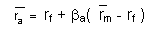







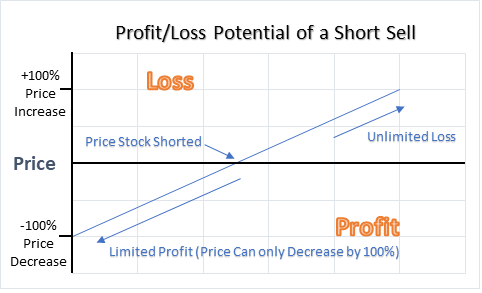
 When investing, an investor deposits money within an account with their broker. There is a choice of two types of accounts in which to deposit the money: a cash account or a margin account.
 Market timing is an investment strategy where the investor buys or shorts stocks and financial instruments based on their expectations of what might happen in the market. This is the “Buy low, sell high” idea – trying to buy stocks just before the prices go up, and selling them at the peak.
 A portfolio has an international investment strategy if it has investments in foreign markets. An international investment strategy offers the investor the opportunity to lower the risk of their portfolio and to take advantage of possible investment opportunities in foreign markets. It reduces risk through diversifying. Diversifying is where the investor invests in more than one market to reduce the risk to any specific market. Instead of being fully invested in domestic markets, the domestic market holds a smaller percentage of investments with investments in foreign markets making up the rest of the portfolio. If the investor was to only focus on American markets and if the markets took a dive, it would be very difficult to protect the portfolio from taking a hit. Therefore, if they had investments in many markets internationally, the investments in other markets would be safe. The investor’s portfolio of investments would not be as exposed.
 Upper managements such as the chief executive officers (CEO), the chief financial officer (CFO), the chief operating officer (COO), the chief technology officer (CTO), the chief marketing officer (CMO), the directors, the presidents, the senior vice presidents, the vice presidents, the sales managers, and many others are charged with being the role models, supporters, the enforcers, the implementers, and the delegators of social responsibility. In other words, social responsibility usually comes from the top, with the highest-level managers encouraging their subordinates to act with social responsibility. This is usually done through the company’s mission and vision statements, implementations of internal controls, and specific goals laid out in the business plan.
 Being and becoming socially responsible is about working with people who are able to identify when something is socially responsible or irresponsible. Social responsibility is about listening and learning about the people and the environment from which it will apply. Being constructive means listening to complaints, coming from both inside and outside of the organization, and being willing to act on those complaints.
 Companies get the best press if they are proactive and address social issues before they are forced to do so by government regulation. For example, the Heinz brand became nationally beloved after it became the first major
  Inviting the public (current, future, and potential customers) to share their thoughts and ideas of how the company can improve their products and services and reaching out to the public to help solve problems. Whenever you take a survey or write a review, all that data is used by the company to make a change.
 The federal government had to respond to this one because people were getting tricked into buying things over the phone by people pretending to sell them something they needed. In return, people gave these fraudsters their personal and financial information. Investigators reported that each year there were $40 billion of losses because of these indirect phishing schemes and Congress responded. This act makes it illegal for telemarketers to deceive and coerce customers and requires them to disclose their information and only make calls at certain times of the day.
 Internal Controls are the procedures and processes in place at an organization to make sure everything operates smoothly and mistakes stay rare. This includes things like building Standard Operating Procedures (SOPs), Quality Assurance (QA), and Auditing. It also includes checks and investigations to make sure those SOPs and QA processes are being followed properly, not just unused documents. Most of the examples in this article will focus on internal risk management.
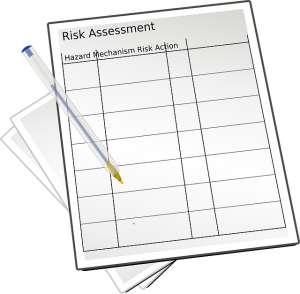 Internal Risk Control is what a manager and organization put in place to minimize risks coming from inside the organization. These controls fall into 4 broad categories:
 Before a risk can be assessed, the first step is identifying what exactly that risk is. The goal of Step 1 is to have a clear and concise definition of what exactly the potential problems are and what kinds of damage might be caused. For example, dangerous machines in a workplace have a defined risk of harming workers, which both loses productivity and results in lawsuits.
 Effective controls are implemented on a trial basis. This means the team has a training session to outline what the hazards are and the new controls being implemented to address them. While the trial progresses, the entire team (from rank-and-file workers through the management involved) record how the implementation impacts their work, both in terms of actually addressing the risks the controls are addressing and the realized cost of implementing them.
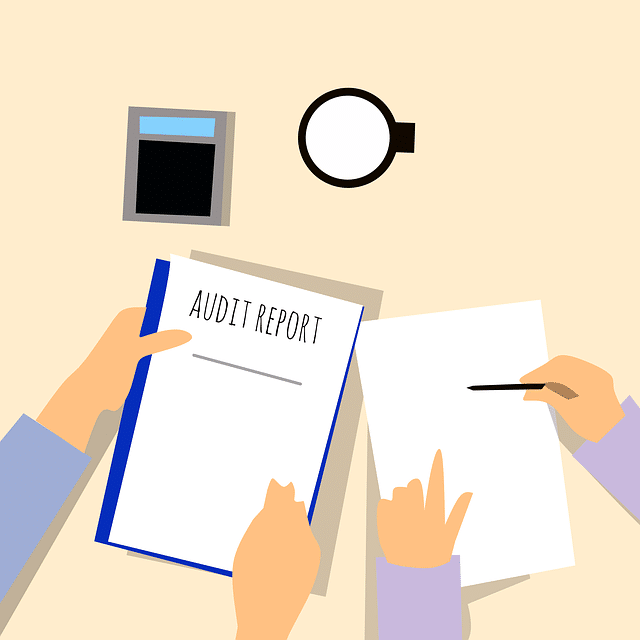
 Audits are larger reviews of the internal risk controls that a company has implemented. Audits are separate from the normal risk assessment procedures, but do follow a similar road map for how they are conducted.












 Planning is a combination of analysis and outlining a plan of action. Planning is what you want to do to achieve some goal or objective to help better manage a business. The purpose of planning is to plan what direction the business is headed, what decisions need to be made, how to be better than competitors in the same industry and business, and how to eliminate wastefulness and optimize current operations. Since plans address a huge variety of business objectives, they tend to be very diverse themselves, but all good plans have a few core components:
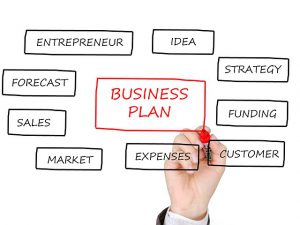 A “Business Plan” in this context is the core document of a small business – it merges many elements of both Strategic Planning and Business Planning together to present one clear vision of what a company is, what its goals are, and how it seeks to achieve them. A good business plan serves three functions: it provides direction to all levels of management as to where the company is heading (like a Strategic Plan), it provides guidance for what a company’s goals and missions are to the rank-and-file workers at a business, and it serves as a document to present to banks and other investors to show why a company will be profitable.
 Reveals the possible strengths, weaknesses, opportunities, and threats that your company will encounter in internal and external business environment.
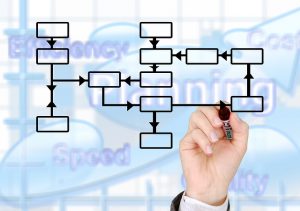 Planning and locating the procurement, distribution, and exchange of supplies and materials to reduce shipping time and decrease shipping costs.
 Crowdsourced plans farm out most of the “heavy lifting” to a large number of people. Companies with strong cohesion of their low-level managers and workers can find great success when crowdsourcing business plans, because it gives all of the people involved a greater “stake” in helping define what company goals are attainable.
 For instance, when it comes to organizing in the logistics department, the manager plans the structure of when shipments will be made, at what times, how long the shipments should be, at what facilities they should be distributed to reduce shipping costs. The manager also needs to plan how much supplies will be allocated to each factory, how much each factory will produce, how much of that product will be shipped to facilities, and where should they be distributed. The manager leads in the structure and allocation of what happens in the logistics department by planning how to get workers to do what is asked and expected of them so that the work process and item production are operating at the highest level. However, when problems arise the manager must control the situation by planning how to solve the problem and how to prevent it from happening again. Planning is in everywhere and everything the manager does.













 Here, sellers gather as much relevant information as possible prior to the appointment with the customer. This focuses on new customers where information is collected in such a way that it has enough applicability and usefulness for effective use. This can be looking up a customer on their social media accounts and finding their likes, dislikes, and needs to present this information in relation to the product.
 The last part of the presentation and the most fearful for the seller. But have no fear! Closing the sale is only confirming and understanding, the fear will disappear if the seller TRULY believes that the customer will enjoy the benefits after they made the purchase.
 Improvements in technology are drastically changing the communication between buyers and sellers. This phenomenon is referred to as a revolution in sales. Technology is an amazing factor in the personal selling process, and allows for products and services to be sold in a variety of different ways. Social Media and the Internet contributed a great deal to this revolution. Customers still want relationships, but look for it in different ways. With more and more people buying online, relationships and repeating customers have to be brought in – in a completely different way. Sellers are no longer meeting face to face with each customer, and need another way to build trust. You might have already seen one way companies address this – many websites have an online chat feature that allows a potential customer to communicate with a seller and then partake in the 8-step process above.
 Be careful of the small talk, some cultures believe that it makes someone appear untrustworthy. In America, although tedious to some, small talk is normal. However, in some other cultures, talking about personal life before talking about a business deal can cause the customer to feel uneasy about the seller and may view them as mischievous.



 Executive role – The HR department are specialists in areas that encompass the management of employees.
 Choosing and hiring employees – The HR department oversees setting job qualifications and sifting through résumés and choosing the most qualified candidate for the interview.
 What is and is not “Ethical” is often very subjective. Over time, several different ways of defining ethical behavior have arisen.
 All businesses are based on a foundation of trust. Customers expect to get their money’s worth from a product they buy (that it will do what is advertised, is free from defect, and is safe to use). Investors expect to know how their money is being used to run the business (though accurate financial statements, truthful statements from the management, and adherence to core principles). Nothing destroys a business faster than losing the public trust, which is why maintaining strong business ethics is essential in the business world today.
 The government actively monitors companies throughout the country, through quality control tests on products, audits of tax forms and financial statements, and other avenues. If unethical behavior is discovered by the government, a company will usually face extremely stiff penalties, and the management may be criminally liable. The company will also likely be forced to engage in lengthy and expensive legal battles, and may have its reputation irreparably damaged.
 You probably will not see a business’s Code of Ethics until after you start. For most employees, they usually do not even take a good look until a major ethical issue has already come up, but your life will be made much easier by evaluating the Code of Ethics early, and bringing up any concerns with your managers before issues arise.
 This act was created in the wake of the Enron Collapse. Enron was a company that primarily dealt with energy. Throughout the late 2000’s, the corporate culture of Enron was obsessed with driving Growth At Any Cost – the company’s daily stock price was posted in the elevators, and associate bonuses were based almost entirely on short-term gains. At lower levels of management, managers were found to have been artificially manipulating energy levels in several states, causing artificial shortages to drive up energy prices. At higher levels, senior managers were found to be manipulating the “book value” of many assets to make failing assets seem profitable. Eventually the entire company collapsed when journalists began investigating their seemingly impossible winning streak, bringing down both one of the biggest energy companies in the world, and one of the most (formally) trusted accounting firms.
 Ahead of the Great Recession, many banks were issuing record numbers of sub-prime loans, or loans issued to lenders with poor credit history or low earnings. Sub-prime loans in and of themselves are not bad – they can be an important way to help uplift people from poverty. What was new was the introduction of wide-spread derivatives trading involving investment banks using something called derivatives and interest-rate swaps, which created a potential for abuse.
































 Dog Bites. If you have a dog that bites someone, your premiums will immediately increase. This is the single most common reason why homeowners file insurance claims – their dog bites someone, who then sues for damages.



























 Because convenience goods carry a relatively low price, consumers usually don’t bother price-checking—they simply stick with the brand they have always bought. For that reason, pricing isn’t overly important as long as the company doesn’t raise prices to the point of being significantly different from competitors. If someone always purchased Crest toothpaste for their entire life, they will not bother checking Colgate’s price to see if they can save a few cents; it’s a habitual purchase. Wide-scale promotion is very important in order to build brand recognition. Typically for a quick, impulsive purchase consumers will choose a brand that they have heard of and are familiar with (Heinz ketchup, for example, holds over 60% market share in the US largely because of its iconic brand). Strategic placement is also frequently used in an attempt to sell convenience goods. A common example is when stores will place candy and other small items right next to the checkout line in hopes of stirring up impulse purchases.
 Strategically, product quality and pricing are much more important for shopping goods than for convenience goods. With customers actively weighing their options, it is vital for a company to provide an offering with attractive value. This can mean selling a product that is better quality than competitors for the same price or selling a product that is similar in quality but at a lower price. The larger the purchase, the more important marketing the good becomes because customers will more actively consider the product’s price-value relationship. Promotion is also important for shopping goods in order to differentiate a product from its competitors and to communicate the value proposition to customers. Whereas promoting convenience goods simply focused on awareness, promoting shopping goods must focus on separating a product from its competition in the minds of customers.
 Typically, consumers of specialty goods do not have much price sensitivity—they are willing to pay whatever price is necessary for the product or brand that they prefer. Someone purchasing a Ferrari likely doesn’t care if a similar car is a few thousand dollars cheaper; they are paying for the brand name and the social status that comes with owning a Ferrari. Therefore, more of the company’s strategic focus needs to be centered on developing outstanding and innovational products that will retain the loyalty of their following. Promotion focuses on demonstrating the company’s latest great product and when/where people can buy it. It is also important to promote status that comes with the brand.
 The key to marketing unsought goods is to remind consumers that the product exists and to convince them that they need to purchase the product to avoid future hardships. For example, a company might run an emotional campaign focusing on how the potential customer’s loved ones will suffer financially if the customer dies unexpectedly. If successful, this would convince the buyer that purchasing a policy is a payment toward protecting their family and they would be compelled to go through with it in order to not have to worry about the potential danger. A lot of promotion is necessary, because consumers rarely think about buying such products unless they are prompted to.
 There are certain issues or uncertainties within the product classification model that need to be taken into consideration. One problem is that certain goods can potentially fall under multiple categories. For example, certain customers may see diamonds as a shopping good and compare prices extensively between brands before making a purchase. Other consumers may have chosen one brand as the best (ie Tiffany & Co.) and they buy that brand for the quality and status it brings. Sometimes product classification can vary depending on the individual customer that is buying the good.
 There are two ways to reduce your tax bill – a “Deduction” and a “Tax Credit”.
 To make it easier to file taxes, everyone has the option to choose between “Itemized Deductions” or “Standard Deduction”. If you file an “Itemized Deduction”, you need to provide evidence of each item you’re deducting (like receipts and proof it is eligible), which can be very time consuming for small deductions.
 The Federal Child Tax Credit gives a simple tax credit for $1000 per child, up to a certain income threshold (between $55,000 and $110,000, depending on your marital status). If you earn more than this threshold, you will have $50 less tax credit for every $1000 over the threshold (so a married couple earning $120,000 would have a $950 tax credit). This tax credit is non-refundable.
  While you cannot write off any costs incurred in a job search, if you need to move between cities when you get a job, you can usually write off part of the moving expense. This is a deduction, subtracted from your taxable income.
  If you have a mortgage, some or all of your interest will be tax-deductible. Not all mortgage interest is tax-deductible – you need to provide evidence that your mortgage was taken out to buy your primary residence, or used for extensive renovations, and only applies to interest paid on loans up to $1 million. If your mortgage does not qualify, you can still write off the interest on the first $100,000 of your loan.
  The “Saver’s Credit” is another word for the Retirement Savings Contribution Credit – the purpose of this credit is to encourage saving in retirement accounts and IRAs. This credit is for up to $2000, and is calculated as a percentage of your contributions (either 50%, 20%, or 10%, depending on your income).
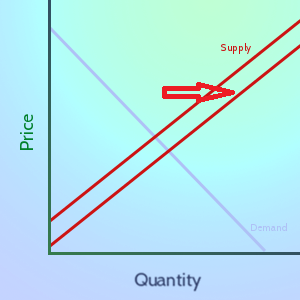 Supply and demand are among the most basic factors on market price for goods, and often an individual firm has little control over them. When there is an oversupply of a product in the market, assuming constant demand, the price of the good will decrease as firms attempt to unload their excess of inventory. Companies that refuse to lower price during a period of oversupply can be punished with huge drops in sales and a buildup of inventory they can’t get rid of. Oil is a prime example of an industry that is currently in oversupply—increased production has led to prices falling from well over $100/barrel down to around $50/barrel today.
 Line pricing is when a company offers products at several different levels of quality (typically low, medium, and high). Pricing is set to reflect the relative quality of each offering, so the low-quality product would be at a discount price, the medium product would be at an average price, and the high-quality product would be at a premium price. The iPad is an example of this strategy—customers have the choice of buying a very basic model or they can pay several hundred dollars more to get one with higher quality and better features. As its name indicates, the line strategy is effective when a firm has a product line with several items that have a distinct difference in quality level. Segmented pricing can help clarify to consumers the added value that buying a better model entails and it provides customers some flexibility on deciding how much they want to spend.
 The loss leader strategy involves a company selling certain items at a loss in order to bring customers into the store. The assumption is that once customers are tempted into the store, they will have a tendency to buy other things as well that will generate the profit for the company. One very basic example of this are restaurants that sell kids’ meals for very cheap (even for free sometimes). The restaurant loses money on the kids’ meal, but makes their profit when the adults accompanying the children have to order full-price meals. This can be an effective strategy to generate store traffic, but firms must be careful to make sure that customers actually are buying products besides just the loss leaders.
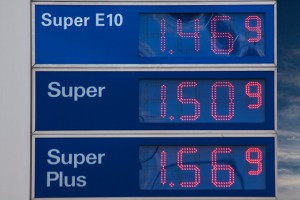
 Psychological pricing is an approach where prices are set based upon a psychological reaction that they will cause consumers. The ultimate goal of this tactic is to increase sales without significantly reducing prices. The most common example of this is when retailers price items one penny below an even dollar amount, $9.99 instead of $10 for example. Customers associate the $9.99 with the lower dollar amount of $9 rather than actively realizing that it is just one cent below $10. The massive usage of that tactic alone illustrates the success psychological pricing can have. It can be effective both for relatively low cost goods like gasoline or for big purchases like cars– $19,999.99 for some reason just seems a lot cheaper than $20,000.
 Technology has led to a very different environment for pricing than has been the norm in the past. With an increased ability to quickly “price-check” online, customers have become more sensitive to prices and it is more important to either be priced below competitors or to clearly communicate the brand’s superiority to consumers. It is also easier for customers to switch brands in that they can shop online and avoid having to travel to multiple stores to find the best deal. In these ways, additional power has shifted to the consumer in determining the way prices are set.
 Revenue represents income earned by the firm through the primary goods and/or services provided. It is the income earned from the firm’s operating activities. For example, Mike’s Computers specializes in selling computers to small businesses. During the year, he sells 10,000 computers at $800, and nothing else. The total sales from the computers sold during the year, $8,000,000, would be Mike’s revenue.
 Expenses can either be capitalized or expensed. Capitalization effectively means the cost of an assets can spread out over the life of an asset. A machine, for example, may be capitalized rather than expensed because the asset has a long useful life.
 Losses are similar to gains in that both are recognized on the income statement only when an asset is sold and a loss is taken. Like gains, there can also be unrealized losses.
 Income tax is the tax you pay on your income, usually directly taken out of your paycheck. Everyone who works in the United States should be paying income tax on their earnings.
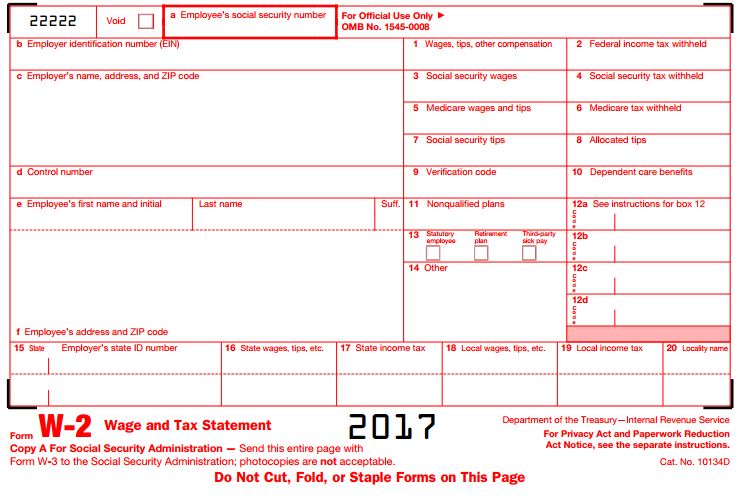 The
The  The basic income tax return form in the United States is known as the
  The IRS may also apply corrections directly based on their own calculations of your taxes owed. If this is the case, they will generally mail you a letter explaining how their calculation differs from theirs, along with a method to dispute their calculation.
 The purpose of the Financial Accounting Standards Board (FASB) is to establish and improve US GAAP. There are also auditing standards, enforced by the Public Company Accounting Oversight Board (PCAOB), and required by the SEC. The purpose of the PCAOB is to protect the public interest in the preparation of audit reports. The FASB and PCAOB are responsible for the oversight of all United States accounting. Internationally, the IFRS Foundation and the International Accounting Standards Board (IASB) oversee international accounting.
 To remedy this, the Sarbanes-Oxley Act of 2002 (SOX) was passed by U.S. Congress in 2002. The SOX Act is a United States federal law that introduced major change to the regulation of financial disclosures and corporate governance. The SOX Act has closed loopholes in accounting practices and increased the consequences for fraudulent activity. The accounting profession is constantly changing and must adapt effectively and efficiently to meet the demands of the economy and society. Developments in the accounting profession, economy, and society affect the profession and how it performs its role. The SOX Act is one example of how a new regulation forced the profession to adapt to change.
 Accountants regularly face ethical dilemmas. Accountants seek to add value by reducing costs and increasing revenue. An accountant wants to produce favorable results for their company or client. Accountants must also have the public best interest in mind. Therefore, information must be represented fairly and accurately to be ethical.




 The introduction stage marks the very first time a company brings a product to market. The main objective for companies at the beginning is not profit (often new products will generate losses because of high advertising costs and low sales) but rather developing a market for the product and building awareness among consumers. If successful, the company can then enjoy a better ROI in future stages as sales grow and relative costs lessen. An example of a product in the introduction stage could be when Amazon first rolled out their
  If products make it through the introduction stage, they next advance to the growth period. This is when demand starts to take off for a product as companies promote to a wider audience in an attempt to build consumer preference over other brands and win market share. Because of increasing demand, companies are often able to start to make sizable profits in this stage. An example of a growth-stage product in today’s market could be drones; though they are a fairly new product, the market has been established and demand is rapidly growing.
 At some point, growth inevitably slows down and products reach the maturity stage. The top focus for managers at this point is protecting the market share they have earned, because the maturity stage is often the phase of the product life cycle with the most competition. Another key objective is to maximize profits—products in this phase of their life often turn into “cash cows” for companies that generate the funds necessary for developing new products. Apple’s (
 In the final stage of a product’s life, demand starts to decline as consumers move on to newer and more appealing products. Traditional telephones are an example of a product in this stage—with the emergence of cell phones, fewer and fewer people are using landlines and the market seems to be on its last legs.
 While the product life cycle model is useful in many ways, it does have some issues. For one, there are products that do not seem to fit into the model. Brands like Coke (